
Last updated September 20, 2026
Full 25-point door and opener safety check with every visit - springs, cables, rollers, tracks, and your LiftMaster or Chamberlain opener included
You get a price before we start. It does not change when the truck arrives.
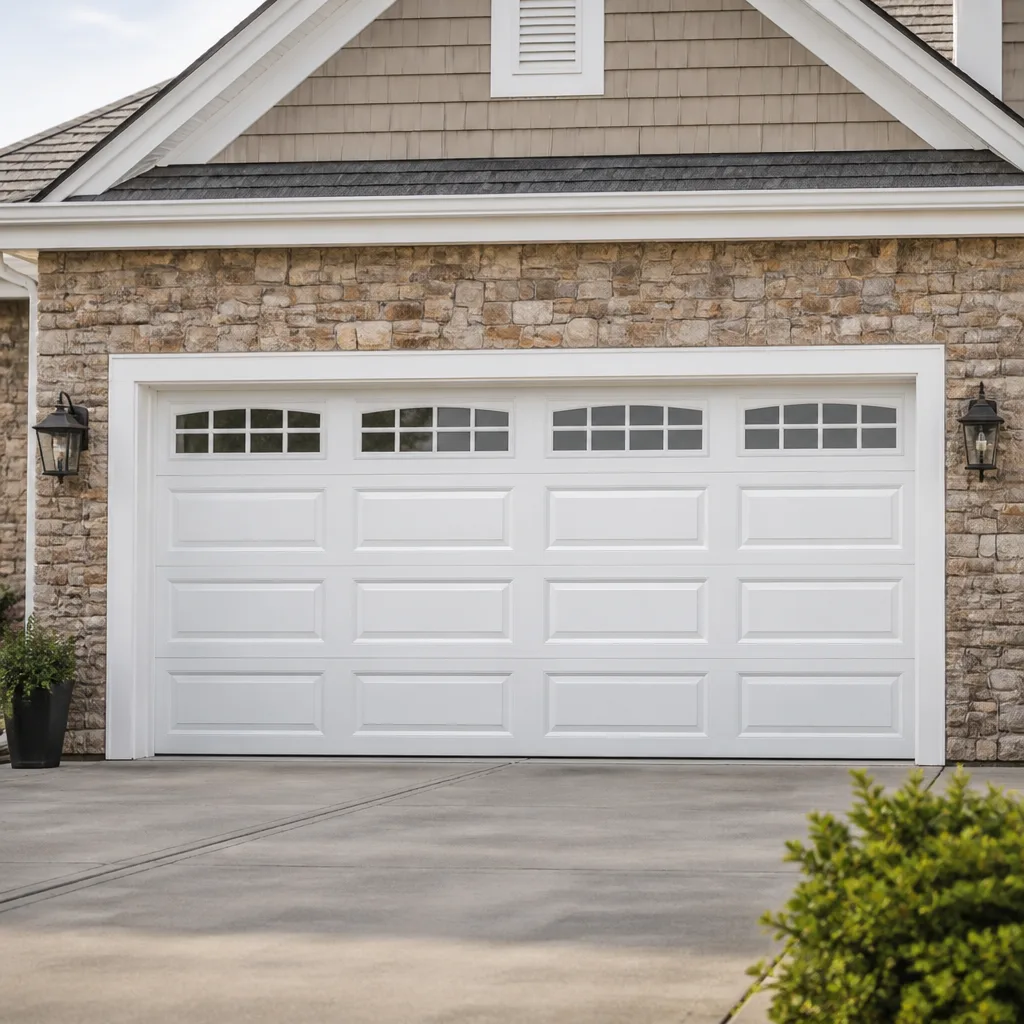
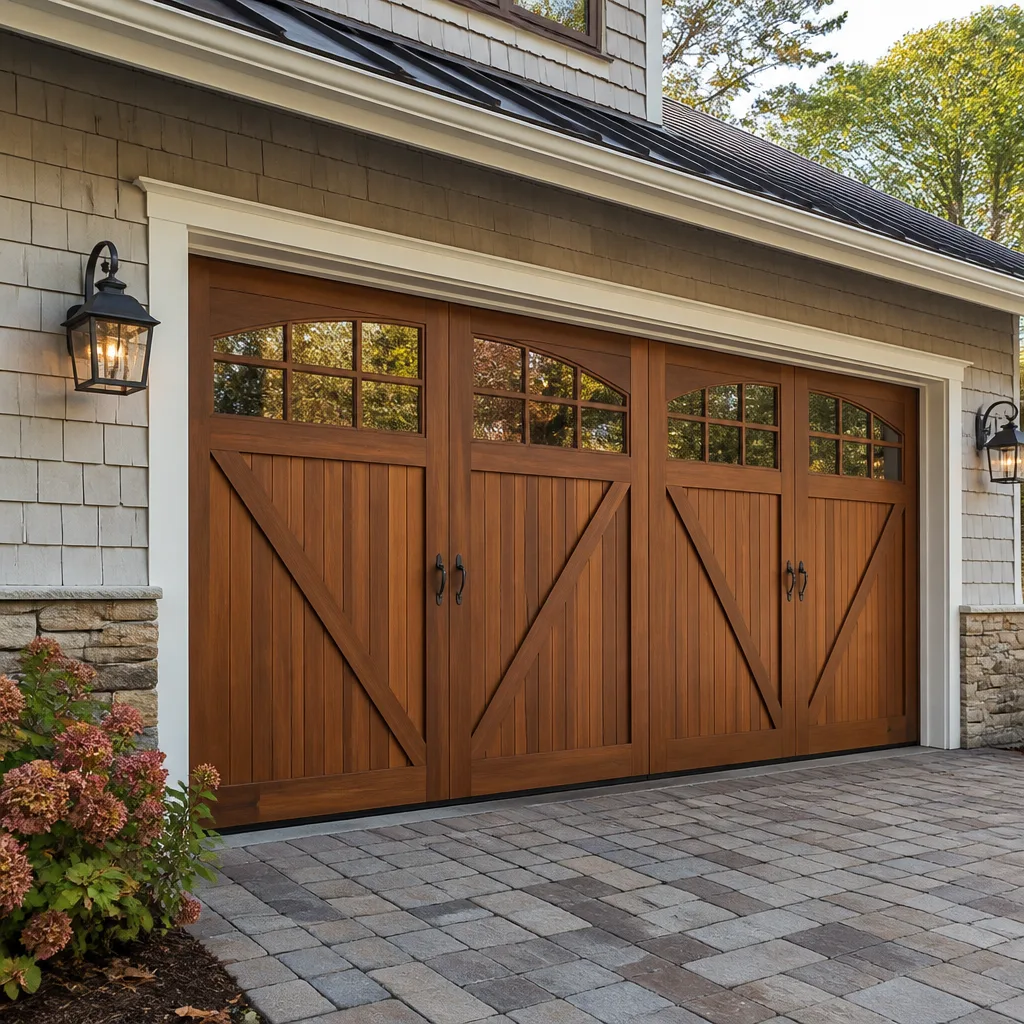
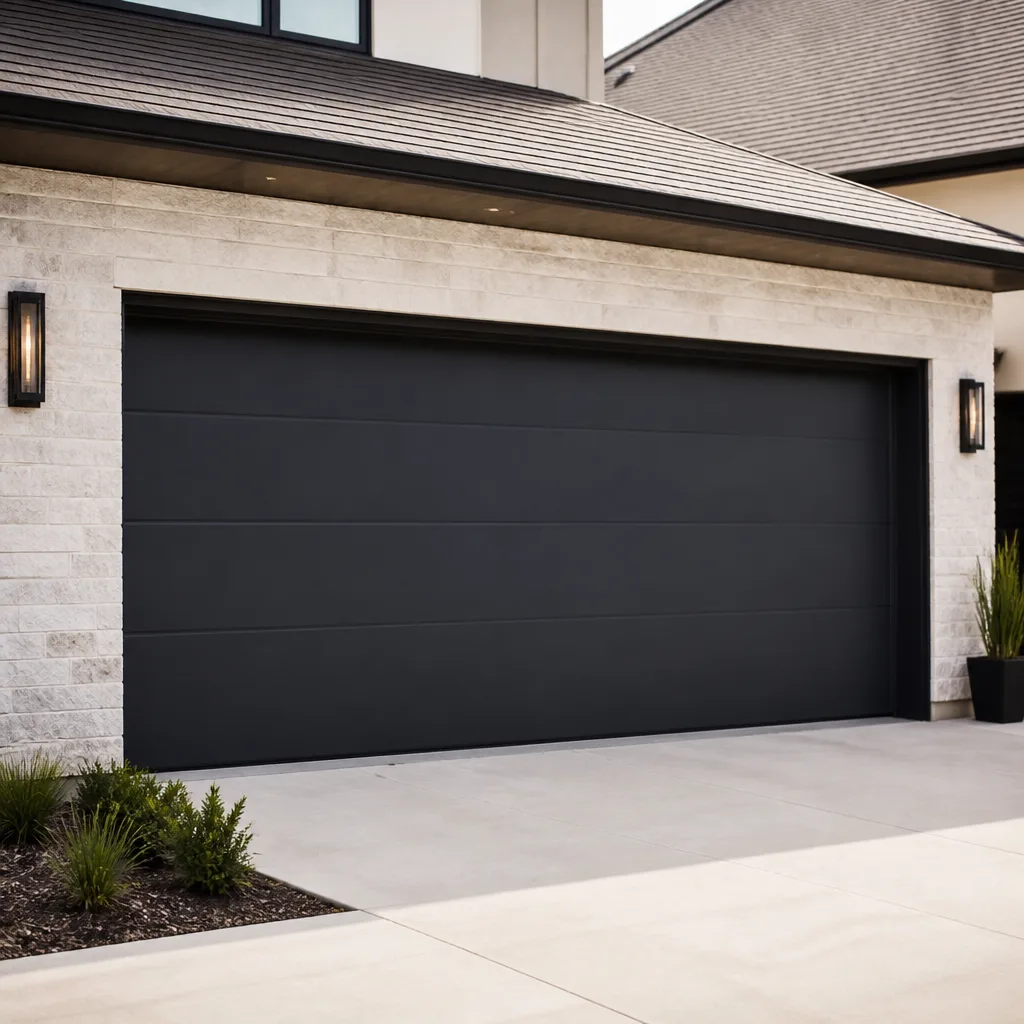
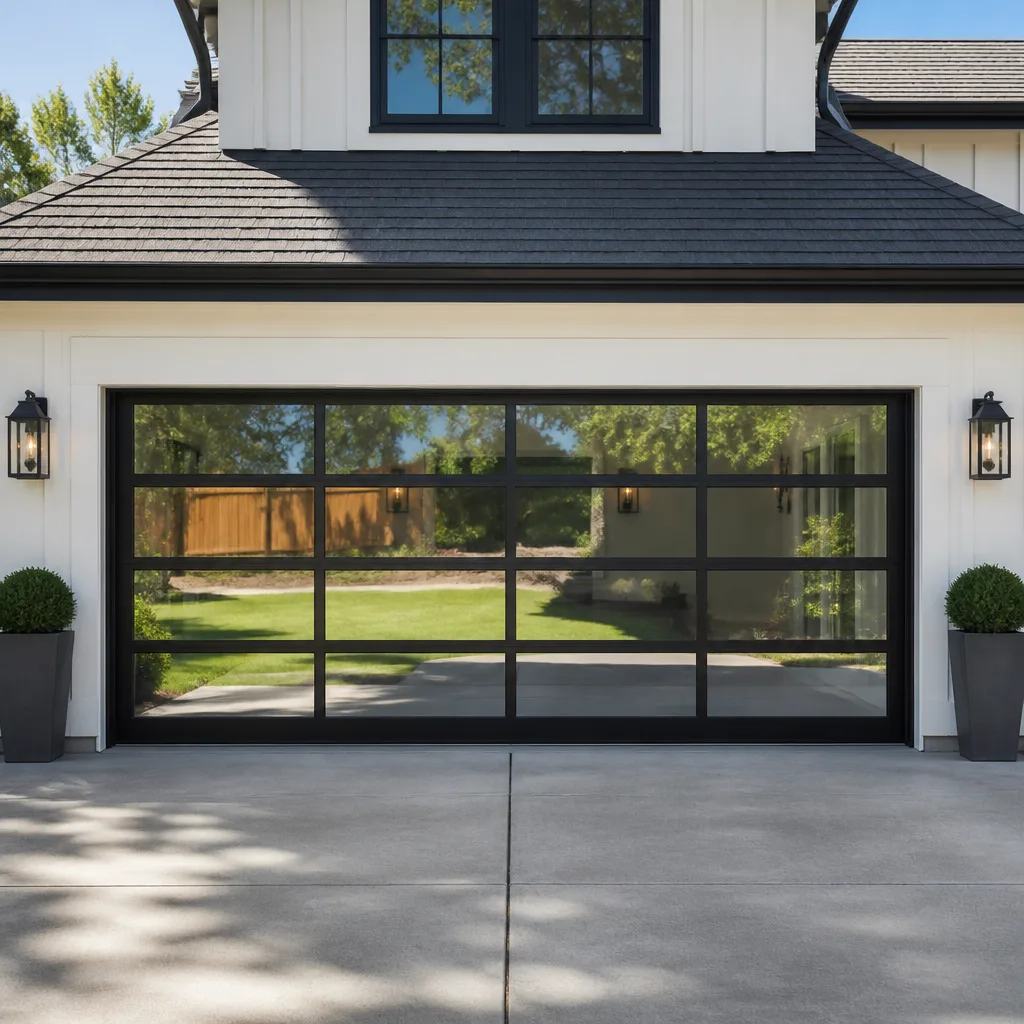
 Before
 After
After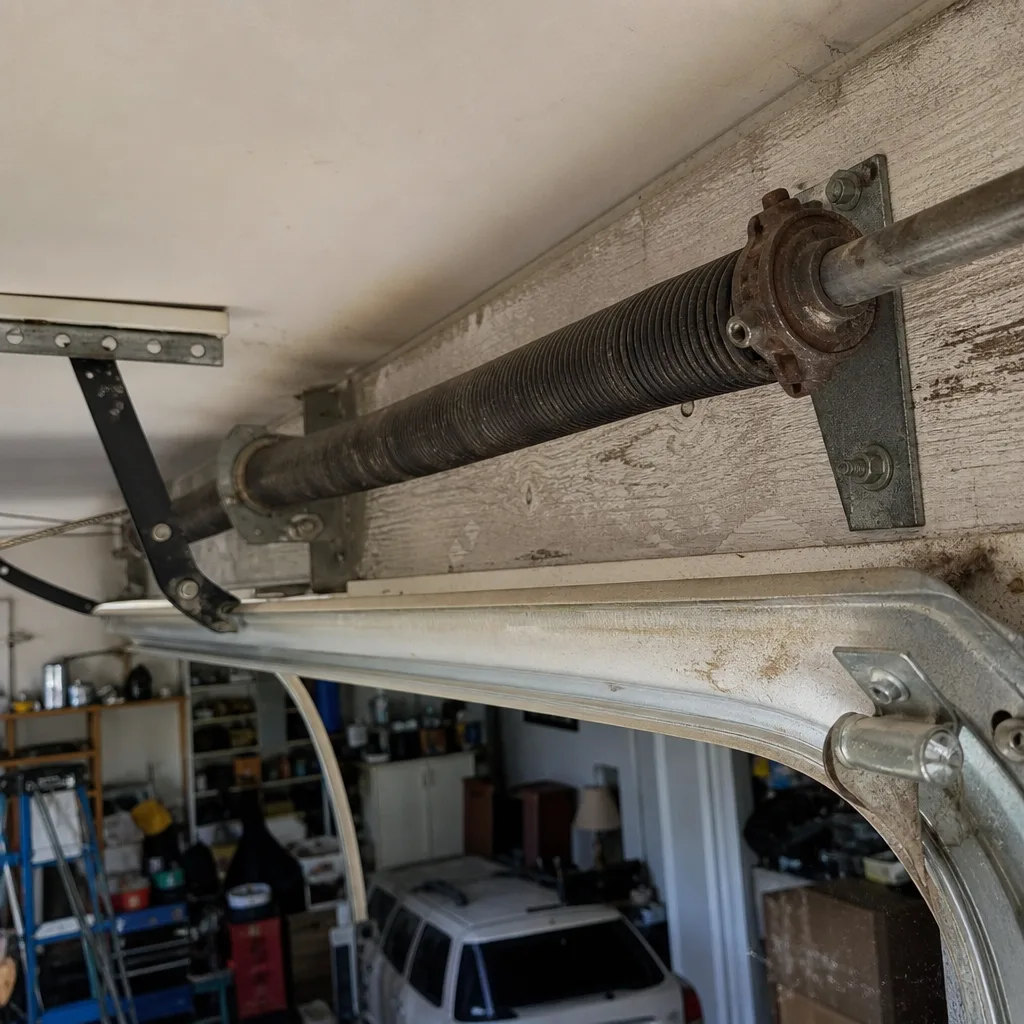 Before
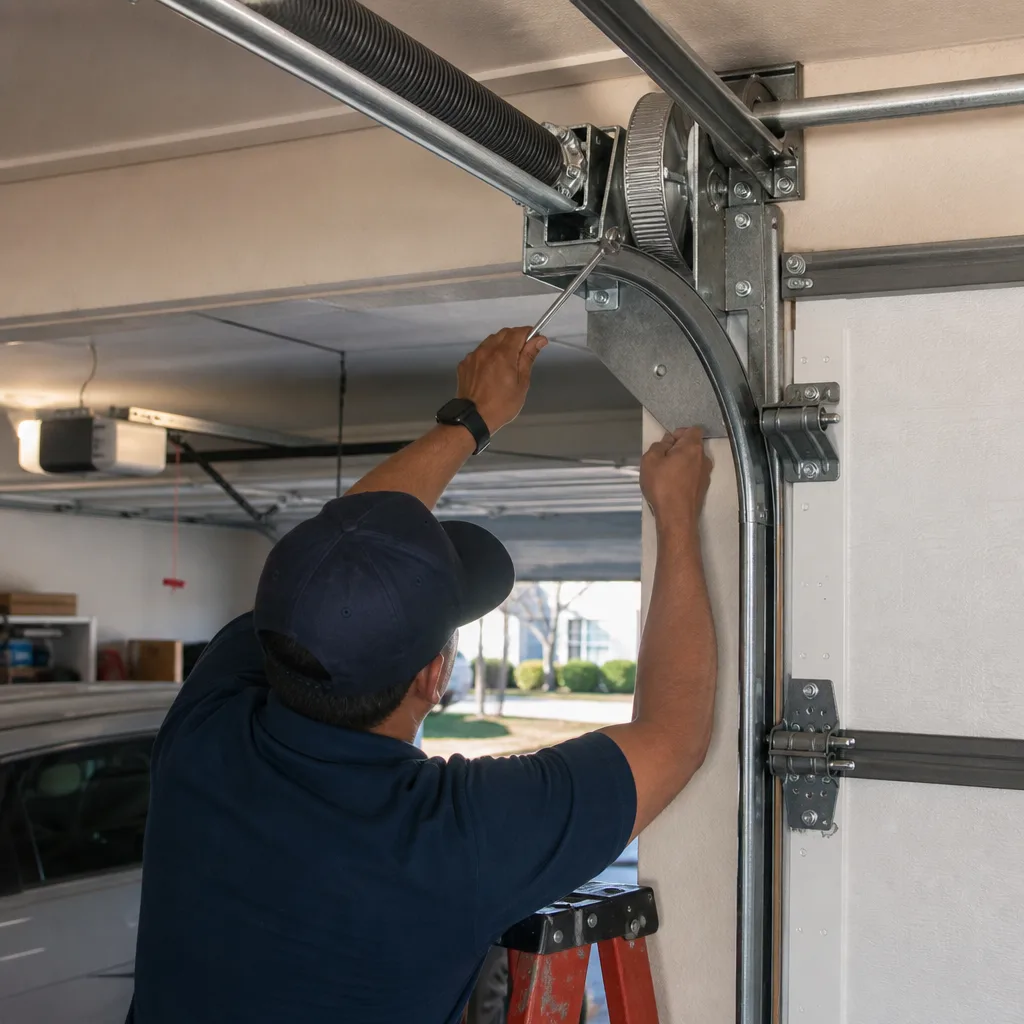 After
After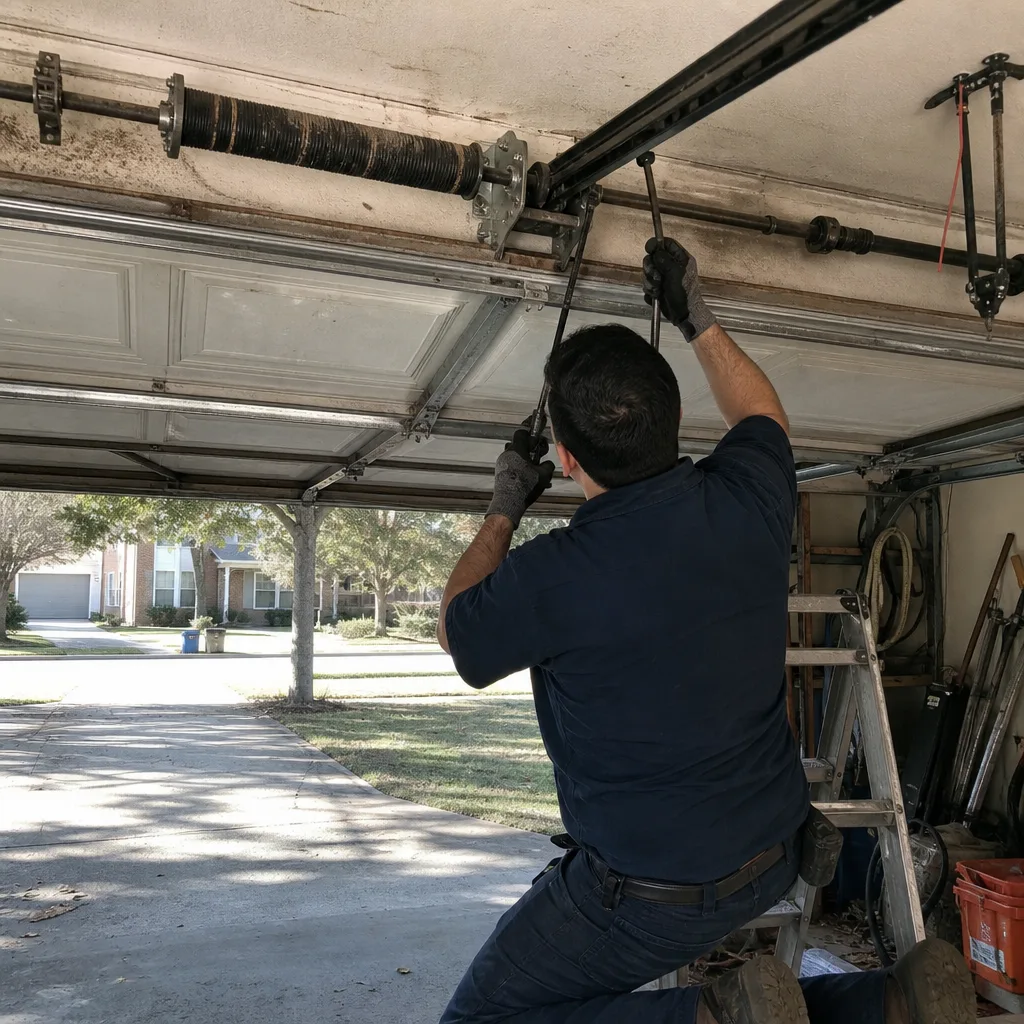 Before
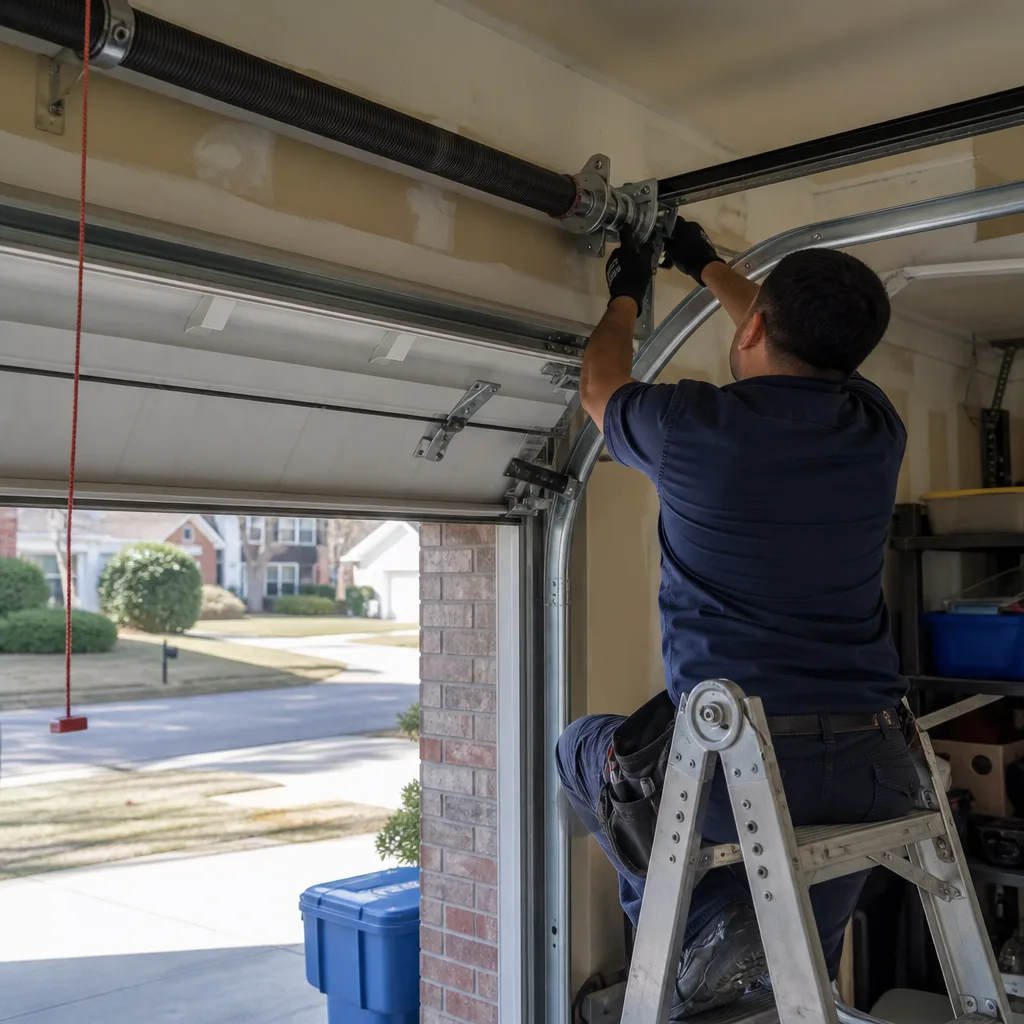 After
AfterGarage Door Cost Breakdown: The McDonough Homeowner’s Reference for 2026
A $799 garage door quote and a $1,400 quote for what looks like the same door are not necessarily different prices for the same thing. One may exclude the existing door disposal fee, opener replacement, and haul-away, while the other includes all three. You are comparing different scopes, not different prices. This guide breaks down garage door pricing in McDonough into five discrete cost categories so you can read a quote the way a technician does: line by line, part by part, before you sign anything. For more guides & resources, visit our blog.
Quick Answer
In McDonough, GA, a complete garage door replacement for a standard two-car door typically costs $900 to $2,400 in 2026, including the door panel, hardware, labor, and disposal. A single-car door runs $550 to $1,300. The spread comes down to five cost categories: door panel material and gauge, spring hardware, opener type, labor complexity, and disposal fees. A written, line-item quote is the only way to know which of those five categories is driving your total.
Table of Contents
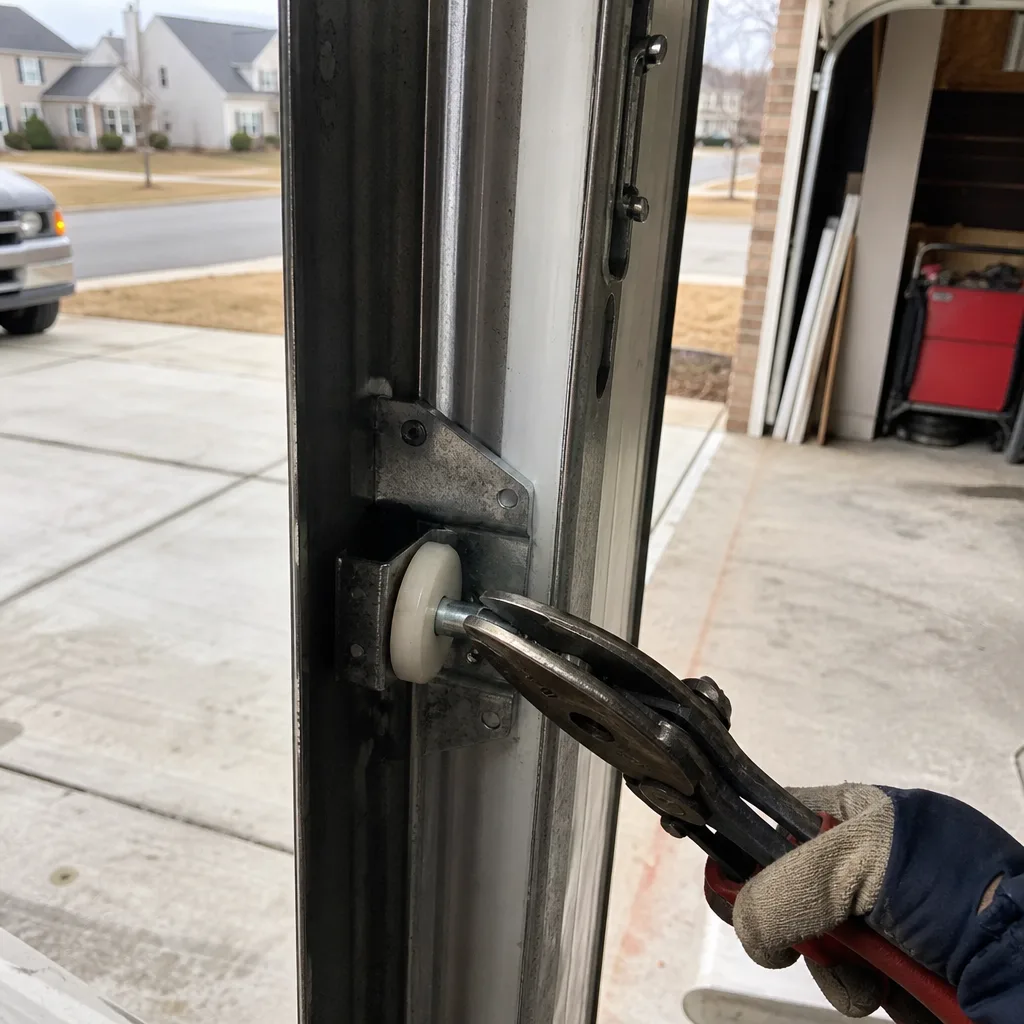
- The Five Cost Categories That Determine Your Total
- Door Panel Costs by Material and Gauge for 2026
- Hardware Costs: Springs, Rollers, Cables, and Tracks
- Opener Costs by Drive Type
- Labor Costs by Job Complexity in McDonough
- Disposal and Haul-Away: The Hidden Line Item
- How to Normalize Competing Quotes: A Line-Item Comparison Method
- Where Upsells Appear in a Garage Door Quote (And Which Are Worth It)
- Total Cost of Ownership: A 10-Year View for McDonough’s Climate
- What a Written, Itemized Quote Is Worth Financially
- Common Mistakes to Avoid
- When to Call a Professional
- Frequently Asked Questions
- The Bottom Line
BeforeAfterThe Five Cost Categories That Determine Your Total
Every garage door quote in McDonough, whether it comes from a national chain, a Henry County independent, or a two-person crew working out of a pickup, can be reduced to five line items. Understanding this structure is the single most useful thing you can do before requesting estimates.
The five categories are:
- Door panel – the largest single line item. Material, gauge, insulation level, and panel design drive this number.
- Hardware – torsion springs, rollers, cables, hinges, tracks, and mounting brackets. Often bundled into one line but worth separating when comparing quotes.
- Opener – the motor unit, rail, and controls. May or may not be included in an “installed door” price.
- Labor – installation time, measured by job complexity: new build versus replacement, single versus double door, standard versus custom sizing.
- Disposal – removal and haul-away of the old door and any opener components. Frequently omitted from low-ball quotes to make the headline number look smaller.
When a McDonough homeowner tells us a competitor’s quote came in $300 lower, the first thing we do is ask which of these five categories are missing from the written scope, as outlined in our Garage Door Warning Signs: A McDonough Homeowner’s Reference Guide. In our experience reviewing estimates across Henry County, the lower quote is almost always missing disposal, using a lighter-gauge door, or excluding the opener entirely. None of those are savings. They are scope reductions dressed up as discounts.
This is also why Servo Garage Doors McDonough home guidance to every homeowner starts the same way: get the scope in writing before you compare numbers. A price without a scope is not a price. It is a conversation starter.
Door Panel Costs by Material and Gauge for 2026
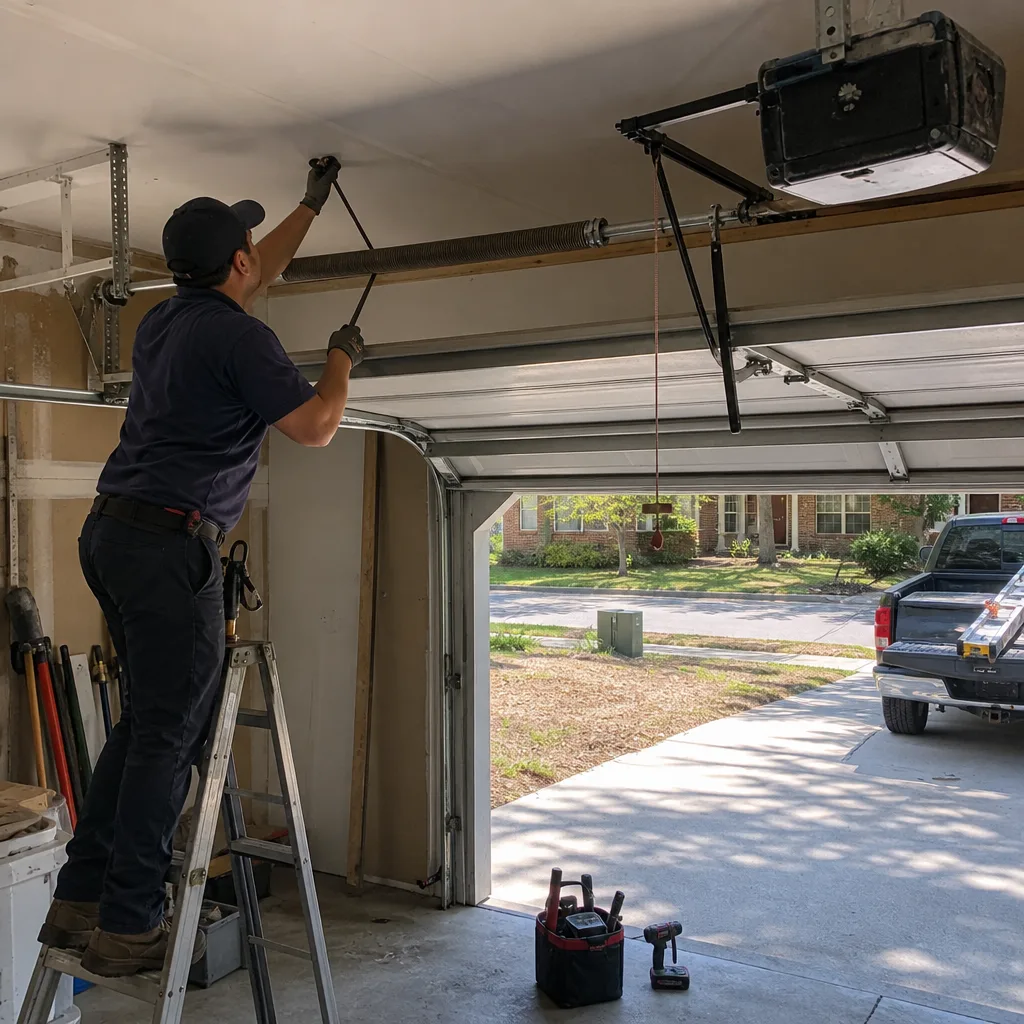
The door panel is what most people mean when they say “garage door.” It is also where the widest pricing spread lives. In McDonough’s 2026 market, we see three material tiers dominate residential quotes:
Steel Doors: $600 to $1,800 (double-car, installed)
Steel remains the default choice for most McDonough homes, and for good reason. It holds up to Georgia’s humidity, resists dents better than aluminum, and comes in a wide range of insulation options.
The gauge number is the detail that drives price. Lower gauge means thicker steel. A 24-gauge steel door is the budget option and runs at the low end of the range. A 26-gauge door is a step up and sits in the middle. At the top, you will find 27- and 28-gauge steel panels with laminated construction, which means the steel is bonded to an insulation core rather than rolled around it. We specify laminated panels whenever a customer wants a door that will not oil-can, meaning flex and ripple when the temperature swings.
In McDonough, where summer heat regularly pushes attic-adjacent garage spaces above 100 degrees, the insulation level inside a steel door matters more than the paint color. An uninsulated 24-gauge door might cost $200 less up front, but the garage will be a heat sink from June through September.
Aluminum Doors: $1,100 to $2,400 (double-car, installed)
Aluminum doors are lighter and resist corrosion, which makes them a reasonable choice for coastal-adjacent Georgia. McDonough is far enough inland that salt air is not a factor, so aluminum’s main advantage here is aesthetic: full-view aluminum doors with glass panels are common on modern builds in the Ola and Kelleytown areas.
The trade-off is dent resistance and insulation. Aluminum is softer than steel. A stray basketball or a misjudged trailer hitch will leave a mark. If you want the full-view look, expect to pay a premium for tempered glass panels, which add $300 to $700 over a standard aluminum frame door.
Wood and Wood-Composite Doors: $1,800 to $4,500 (double-car, installed)
Real wood doors are rare in McDonough’s newer subdivisions, but they still appear on custom homes and older properties near the Square. Wood-composite doors, which use a steel or fiberglass core with a wood-look exterior, split the difference at $1,800 to $3,000.
Brands like Clopay and Amarr offer wood-look steel doors that photograph well and require none of the seasonal resealing that real wood demands. We stock and install both, and we are direct with customers about the maintenance trade-off before they spend the money.
2026 Door Panel Price Snapshot: McDonough Market
- Single-car, 24-gauge steel, uninsulated: $550 – $900 installed
- Single-car, 26-gauge steel, insulated: $800 – $1,200 installed
- Double-car, 24-gauge steel, uninsulated: $900 – $1,300 installed
- Double-car, 26-gauge steel, insulated: $1,200 – $1,800 installed
- Double-car, aluminum full-view with tempered glass: $1,800 – $2,400 installed
- Double-car, wood-composite: $1,800 – $3,000 installed
- Custom wood, double-car: $3,000 – $4,500 installed
These ranges reflect what we quote and see quoted across Henry County in 2026. They are installed prices, meaning they include the panel, mounting hardware, and standard labor. They do not include opener replacement or disposal, which we will get to next.
Hardware Costs: Springs, Rollers, Cables, and Tracks
Hardware is the category homeowners understand the least and pay the most for when it fails unexpectedly. On a new door installation, hardware is typically bundled. On a repair, it is quoted line by line. Either way, these are the numbers.
Torsion Springs: $180 to $340 per pair, installed
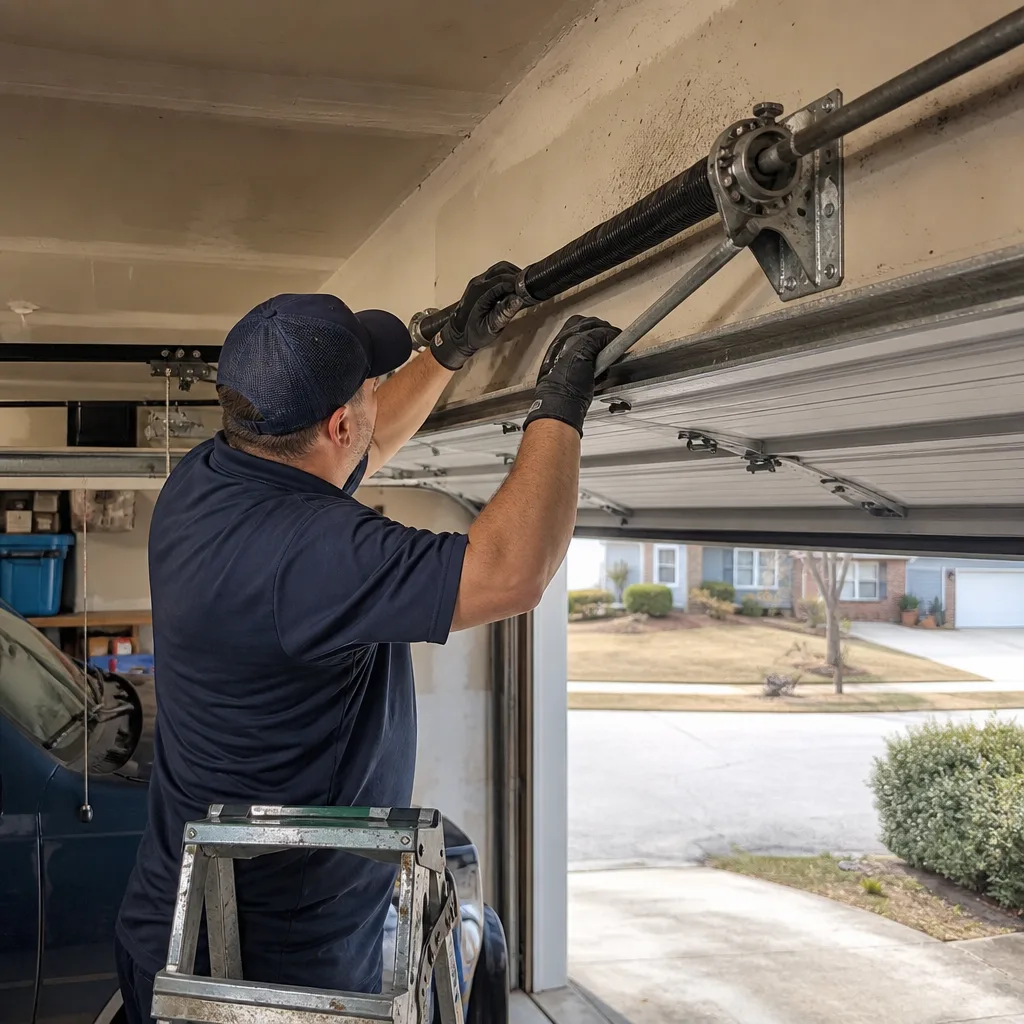
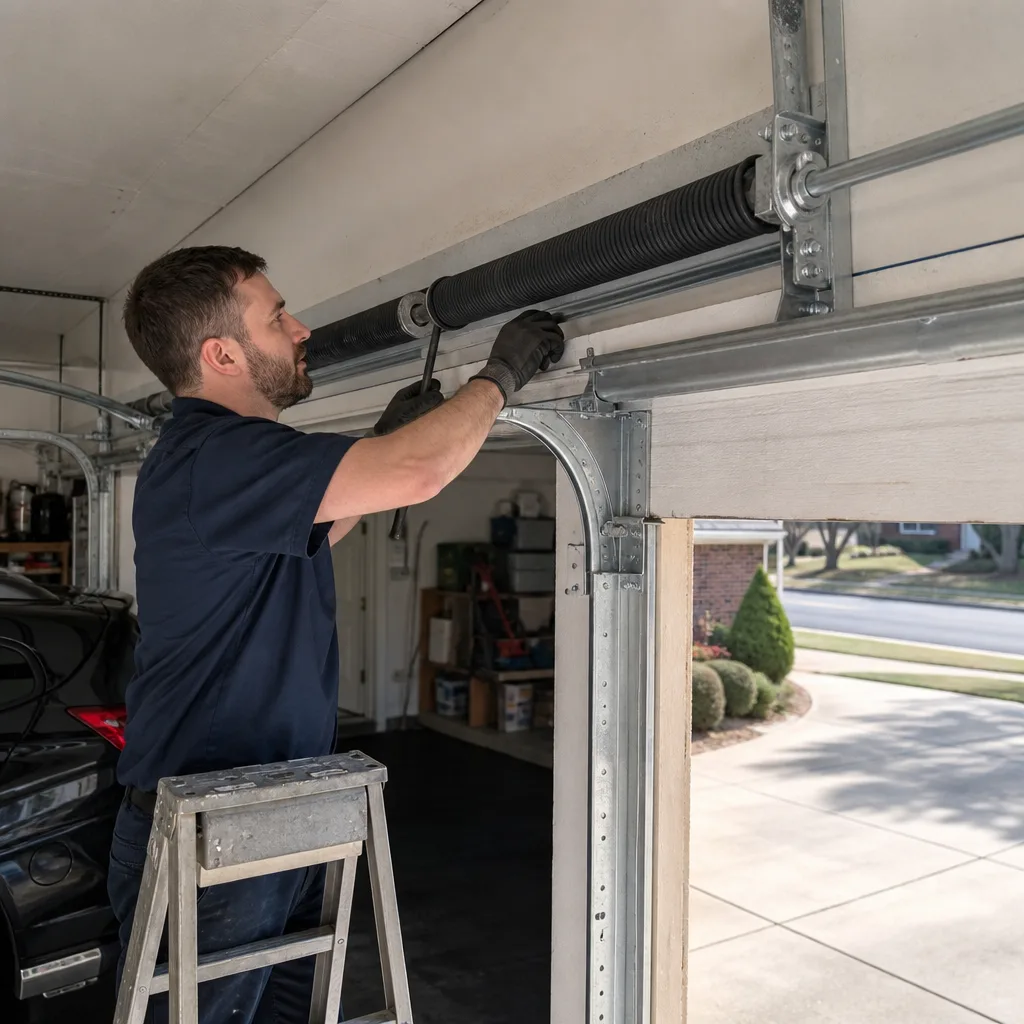
The torsion spring is the wound steel coil mounted above the door opening. It counterbalances the door’s weight so the opener motor is not lifting 150 pounds on its own. Most residential doors use either one or two torsion springs, and they are rated by cycle life: 10,000 cycles is the standard grade, 20,000 to 30,000 cycles is the upgraded grade.
In McDonough’s climate, springs do not fail from cold. They fail from use. A door that opens and closes four times a day will cycle a standard spring to failure in about seven years. The upgraded spring costs $40 to $70 more per spring and roughly doubles the service life. For a door you use every day, that is the better math.
A safety note worth stating plainly: torsion springs are under tension even when the door is closed. If you see a broken spring, do not attempt to remove or adjust it. The stored energy in a wound spring can release suddenly and cause serious injury. This is one component where we recommend calling a trained technician, every time.
Rollers, Cables, and Hinges: $75 to $250 combined
Rollers guide the door along the track. Standard steel rollers are fine and inexpensive. Nylon rollers run quieter and cost about $10 more per roller, with most doors using 10 to 12 rollers total. Cables connect the bottom of the door to the spring assembly and should be replaced whenever springs are replaced, which adds $30 to $60 to the spring job. Hinges are straightforward at $10 to $20 each and rarely all need replacing at once.
Complete Track Replacement: $200 to $500
Tracks bend when a door is hit, when a spring breaks while the door is partially open, or when a homeowner tries to force a stuck door. A full track replacement for a double door, including vertical and horizontal sections, brackets, and labor, lands between $200 and $500 depending on whether the door needs to be re-squared.
Opener Costs by Drive Type
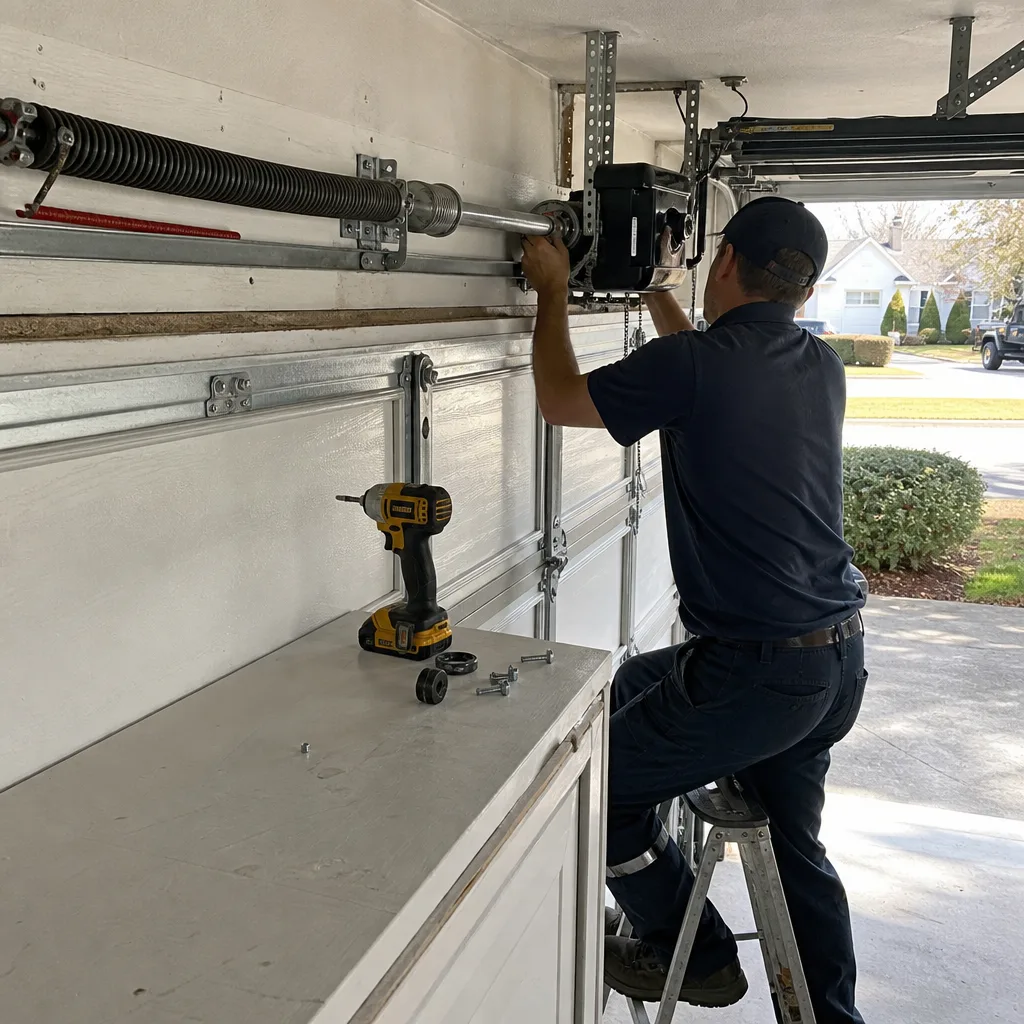
The garage door opener is the motorized unit that does the lifting once the springs are doing their job. In 2026, three drive types cover nearly every residential installation in McDonough:
- Chain drive: $250 to $400 installed. Loudest option. The chain physically pulls the trolley carriage along the rail. Fine for detached garages. Acceptable for attached garages if the room above the garage is not a bedroom.
- Belt drive: $350 to $550 installed. Quieter than chain because a reinforced rubber belt replaces the chain. This is our default recommendation for attached garages in McDonough, where the master bedroom sits directly above the garage in most floor plans built since 2010.
- Screw drive: $300 to $450 installed. Fewer moving parts, louder than belt but quieter than chain. Less common in Georgia than in drier climates because humidity can affect the screw assembly over time.
Smart opener features add cost. Wi-Fi connectivity, battery backup, and camera integration typically add $50 to $120 to the opener unit itself. Brands like Chamberlain and Genie both offer smart-line openers that pair with phone apps, which matters if you want to open the door from the driveway without a clicker or check whether you left the door open from work.
One note on opener lifespan: a well-installed opener in McDonough lasts 10 to 15 years. The logic board, which is the circuit board that interprets remote signals and controls the motor, is the component that fails first. If your opener is over 10 years old and the logic board goes, replacement usually beats repair on cost. A new board runs $80 to $150 before labor, and the labor to install it is within $100 of the labor to install a whole new opener.
For a deeper look at opener pricing and repair scenarios, see our guide on Garage Door Opener Repair & Installation in McDonough.
Labor Costs by Job Complexity in McDonough
Labor for a standard door replacement in Henry County runs $250 to $600 in 2026, depending on what the crew is walking into. The biggest variable is not the door itself. It is what the existing opening looks like before the new door arrives.
Here is how labor breaks down by job type:
- Straight replacement, standard sizing: $250 to $350. The old door comes down, the new door goes up, tracks and brackets are reused where they are square and serviceable, and the job is done in a morning. This assumes the opening is standard 16×7 or 9×7 and the framing is intact.
- Replacement with new tracks and hardware: $400 to $500. Required when the old tracks are bent, the spring pad is compromised, or the previous installation was not plumb. We see this most often on homes where the original door was installed in the 1990s or earlier.
- New construction or opening modification: $500 to $600 plus framing costs. Rare for existing McDonough homes, but it comes up when a homeowner converts a carport to an enclosed garage or widens a single opening to fit a two-car door.
Some companies roll labor into a single “installed” price, which is fine as long as the scope is written. The problem comes when labor is padded to cover unknowns the quote does not mention. A quote that reads “install new door: $1,400” without listing labor separately is not necessarily dishonest, but it makes it impossible to compare against a quote that does itemize. The line-item list is what makes the comparison valid.
Disposal and Haul-Away: The Hidden Line Item
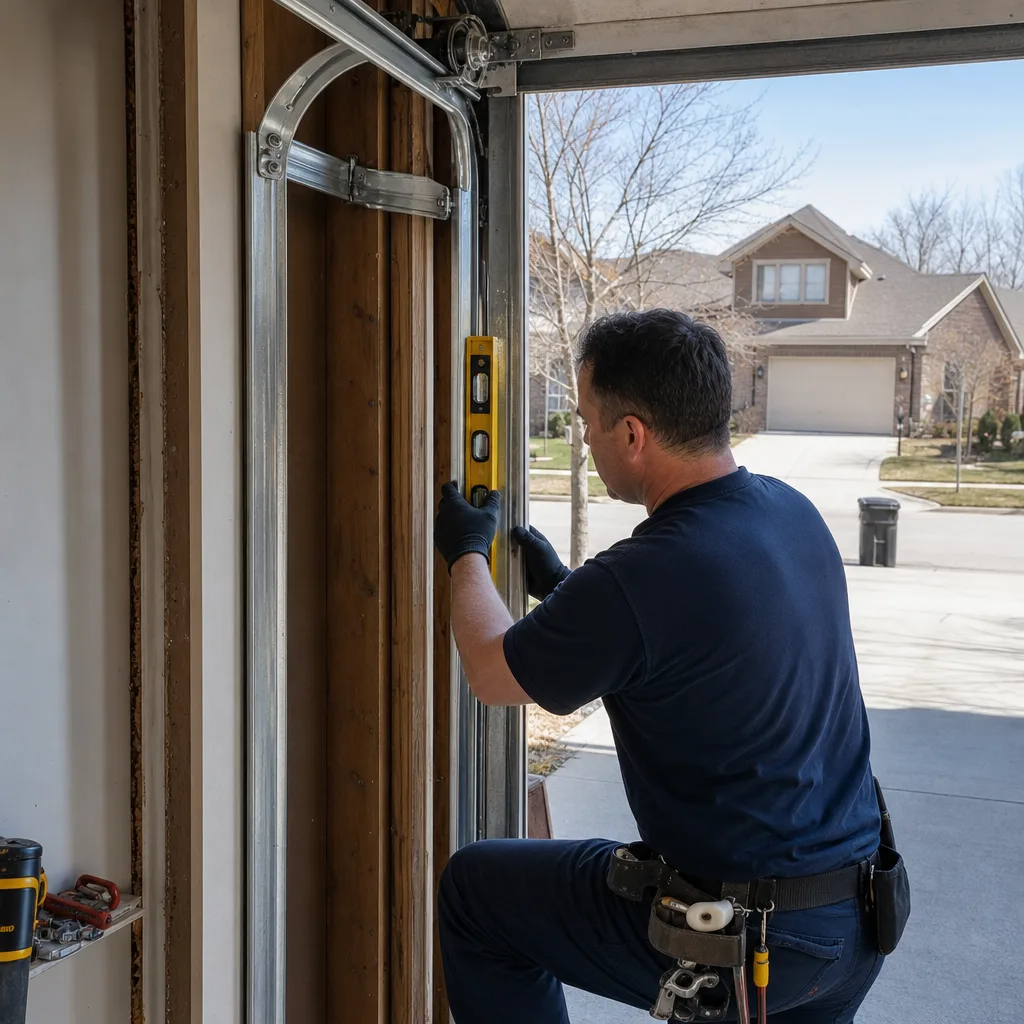
Disposal is where we see the most quote manipulation in the McDonough market. The old door, the old opener, the torsion springs, the track sections, and the packaging from the new door all have to go somewhere. Somebody has to load it, haul it, and pay the dump fee. That cost is real, and it is always somewhere in the price. The question is whether it is visible.
McDonough residential disposal for a full door set runs $75 to $150. The range depends on whether the haul is going to the Henry County transfer station and whether the door contains any materials that require separate handling. A door with polyurethane insulation, for example, does not go in the same bin as a plain steel door.
When a quote omits disposal, the homeowner usually finds out one of two ways. Either the installer leaves the old door stacked in the driveway and says disposal was never included, or the final invoice reveals a “disposal fee” that was not on the original written quote. Both are avoidable. The fix is simple: ask whether the written quote includes removal and haul-away of the existing door and all related materials. If the answer is anything other than “yes, and here is the line item,” you are looking at an incomplete scope.
For a full picture of what a repair visit includes versus a full replacement, see our guide on Garage Door Repair in McDonough.
How to Normalize Competing Quotes: A Line-Item Comparison Method
The single most valuable skill a McDonough homeowner can develop before replacing a garage door is the ability to normalize quotes. Normalizing means putting every quote on the same scope so the numbers can actually be compared. Without normalization, you are comparing a quote that includes disposal to one that does not, a 24-gauge door to a 26-gauge door, and a belt-drive opener to no opener at all.
Here is the method we recommend. It takes fifteen minutes and works for any quote, from any company:
- Write down the five cost categories: door panel, hardware, opener, labor, disposal.
- Open the first quote and place each line item under one of the five categories. If a line item does not fit, create a sixth category called “miscellaneous” and note what it is.
- Repeat for the second quote. Use the same categories, not the quote’s own formatting.
- Mark any category that is missing from either quote. A missing category is not a savings. It is a scope gap. Note it explicitly.
- Compare the dollar totals category by category, not quote by quote. The difference between quotes on the panel line tells you whether one quote is using a different material or gauge. The difference on the labor line tells you whether one company is pricing a different job complexity.
- Ask each company to fill the gaps in writing. If disposal is missing, ask for the disposal line item in writing. If the opener is not specified, ask which drive type and brand is included.
This process does two things. It reveals scope differences immediately, and it signals to the contractor that you are reading the quote line by line. In our experience, the second effect is not trivial. A contractor who knows you are normalizing quotes is less likely to pad line items they think you will not check.
Where Upsells Appear in a Garage Door Quote (And Which Are Worth It)
Not every add-on is an upsell. Some are legitimate upgrades that make sense in McDonough’s climate and with modern usage patterns. But you should be able to identify which is which, because the add-on section is where quote totals creep upward without any corresponding change in the door itself.
Insulation Upgrades: Usually Worth It
A door with a lower R-value means a hotter garage in summer and a colder one in winter. In McDonough, where attached garages absorb afternoon sun on the western exposure, insulation matters. Upgrading from an uninsulated steel door to a polystyrene-insulated door adds $100 to $250. Upgrading to polyurethane, which is denser and bonds directly to the steel, adds $200 to $400 but also stiffens the panel, which reduces oil-canning and improves dent resistance. If your garage shares a wall with conditioned living space, the polyurethane upgrade is the better call.
Premium Rollers: Worth It, Cheap
Nylon rollers with sealed bearings cost $10 to $15 more per roller than standard steel, which works out to $120 to $180 for a full set. The benefit is noise reduction, especially on belt-drive openers in attached garages. For the cost, this is one of the better value upgrades on the list.
Keypad Add-Ons: Worth It If You Use Them
A wireless keypad outside the door runs $50 to $80 installed. If you have kids who walk home from school or you routinely give temporary access to a neighbor or service provider, a keypad is a useful addition. If everyone in the house uses clickers and the keypad would sit unused, skip it.
Extended Warranties: Read the Terms
Some companies sell extended warranties that cover parts and labor beyond the standard term. Whether this makes sense depends entirely on the terms. Ask what is covered, what is excluded, whether there is a service call fee, and whether the warranty is transferable if you sell the house. If the answers are vague, the warranty is not worth the paper it is written on.
Total Cost of Ownership: A 10-Year View for McDonough’s Climate
A $200 price difference at installation looks meaningful on the day you sign. Over a ten-year ownership period, it usually disappears into rounding error, because the bigger cost driver is what the cheaper door costs to maintain and operate in Georgia’s climate.
Consider two double-car steel doors quoted for the same McDonough home. Door A is a 24-gauge, uninsulated steel panel at $950 installed. Door B is a 26-gauge, polyurethane-insulated panel at $1,350 installed.
The $400 difference at purchase means Door B costs about $40 more per year over a decade. Now consider what that $40 per year buys. Door A will transfer heat into the garage from May through September. If the garage shares a wall with the house, the HVAC system works harder to compensate. The energy cost difference is not dramatic, but it is not zero either, and in Henry County’s climate it compounds over ten summers.
More importantly, Door A is more likely to dent. A 24-gauge panel will take a golf ball, a bicycle handlebar, or a stray board from a lumber rack without much resistance. A door with a visible dent does not fail functionally, but it does reduce curb appeal when you sell. Door B’s thicker steel and bonded insulation core resist the same impacts.
The point is not that every McDonough homeowner should buy the most expensive door. The point is that a quote comparison that looks only at the installed price is measuring the wrong number. The right number is the ten-year cost: installation plus expected maintenance, repair, and operational cost over the time you plan to own the home. Most McDonough buyers in the 32-to-50 age range bought between 2015 and 2025 and plan to stay for a decade or more. For them, the durable door is almost always the cheaper door.
What a Written, Itemized Quote Is Worth Financially
A written, itemized quote is not a formality. It is the difference between a price you agreed to and a price someone can adjust after the fact. In garage door work, scope creep almost always runs in one direction: the final invoice is higher than the verbal estimate, never lower.
The classic patterns we have seen in McDonough include:
- The “disposal was never included” move: The verbal quote sounds low, the installer finishes the door, and then the old door is still in your driveway. Removal is now a separate charge that was never mentioned.
- The “your tracks were worse than expected” adjustment: The quote assumed standard track replacement, but the job required new verticals, new brackets, and re-squaring. If the quote did not specify what “track work” covered, the added cost appears on the final invoice.
- The “that opener was not part of the quote” clarification: The new door goes up, but the old opener is reused without discussion. When you ask why the opener was not replaced, the answer is that the quote only covered the door.
A written quote with a written scope prevents all three patterns. If the scope says “remove and dispose of existing door, all hardware, and opener,” that is what happens. If the scope says “replace tracks and brackets, re-square opening,” the labor line reflects that complexity up front. If the scope says “install Chamberlain belt-drive opener, model B6753,” there is no ambiguity about what is being installed.
At Servo Garage Doors in McDonough, the written-price-first approach is Clause 1 of The Haven Standard. Every job, from a single spring replacement to a full custom door installation, is quoted with a flat, written price and a written scope before any work begins. The customer sees the failed part, the written price, and the full scope before we touch anything. Clause 4 is why the technician photographs the failed component before quoting a replacement. The photo record is not a courtesy; it is the documentation that makes the quote undeniable.
For more on how installation quotes should be structured, see our guide on Garage Door Installation in McDonough.
Common Mistakes to Avoid
- Comparing quotes without normalizing scope. A quote missing disposal, opener replacement, or track work is not a better price. It is a smaller job. Normalize first, then compare.
- Buying the lightest gauge steel to save $200. A 24-gauge door in a McDonough attached garage will dent and flex. The $200 savings evaporates when you factor in ten-year durability.
- Reusing an old opener with a new door. The opener and door work together. If the opener is over 10 years old, replacing the door and keeping the opener means you will likely pay for an opener replacement within a few years anyway.
- Accepting a verbal quote. If it is not in writing, it does not exist. The scope, the price, the warranty, and the disposal terms all need to be on paper before any work starts.
- Ignoring spring cycle life. A standard 10,000-cycle spring costs less up front and fails sooner. If you open your door four or more times a day, the upgraded spring is the cheaper option over time.
- Skipping insulation in an attached garage. McDonough summers are long and hot. An uninsulated door turns the garage into a heat sink and forces the HVAC system to work harder if the garage shares a wall with conditioned space.
- Not asking who is actually doing the work. The quote may come from a company office, but the technician who arrives is the one who matters. Ask whether the crew is background-checked, uniformed, and employed by the company quoting the job.
When to Call a Professional
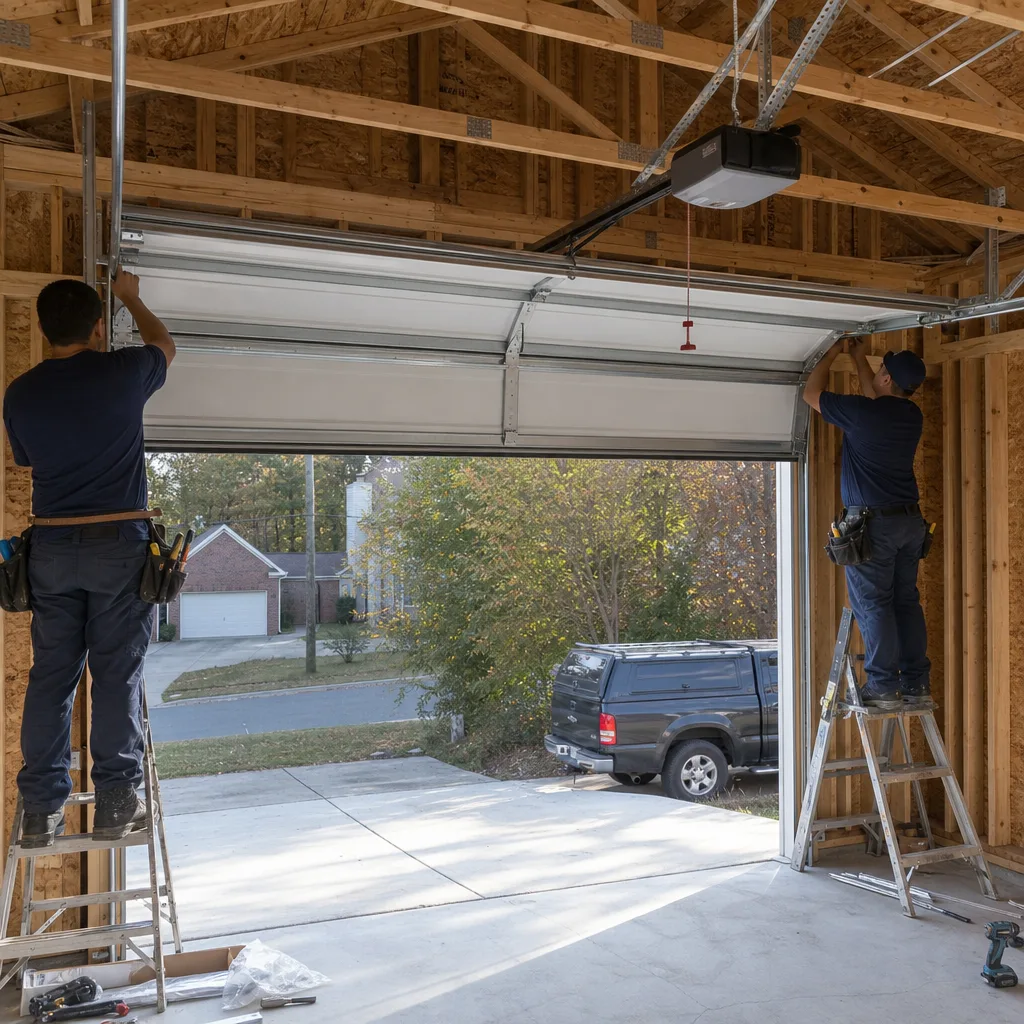
Some garage door work is genuinely dangerous for a homeowner to attempt. Broken torsion springs are at the top of that list. The stored energy in a wound spring is enough to cause serious injury if it releases unexpectedly. Cables under tension, a door off its track, and any work involving the opener’s electrical connections are also worth a trained technician.
If your door is making grinding noises, opening unevenly, or the spring has broken, do not attempt to fix it yourself. Servo Garage Doors McDonough offers free estimates for all repair and replacement work in McDonough and Henry County. Call (470) 928-4767 and we will give you a written price and scope before any work begins, so you know exactly what you are paying for.
Frequently Asked Questions
A complete double-car garage door replacement in McDonough typically costs $900 to $2,400 in 2026, including the panel, hardware, labor, and disposal. A single-car door runs $550 to $1,300. The total depends on the door material, gauge, insulation level, opener type, and whether the existing door needs to be hauled away. Call (470) 928-4767 for a free estimate with a written line-item price for your specific opening.
Torsion spring replacement in McDonough typically costs $180 to $340 per pair, installed, for standard 10,000-cycle springs. Upgraded springs rated for 20,000 to 30,000 cycles add $40 to $70 per spring. Spring replacement should always include new cables, which adds $30 to $60 to the total.
Yes, an opener can be replaced independently of the door. Opener replacement with a new belt-drive unit typically runs $350 to $550 installed in McDonough, depending on the brand and whether smart features like Wi-Fi and battery backup are included. If your current opener is over 10 years old and the door itself is also aging, replacing both together may be more cost-effective than doing them separately.
Labor for a standard garage door replacement in McDonough runs $250 to $600 depending on job complexity. A straight replacement with standard sizing is at the low end. A replacement that includes new tracks, new hardware, or re-squaring the opening is at the high end. New construction or opening modification starts at $500 for labor plus framing costs.
It should not, if you have a written quote. At Servo Garage Doors McDonough, the price quoted is the price you pay, because the scope is written before any work begins. Clause 1 of The Haven Standard requires a flat, written price and written scope on every job. That is why we photograph the failed component before quoting a replacement. If a competing quote does not have a written scope, the price can change when the technician finds something the quote did not include. Call (470) 928-4767 for a free estimate that is written, itemized, and binding before work starts.
Yes, our technicians carry common replacement parts on the truck, including torsion springs, cables, rollers, hinges, and opener components for major brands like LiftMaster, Chamberlain, Genie, Clopay, Amarr, Wayne Dalton, Craftsman, and Raynor. Most standard repairs are completed on the first visit. If a custom component is required, we tell you on the spot and schedule the follow-up.
Steel doors from Clopay and Amarr perform well in McDonough’s heat and humidity, provided the panel is at least 26-gauge and insulated. For openers, belt-drive units from Chamberlain and Genie are quieter options that hold up well in attached garages where the bedroom sits above the garage. The best brand is less important than the gauge, insulation level, and installation quality.
The Bottom Line
A McDonough homeowner replacing a garage door in 2026 should expect to spend $900 to $2,400 for a standard double door, with the final number depending on five cost categories: door panel, hardware, opener, labor, and disposal. The only way to compare quotes meaningfully is to normalize them to the same scope. A written, itemized quote with a documented scope prevents the scope creep that turns a $1,400 verbal estimate into a $1,900 final invoice. The cheapest installed price is rarely the cheapest ten-year cost. And in McDonough’s heat and humidity, the durable, insulated door is almost always the better buy.
Written by Marcus Deller, Owner at Servo Garage Doors McDonough, serving McDonough since 2015.