
Last updated September 20, 2026
Full 25-point door and opener safety check with every visit - springs, cables, rollers, tracks, and your LiftMaster or Chamberlain opener included
You get a price before we start. It does not change when the truck arrives.
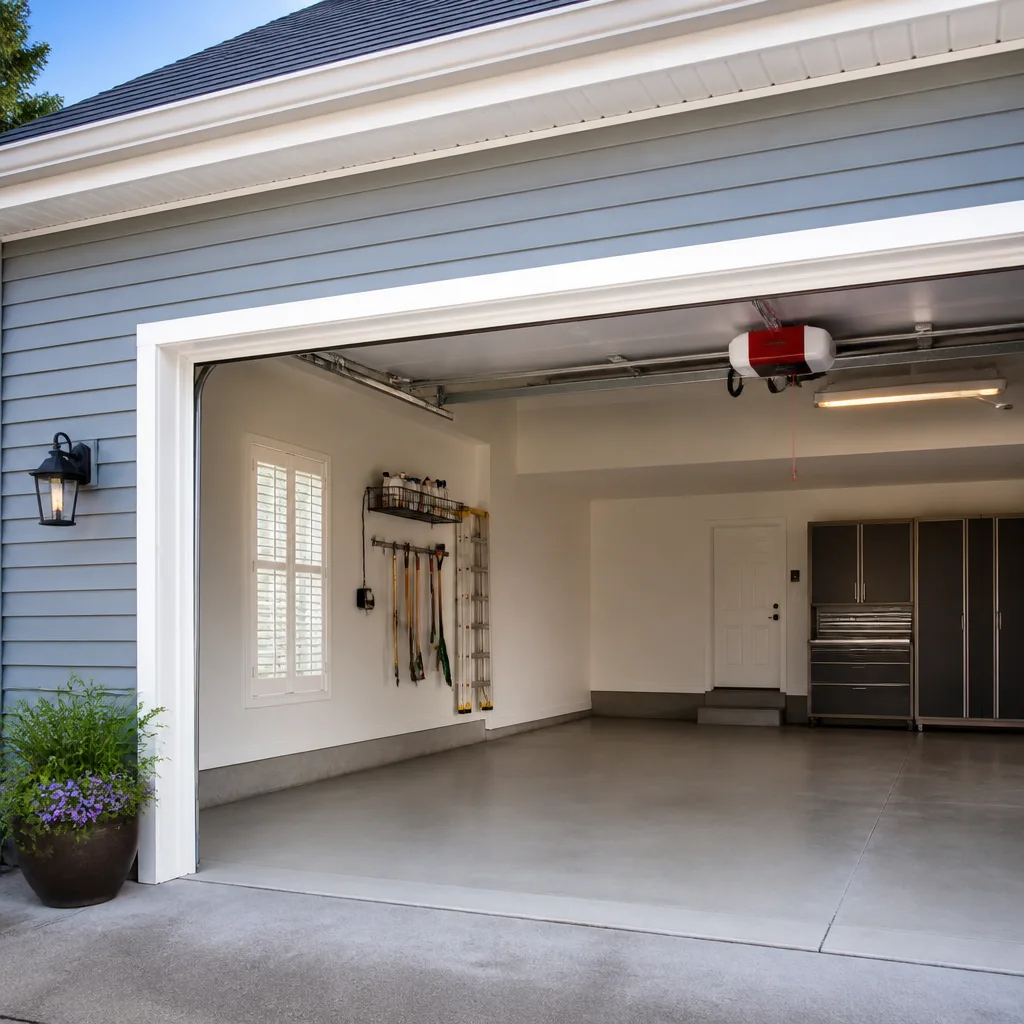
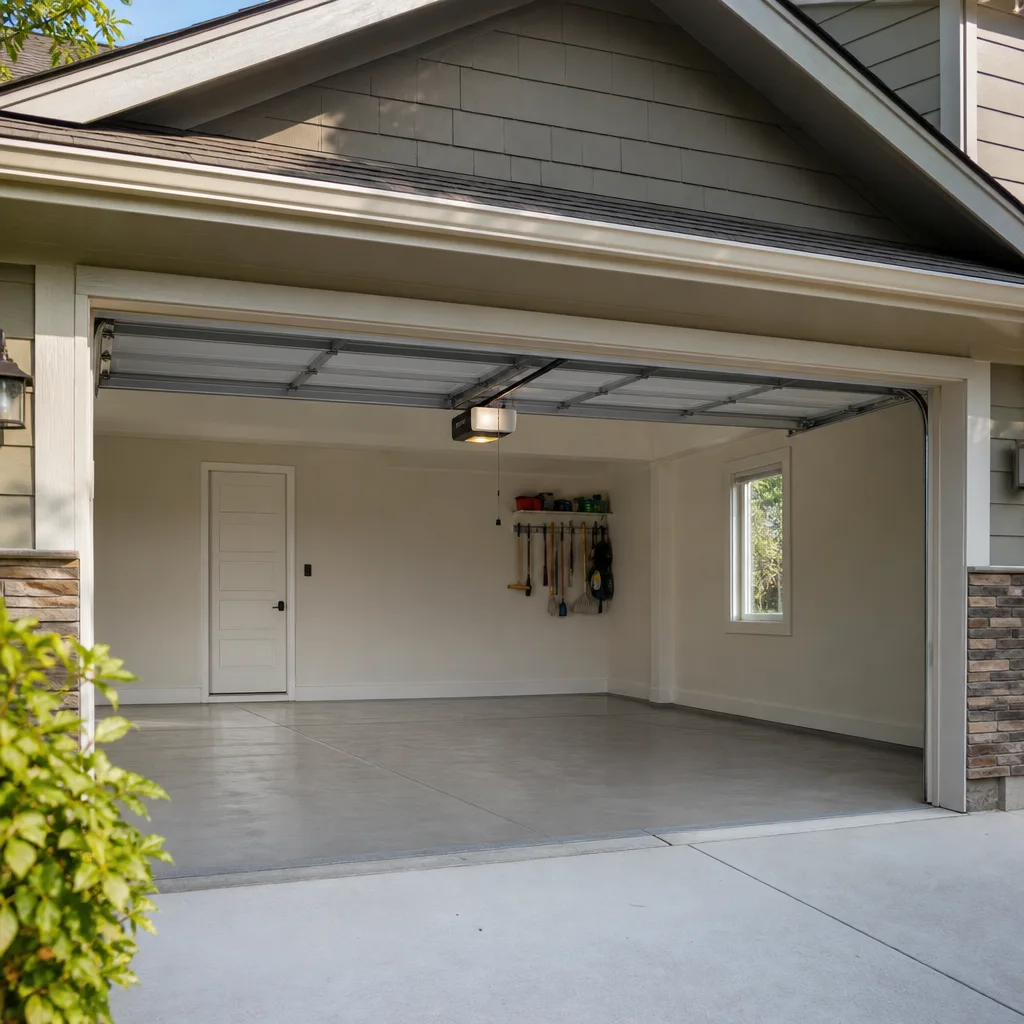
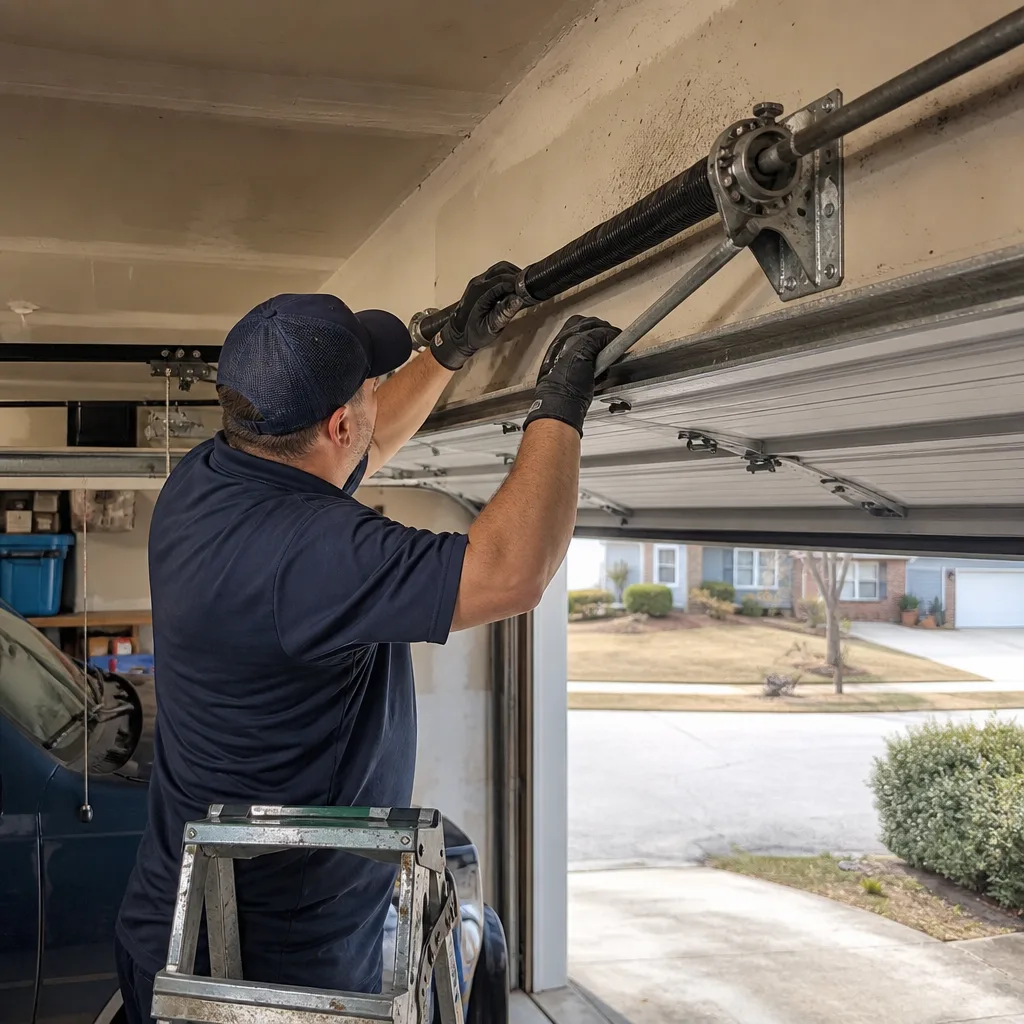 Before
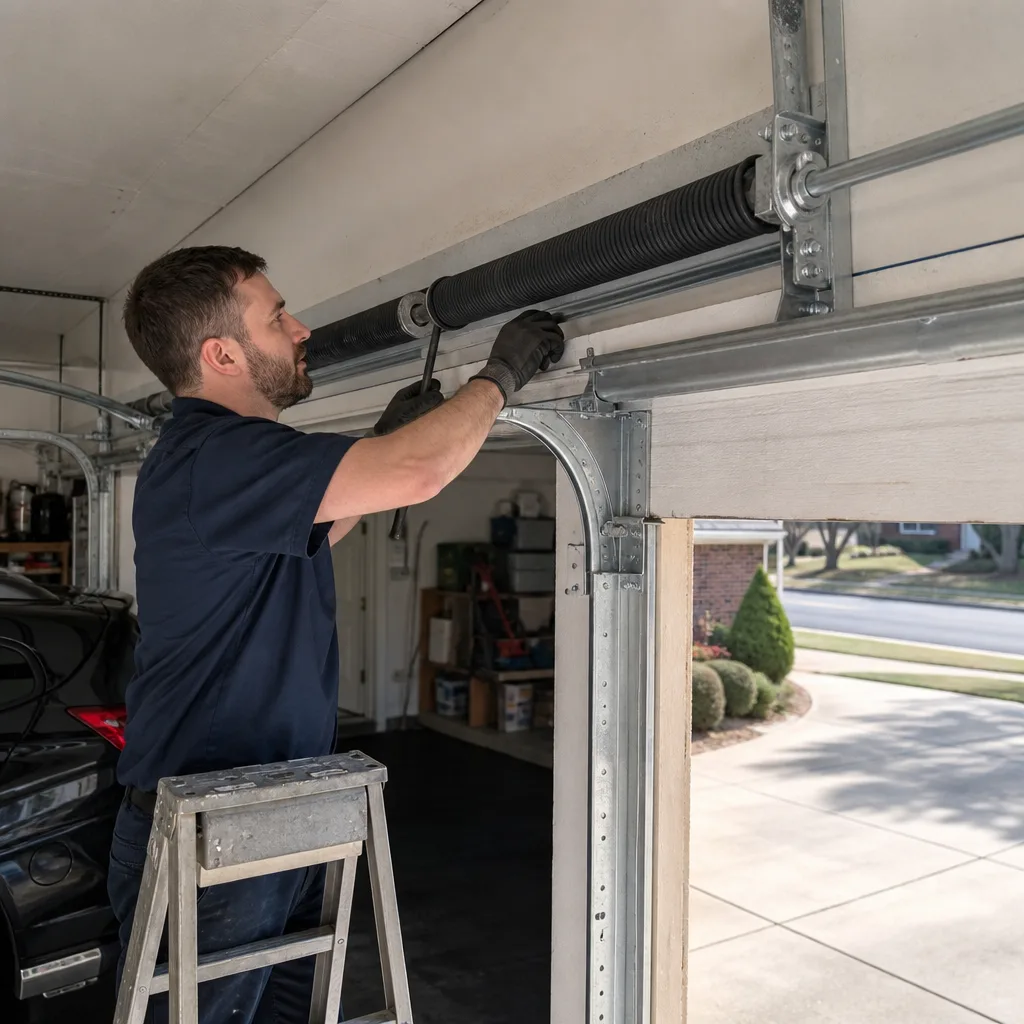 After
After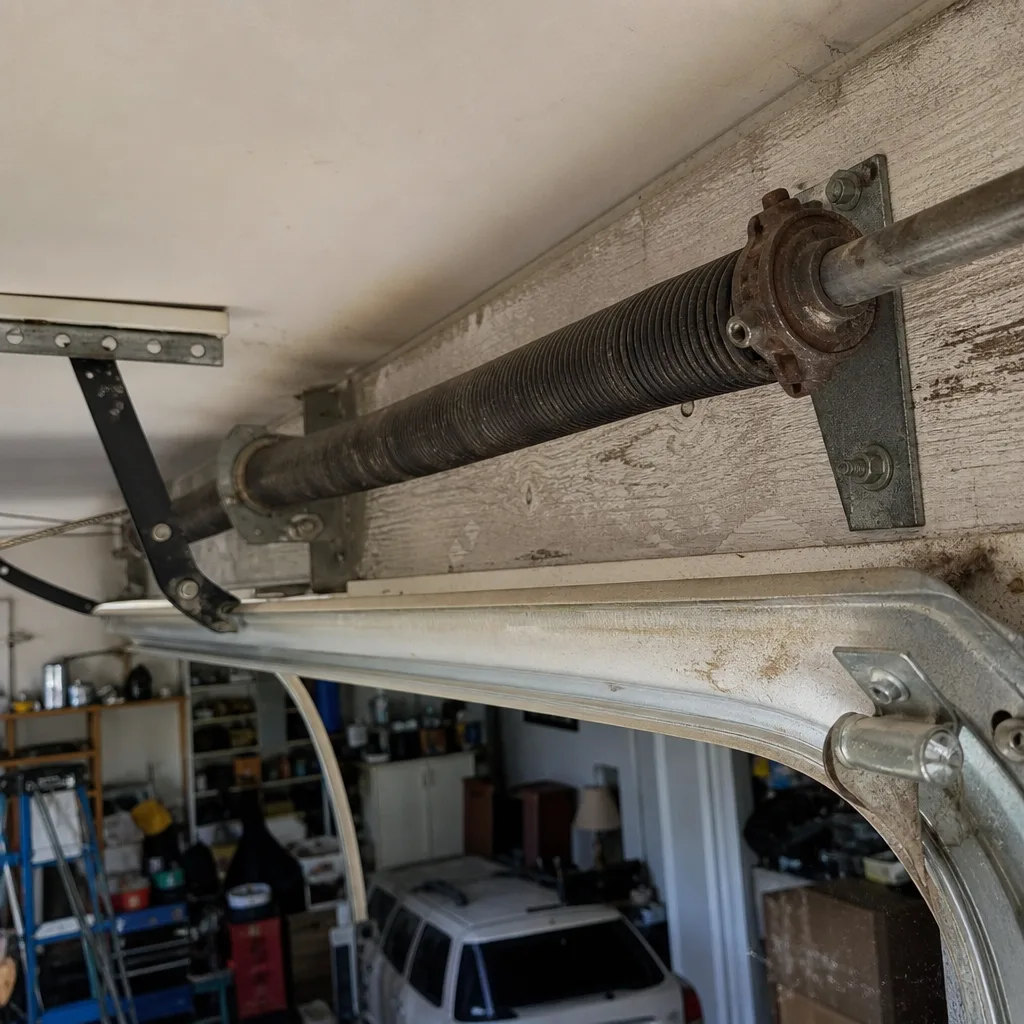 Before
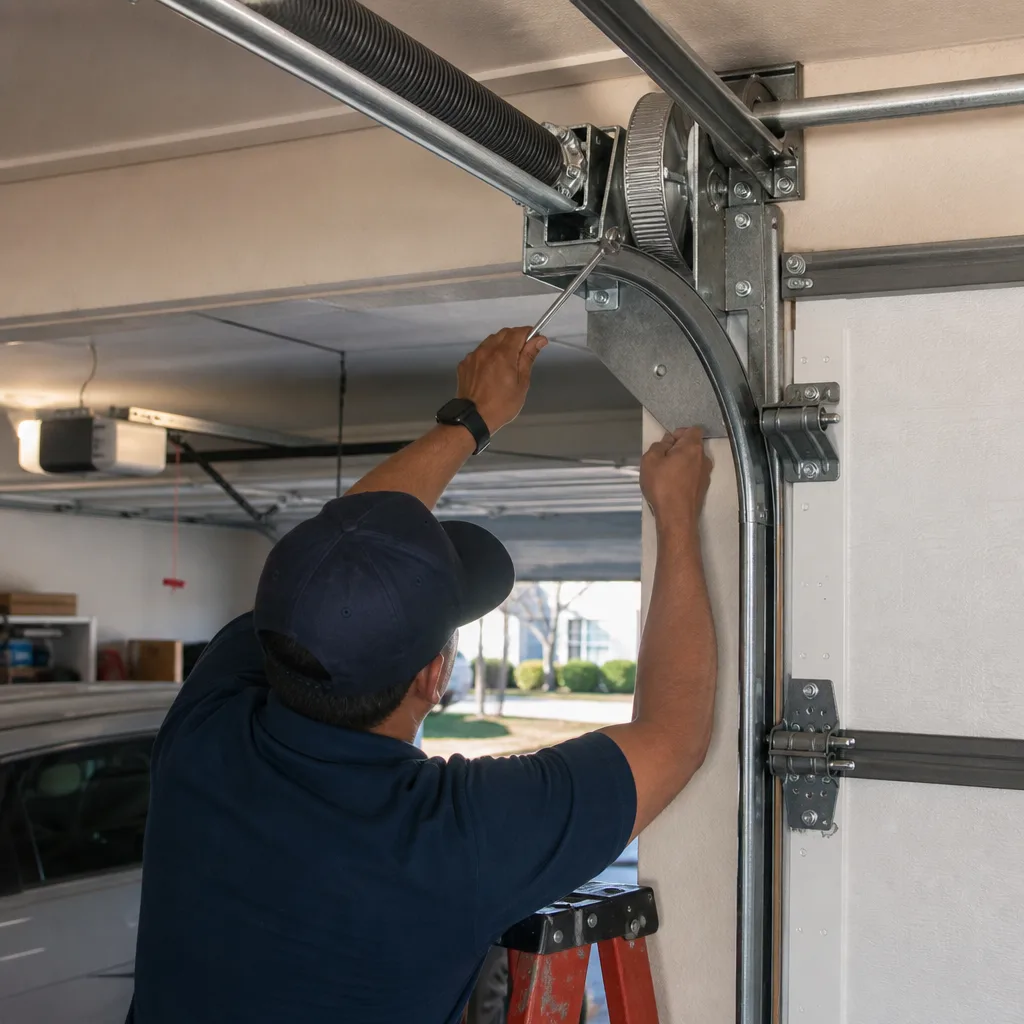 After
After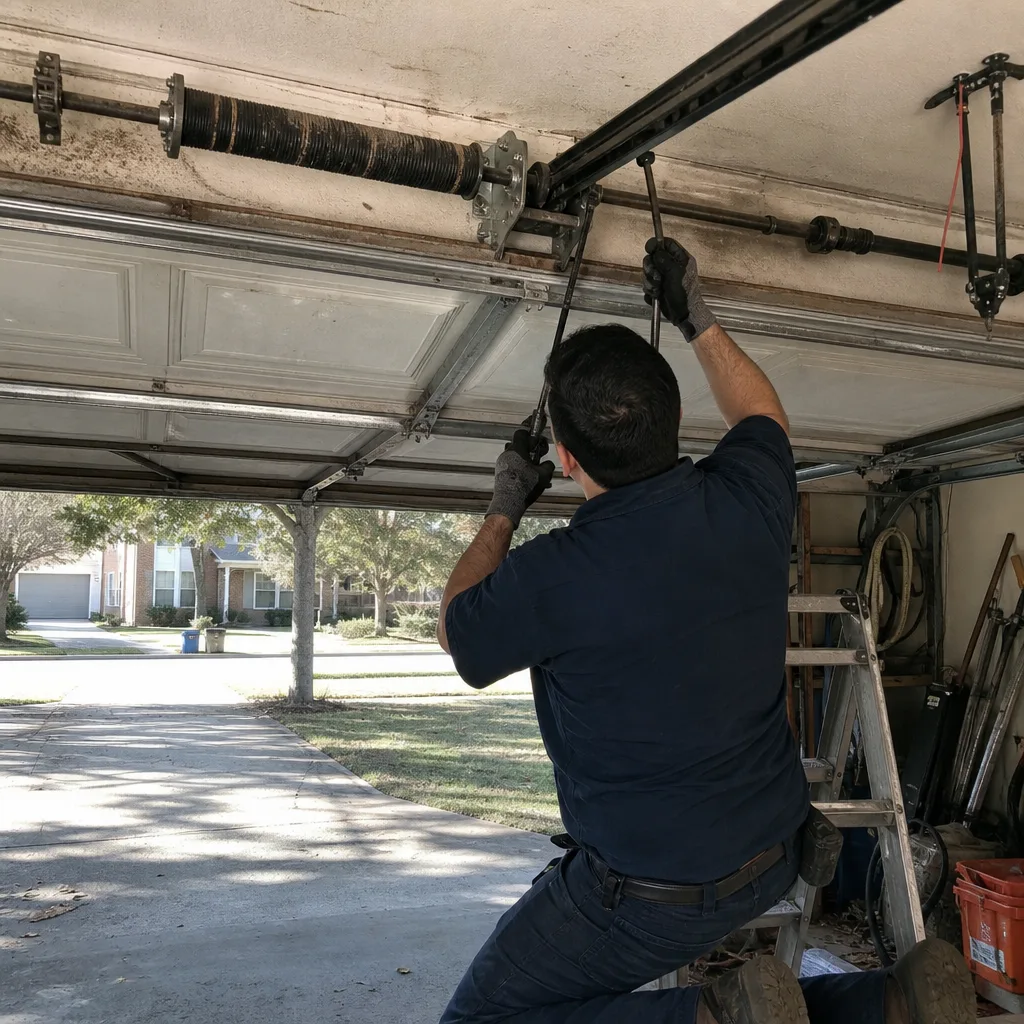 Before
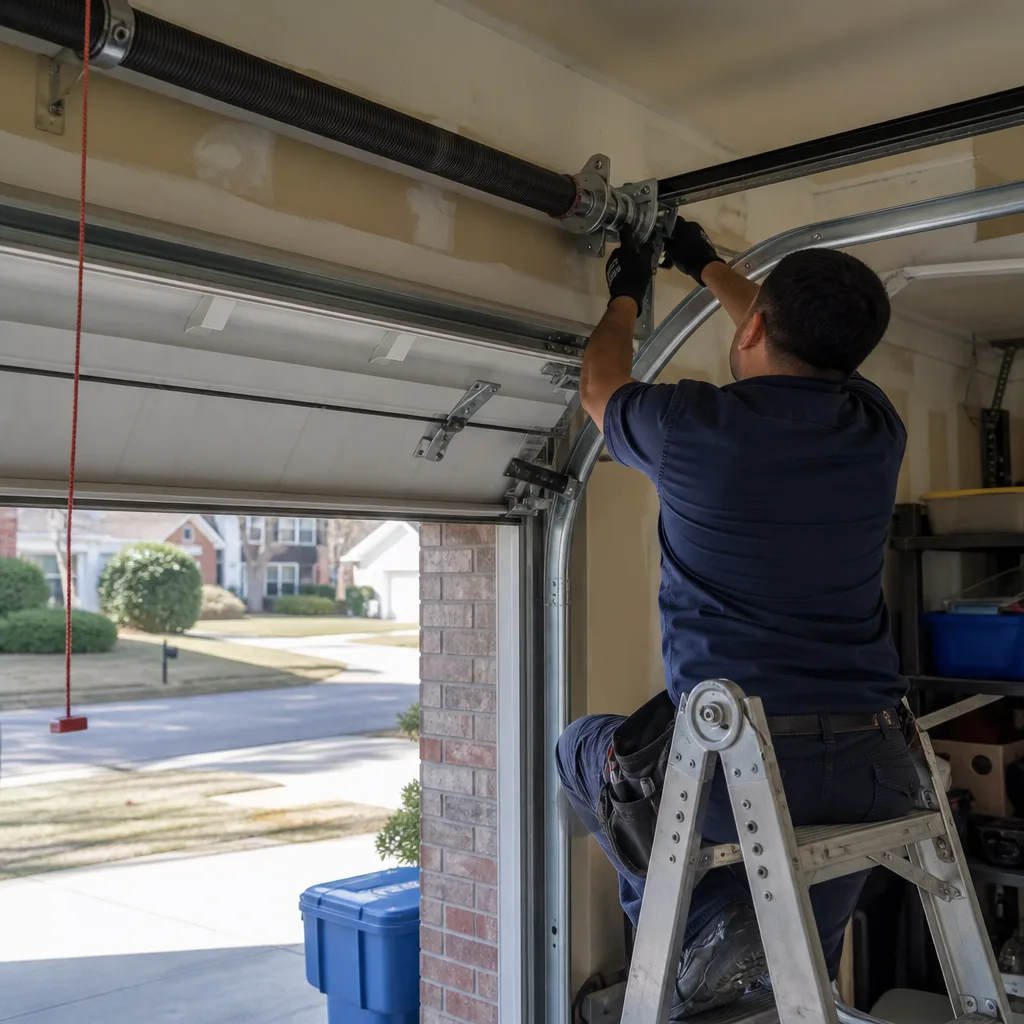 After
AfterGarage Door Permits, Codes & Inspections in GA: What You Need to Know
A garage door replacement can be completed, paid for, and forgotten in a single afternoon. Then it surfaces three years later as an unpermitted improvement flagged during a home sale inspection, requiring retroactive permits or a disclosure that quietly reduces your negotiating position. Most repair work in McDonough never triggers a permit. Most full replacements of the door and its framing do. The line between the two is not vague: it turns on a dollar threshold and whether anyone touches structural framing. This guide walks through both, section by section, so you know which side of the line your project sits on before you hire, and you can consult our step-by-step guide on hiring a garage door contractor in McDonough when you’re ready.
Quick Answer
In Georgia, garage door repairs (springs, cables, panels, openers) typically require no permit because they stay below the state’s $2,500 project-value threshold and do not alter structural framing. A full garage door replacement that involves new framing, header work, or a door opening that changes size will require a building permit in Henry County; see our Garage Door Warning Signs guide for McDonough homeowners to spot problems early. Most door-only swaps, where the existing opening and framing stay untouched, fall into a gray zone: the county evaluates them case by case, but the safest reading is that a new door with new track and new mounting hardware is a permitted job.
Table of Contents
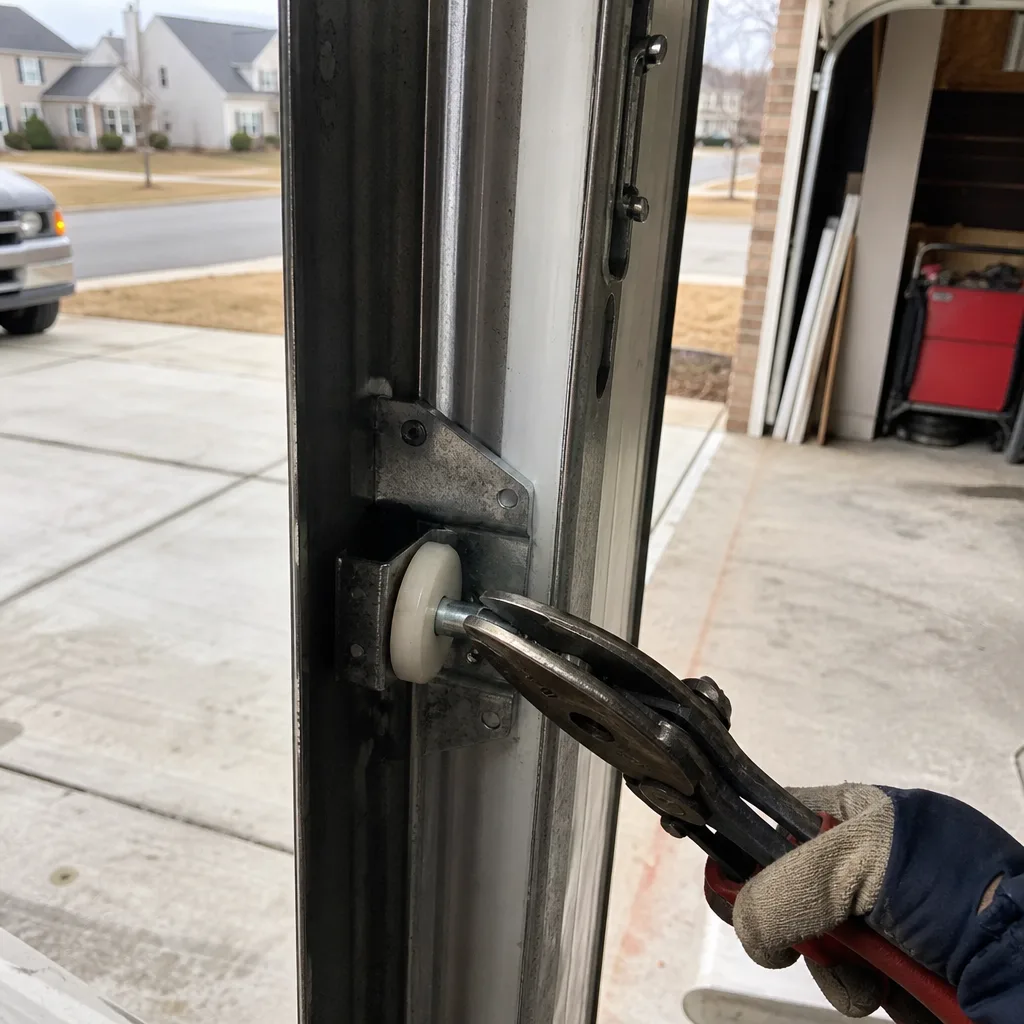
- The Dollar Threshold: What Georgia Law Actually Says
- How Henry County Enforces the State Code
- Fire-Rated Doors on Attached Garages: The 20-Minute Rule
- What Passing Inspection Actually Documents (and Why It Matters at Resale)
- Pulling the Permit Yourself When Your Contractor Won’t
- Structural Work vs. Cosmetic Work: Where the Line Sits
- Common Mistakes to Avoid
- When to Call a Professional
- Frequently Asked Questions
- The Bottom Line
BeforeAfterThe Dollar Threshold: What Georgia Law Actually Says
Georgia’s permit statute is built on a number, and that number is $2,500. Under the state’s building code framework (which adopts the International Residential Code for one- and two-family dwellings), any project whose total value, labor plus materials, meets or exceeds that figure requires a building permit from the local enforcing authority. Below $2,500, most jurisdictions treat the work as ordinary repair or maintenance and no permit is required. Henry County follows this threshold. McDonough, as a city within Henry County, enforces the same standard through the county’s building department rather than running its own separate code office.
The dollar threshold creates a scenario we’ve watched play out repeatedly in McDonough. A full garage door replacement, door plus track plus operator plus labor, routinely lands between $1,800 and $3,200 depending on door size, insulation, and brand. That means some replacements sit below the permit line and some sit above it. Contractors who understand this sometimes structure quotes to keep the documented project value under $2,500, which sounds helpful until you ask what the number leaves off: if the invoice understates the real scope, then the unpermitted work becomes visible only when a home inspector reads the door’s installation date as evidence of an unpermitted replacement. In our experience, it is rarely in the homeowner’s interest to have a job artfully priced just under the line if the actual work being performed is the same. The permit either applies or it doesn’t based on what actually happens, not what the quote says.
The threshold also applies to garage door openers in a specific way. An opener replacement alone, at $350 to $700 installed, stays well under $2,500. No permit. A new opener added to a door that never had one, wired into a new circuit, with a new outlet in the ceiling, crosses into electrical work. Electrical work has its own permit path under the code, separate from the general building permit, and Henry County does enforce electrical permits for new circuits. That distinction catches homeowners because it is not intuitive: you’re not changing the structure, but you are adding a circuit, and the circuit is what triggers the pull.
How Henry County Enforces the State Code
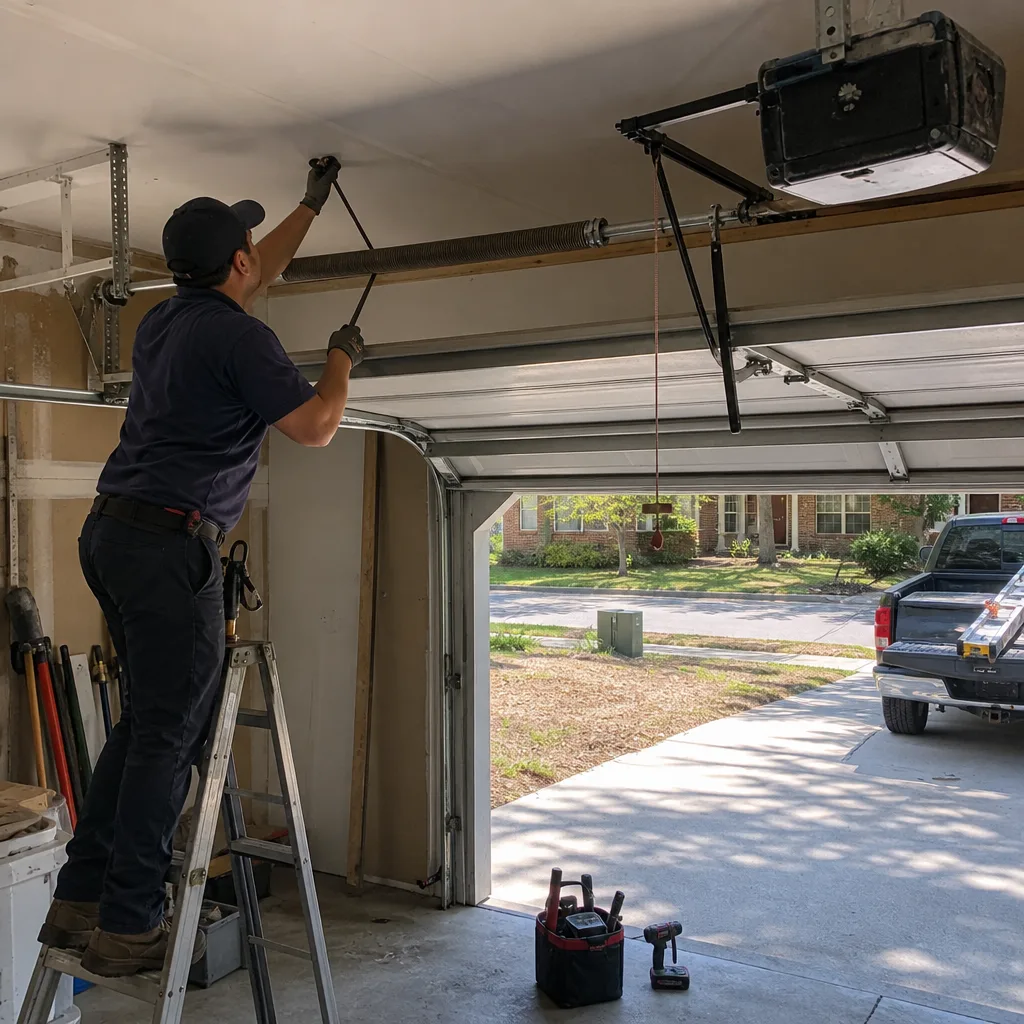
Henry County operates a consolidated building department that handles permits for both the unincorporated county and the city of McDonough. The governing document is the Georgia State Minimum Standard Building Code, which is the state’s amended adoption of the IRC, plus a set of local amendments the county publishes on its building department page. The department issues permits, schedules inspections, and maintains the public record of permitted work. For garage door work, the relevant enforcement question is whether the job is classified as alteration, repair, or replacement.
In our experience in Servo Garage Doors McDonough home service territory, the county treats the categories this way:
- Repair: Springs, cables, rollers, hinges, panels, sensors, gear kits, and circuit boards. No permit. No inspection. The county considers these routine maintenance because the door’s structural components (track, mounting, framing, header) remain in place.
- Replacement of the door only: New sections on existing track, same size and weight class. The county has historically not required a permit for this when the project stays under the $2,500 threshold, though the cautious reading is that a door with a significantly different weight (switching from a single steel door to an insulated double-layer or solid wood door) may warrant a call to the county to confirm.
- Replacement of the door, track, and mounting hardware: This changes loads on the header and framing. The county treats this as an alteration, and alteration triggers a permit when the value meets the threshold or when the opening size changes.
- New opening or resized opening: Always a permit. There is no dollar threshold small enough to exempt structural framing changes.
The practical takeaway for a McDonough homeowner: if you can describe what is being replaced as a part that wears out, you are almost certainly in the no-permit category. If you are changing what the door hangs from, assume a permit is required until the county says otherwise. Calling ahead costs ten minutes. The county building department’s staff answer the phone, and their answer carries more weight than what a contractor promises at the kitchen table.
Fire-Rated Doors on Attached Garages: The 20-Minute Rule
The International Residential Code, as adopted by Georgia, requires that any door between a garage and a dwelling unit be a 20-minute fire-rated door. That applies to the door from the garage into the house, not to the vehicle door itself. The vehicle door on an attached garage has a different requirement: under the 2018 IRC (and the Georgia amendments), the door separating the garage from the outside is not required to be fire-rated, but the wall and ceiling assembly between the garage and any habitable room above or beside it must maintain a separation. What the vehicle door does affect is airflow, and that is where the code catches people in McDonough specifically.
Georgia’s hot, humid summers mean attached garages trap heat. Homeowners install ventilation panels or modify the bottom weather seal to increase airflow, and the modification undermines the garage’s function as a buffer between vehicle fumes and living space. The code does not prohibit vents, but it does require that the garage maintain a separation from the living area through the door, the walls, and the ceiling. A door with a damaged bottom seal or missing weatherstripping is not just an energy problem; in the event of a fire in the garage, it becomes an oxygen source and a smoke path. The code’s intent is that fire and fumes do not move freely from the garage into the house.
How to verify a fire-rated door’s rating label: every rated door carries a label, usually stamped or embossed on the hinge edge or the top edge, from a recognized testing agency (UL, Intertek, or Warnock Hersey). The label reads “20 MIN” or “20 MINUTE” and includes the manufacturer’s name. Doors from Clopay, Amarr, and Wayne Dalton that are sold as residential garage-to-house doors carry this label. If you look at the edge of your existing door and see no label, the door is either unpainted on that edge (the label may be painted over) or was not sold as a rated door. In McDonough, where many homes were built in the last fifteen years during the construction boom that followed the 2008 downturn, we occasionally find doors that were swapped during a quick sale fluff-and-flip and replaced with something unrated. That is exactly the kind of issue a home inspector flags at resale.
What Passing Inspection Actually Documents (and Why It Matters at Resale)
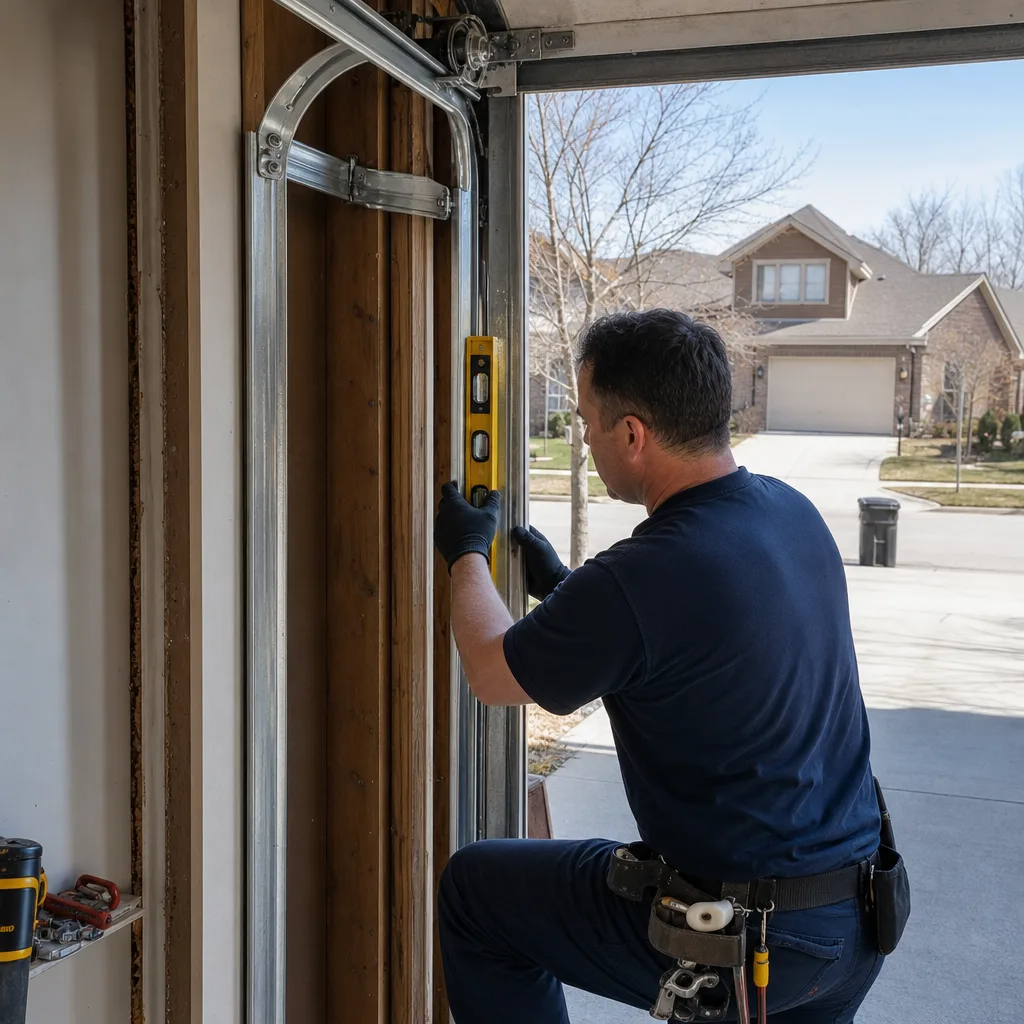
When a permitted garage door installation passes its final inspection, the county produces a record that lives in the public permitting database. That record shows the permit number, the date the work was performed, the scope as written on the permit application, and the inspector’s sign-off. It is not a warranty. It is evidence. And at resale, evidence is what a buyer’s agent and a buyer’s home inspector look for.
In Henry County, a passed inspection on a garage door replacement documents three things:
- The work existed at the date of inspection and was visible. This matters when a seller’s disclosure asks whether any improvements were made without a permit. A passed inspection means the answer can be “permitted and inspected.”
- The installation met the code in force at that time. Codes change. A door installed in 2018 and inspected in 2018 is grandfathered against later code changes. An unpermitted door installed in 2018 has no grandfathering protection because it was never a legal installation to begin with.
- The door’s fire rating, if applicable, was verified by the inspector. Inspectors in Henry County check the label. They check it because the code requires it, and because unrated doors are one of the most common findings on failed final inspections for garage work.
The insurance value is less obvious but real. If a fire starts in a garage and spreads through an unrated, unpermitted door into the living space, the insurer’s investigation will ask when the door was installed and who installed it. A permitted, inspected door answers that question with documentation. An unpermitted door puts the homeowner in the position of proving a negative. For the cost of a permit (Henry County’s fee schedule puts residential alteration permits in a modest range, typically under $200), the documentation is the least expensive insurance against the most expensive conversation.
We installed a door in McDonough’s Lake Dow corridor where the homeowner’s previous door had been replaced by the prior owner without a permit. The buyer’s inspector flagged the lack of a permit record. The seller’s agent called us to quote a retroactive permit and inspection, which is not always possible: once work is covered by drywall or finished surfaces, the inspector cannot verify what he cannot see. In that case, the work was visible enough that the county did issue a retroactive permit. The seller paid more for the retroactive path than they would have for the original permit, and the closing delayed by three weeks. That is the unpermitted-improvement scenario playing out exactly as the real estate attorneys describe it.
Pulling the Permit Yourself When Your Contractor Won’t
Some contractors are comfortable quoting the work but not pulling the permit. The stated reasons vary: the permit process slows the schedule, the county inspector is difficult, the job doesn’t really need one. The underlying reality is usually simpler: the contractor doesn’t want the county’s eyes on the work, or doesn’t carry the license that Henry County requires for a contractor to pull a permit in their own name.
Georgia law allows a homeowner to pull a permit for work on their own primary residence, provided the homeowner will occupy the home. That is the homeowner permit path. Taking it changes the legal arrangement in ways most homeowners don’t realize until something goes wrong:
- The homeowner becomes the general contractor of record. The permit is issued in the homeowner’s name. The county’s communication comes to the homeowner. The inspection schedule is the homeowner’s responsibility to manage.
- The contractor is now a subcontractor to the homeowner. If the contractor is injured on the job, the homeowner’s liability exposure changes. The contractor’s own workers’ compensation policy may not cover a job where the contractor is a sub to the homeowner instead of the prime. Some contractors carry policies that only respond when the contractor is the permit holder.
- The final inspection is the homeowner’s responsibility to schedule. If the contractor leaves the job and the final inspection never happens, the permit remains open. An open permit is discoverable at resale and creates the same disclosure problem the homeowner tried to avoid.
- The board’s communication comes to you, not the contractor. If the inspector finds a code violation, the homeowner receives the correction notice. The homeowner then has to chase the contractor for the fix.
None of this means a homeowner shouldn’t pull their own permit. It means the decision should be made with eyes open. If a contractor in McDonough won’t pull a permit for work that clearly requires one, and the homeowner chooses to pull it themselves, the homeowner should get the contractor’s proof of insurance and workers’ compensation coverage in writing before the first day of work. A contractor who won’t pull a permit and won’t provide proof of insurance is not a contractor you want standing on your property with a ladder.
Structural Work vs. Cosmetic Work: Where the Line Sits
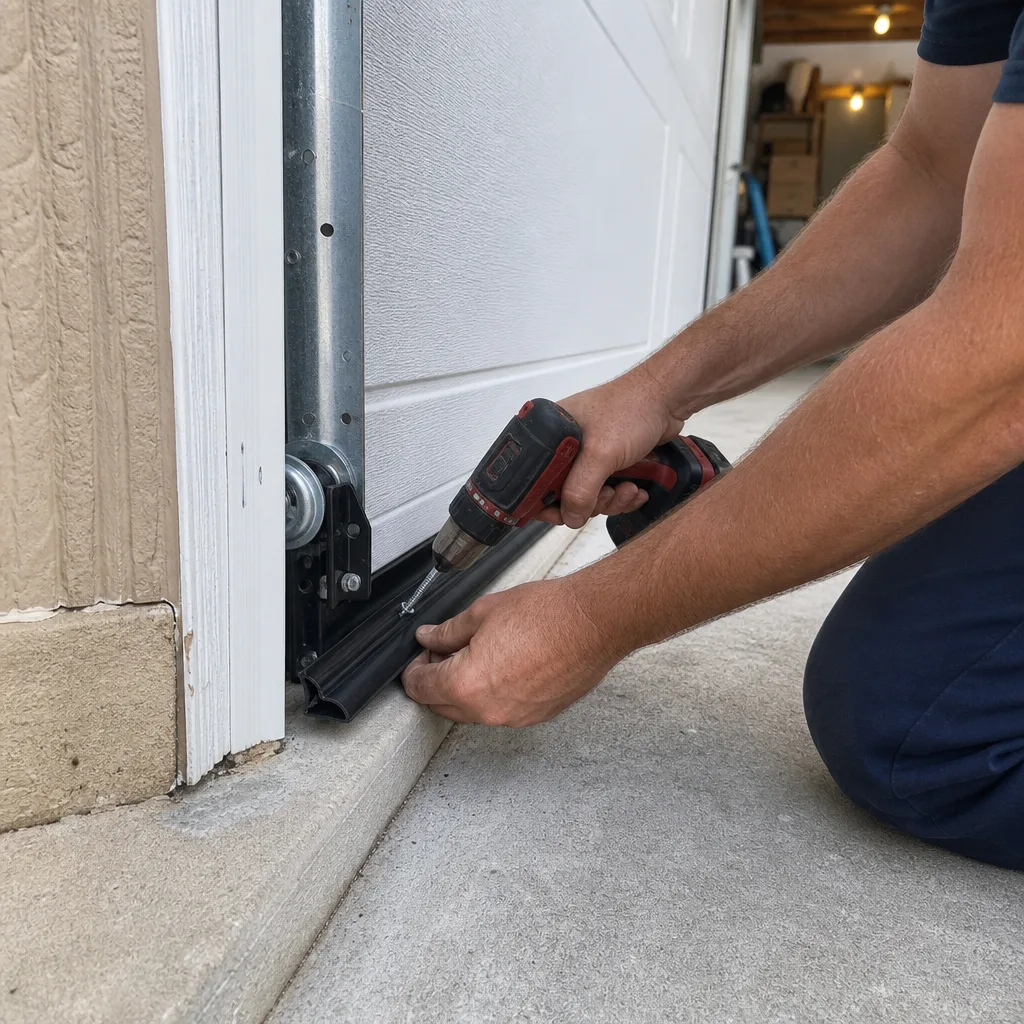
The $2,500 threshold is the clearer line. The structural line is fuzzier, and it is the one that produces the most phone calls to the county building department. Here is how the line actually sits in practice for garage door work in Georgia and in Henry County:
Cosmetic or wear-and-tear work (no permit, no inspection):
- Torsion spring replacement (springs wear out; replacement is maintenance)
- Extension spring replacement (same category)
- Cable replacement
- Roller and hinge replacement
- Weatherstripping and bottom seal replacement
- Panel replacement (same-size panel on existing track)
- Opener motor replacement (same mount, same electrical connection)
- Sensor realignment and replacement
Structural or opening-changing work (permit, final inspection):
- New door opening cut into an existing wall
- Resizing an existing opening (widening or raising the header)
- Replacing the header above the door (even at the same size, if the header comes out, the structural member is changed)
- Changing the door from a tension-spring design to a torsion-spring design that requires new mounting pads on the framing
- Installing a door in a previously unfinished carport enclosure
- Adding a garage door to a detached structure that previously had none
Between the two lists sits the gray zone: a complete door replacement on existing framing, same opening size, with new track and new mounting hardware. In our experience, Henry County has not been aggressive about requiring permits for this when the project stays under the threshold and the opening is unchanged. But the county’s answer can change depending on which reviewer you speak with, and the safer route is to ask in writing before work starts. An email to the building department with a one-sentence project description and “is a permit required for this scope?” produces an answer you can keep. A verbal “nobody pulls permits for that” from a contractor does not.
Common Mistakes to Avoid
- Assuming a door replacement under $2,500 automatically needs no permit. The dollar threshold is only half the test. If the install includes header modification, the opening change controls regardless of price. Resizing a garage door opening is structural work at any project value.
- Letting a contractor structure the quote to stay just under the threshold. A quote that carefully lands at $2,450 for a door replacement that would normally run $2,800 to $3,000 on a documented scope should raise a question: what’s being left off the invoice? Understated project value does not erase the need for a permit; it erases the paper trail that protects the homeowner.
- Installing a garage-to-house door without checking the fire label. In McDonough, we see this most often in homes sold after a quick investor rehab. The replacement door looks identical from the living room side. On the edge, there’s no 20-minute label, which means the fire separation required by the IRC is gone.
- Confusing a motor swap with a new electrical circuit. Replacing an opener motor on an existing outlet is no-permit work. Adding an outlet in the garage ceiling to serve a new opener is electrical work, and electrical work has its own permit path. Homeowners sometimes learn this only when the opener’s install is complete and the inspector reads the new circuit as unpermitted electrical.
- Buying a home with an unpermitted door replacement and assuming it’s grandfathered. Unpermitted work is never grandfathered. It was never legal to begin with. The home’s sale may proceed, but the disclosure burden passes to the new owner, and the new owner will face the same question at their own resale.
- Pulling a homeowner permit without verifying the contractor’s insurance. Once you pull the permit, you are the general contractor. If the person on the ladder has no workers’ compensation coverage, the exposure is yours. Ask for the certificate of insurance before the permit is issued, not after the work starts.
When to Call a Professional
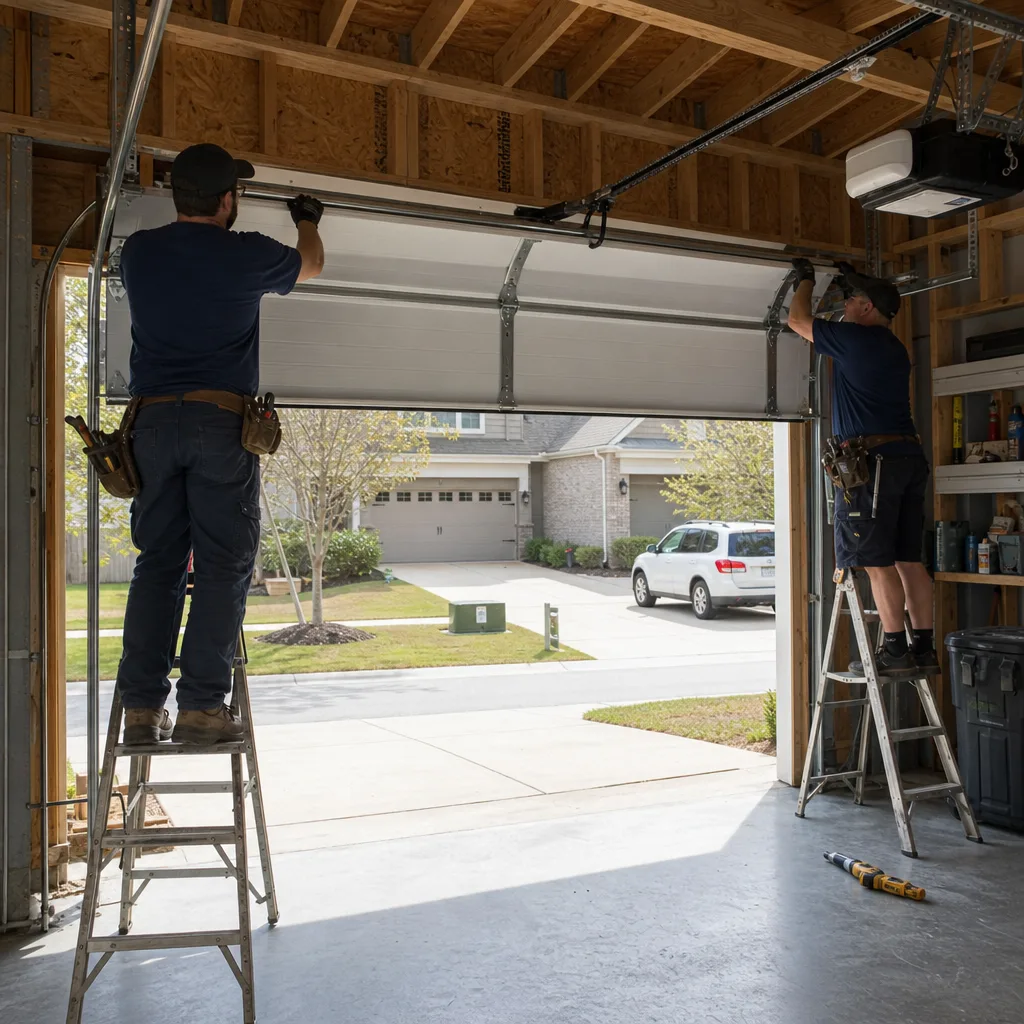
If your project involves anything beyond routine part replacement, a licensed contractor who understands Henry County’s permit process is the difference between a documented job and a disclosure problem. Specifically: you should call a professional when the door opening changes size, when the header above the door is touched, when the door weight changes significantly (steel to wood, single-layer to double-insulated), when a garage-to-house door is replaced and the fire rating matters, or when the project value approaches or exceeds $2,500. The code questions are answerable without hiring anyone, but the installation that follows needs someone who does this work in McDonough regularly and knows what the county inspector will look for. Servo Garage Doors McDonough offers free estimates in McDonough, with a flat written price and a written scope before any work starts. Call (470) 928-4767.
Frequently Asked Questions
You need a permit if the project value is $2,500 or more, or if the work includes structural changes to the opening, header, or framing. A straightforward door-only replacement on existing framing under the threshold typically does not require a permit in Henry County, but we recommend confirming the county’s position in writing before work starts. Call us at (470) 928-4767 for a written scope and price that makes the permit question clear, or explore more guides & resources on our blog.
Henry County’s residential alteration permit fees are based on the project valuation and typically run from around $75 to $200 for a garage door replacement in the $2,500 to $4,000 range. The exact fee depends on the county’s current fee schedule and the project’s stated value. We include the permit cost as a line item in our written scope rather than burying it in the labor.
No, replacing an existing opener motor on an existing electrical outlet is routine maintenance and does not require a permit. Adding a new opener where one never existed, and the wiring for a new outlet, triggers the electrical permit path because it adds a circuit. If you’re not sure which situation applies to your McDonough home, call (470) 928-4767 and we’ll tell you what we’d be doing before anyone touches a ladder.
A 20-minute fire-rated door, required between an attached garage and the living space, is designed and tested to resist fire passage for twenty minutes under laboratory conditions. The rating is documented on a label from a recognized testing agency on the door’s edge. The vehicle door facing the driveway is not required to be fire-rated, but the garage-to-house door is.
Yes, Georgia allows a homeowner to pull a permit for work on their own primary residence. That makes you the contractor of record and shifts inspection scheduling, liability, and final-inspection responsibility to you. If your contractor won’t pull the permit, ask for their proof of insurance in writing before you decide whether the homeowner-permit route makes sense for your situation.
Sometimes. Henry County can issue a retroactive permit after the fact when the work is visible and the inspector can verify what was done. If the work is covered or altered, retroactive approval becomes more difficult or impossible. The retroactive process is more expensive than the original permit and frequently adds weeks to a closing timeline. The cheapest permit is the one pulled before the work starts.
The Bottom Line
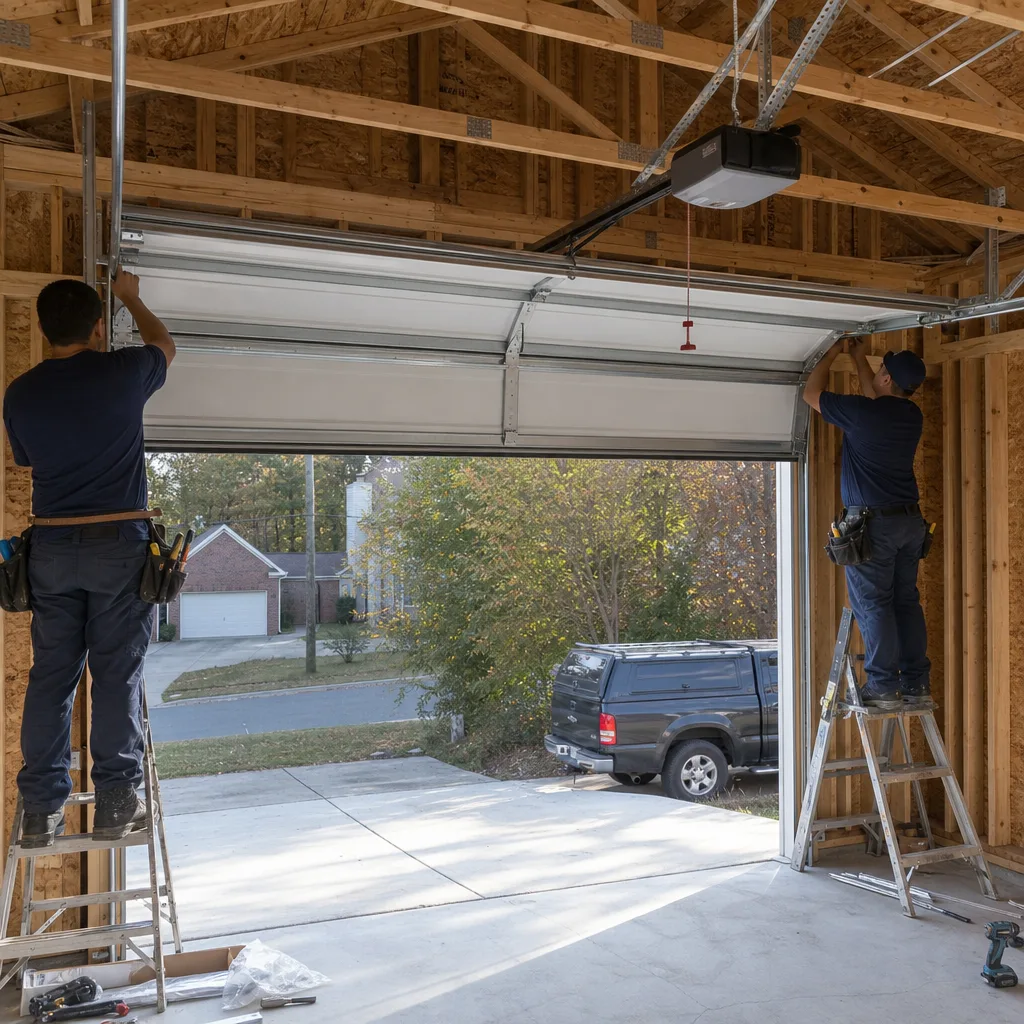
The permit question in Georgia comes down to two tests: project value relative to the $2,500 threshold, and whether structural framing changes. Most garage door repairs in McDonough never need a permit. Most full replacements sit close enough to the line that the answer deserves a phone call to Henry County’s building department rather than a guess. Fire-rated doors on attached garages are a code requirement with resale and insurance consequences that outlast the installation day. Documentation matters: a passed inspection is a public record that protects you at closing, and an unpermitted replacement is a disclosure problem that follows the house. Pull permits when they apply, ask for them in writing when they don’t, and never accept a quote that structures around the threshold instead of answering it honestly. For a flat written price and scope on any garage door project in McDonough, call (470) 928-4767. The estimate is free, and the documentation is what you leave with.
Written by Marcus Deller, Owner at Servo Garage Doors McDonough, serving McDonough since 2015.