
Last updated September 20, 2026
Full 25-point door and opener safety check with every visit - springs, cables, rollers, tracks, and your LiftMaster or Chamberlain opener included
You get a price before we start. It does not change when the truck arrives.
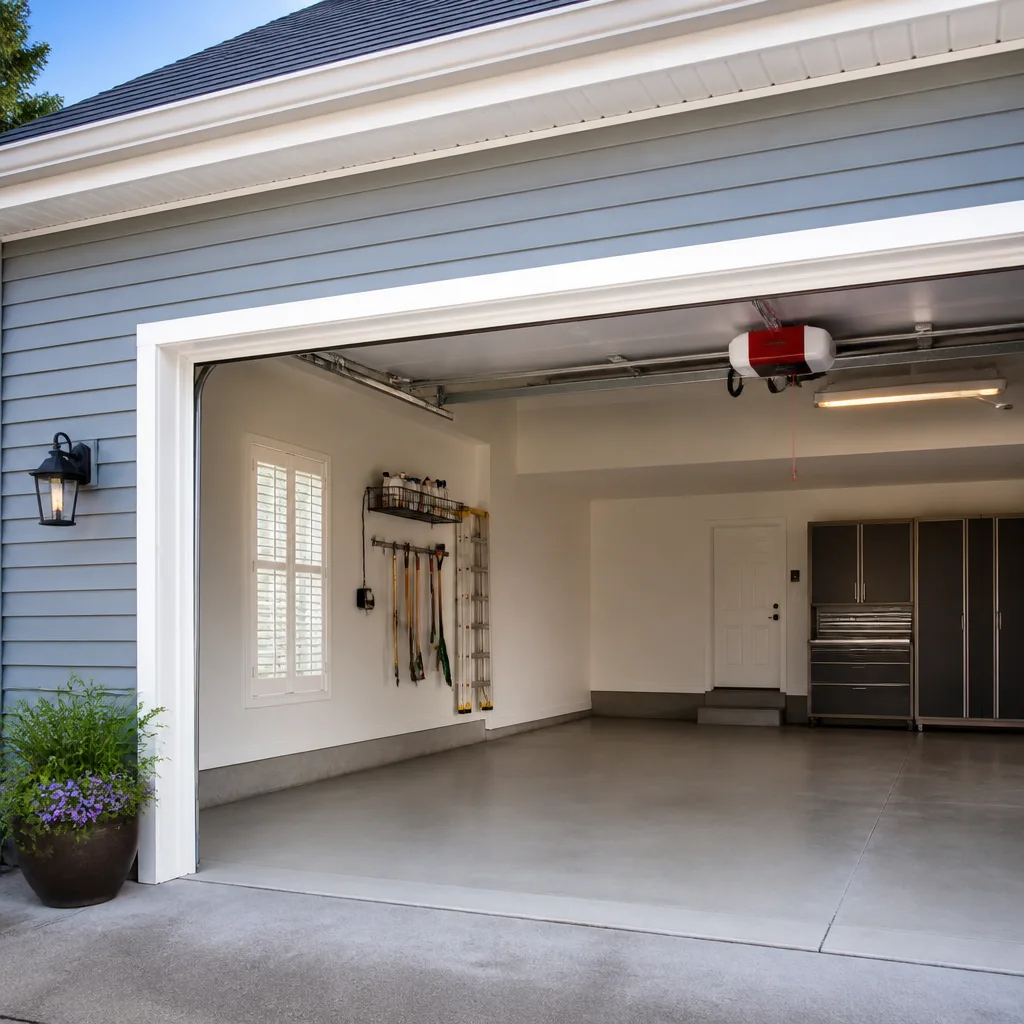
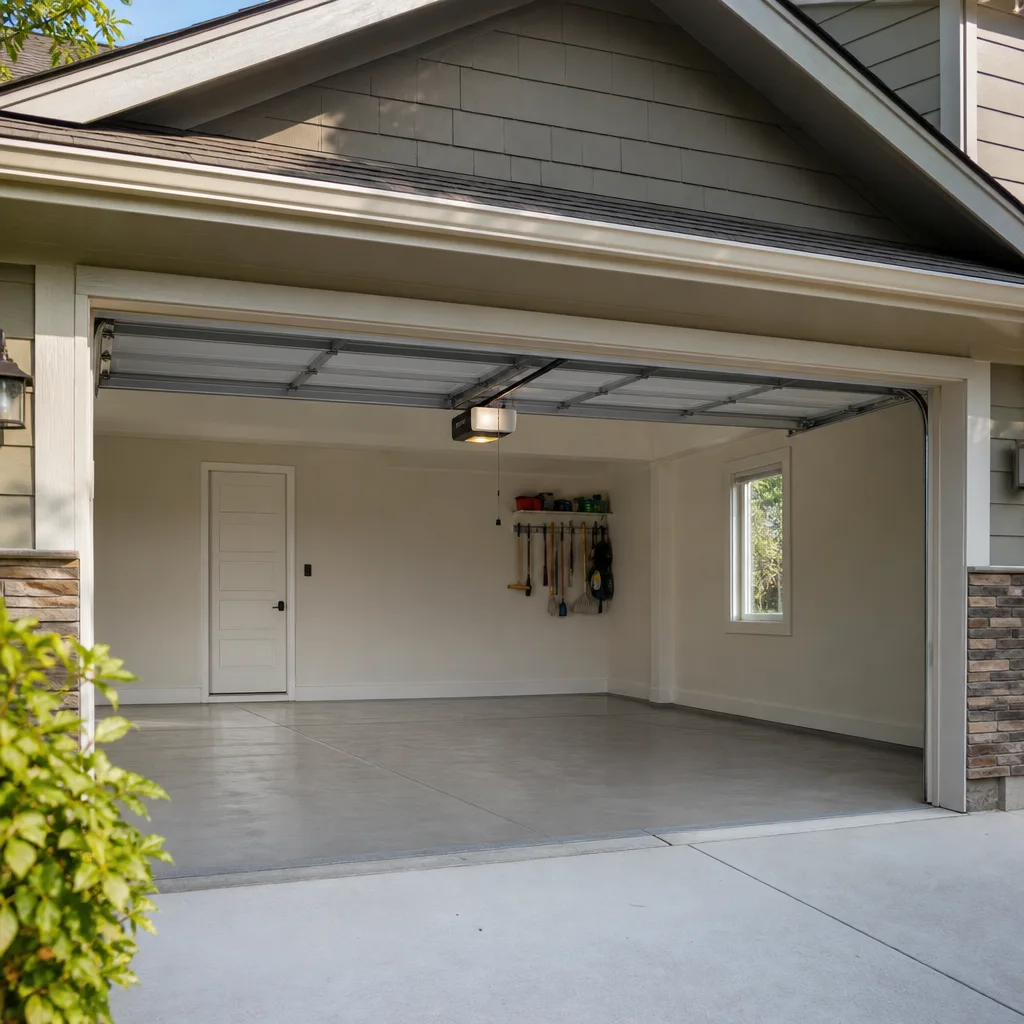
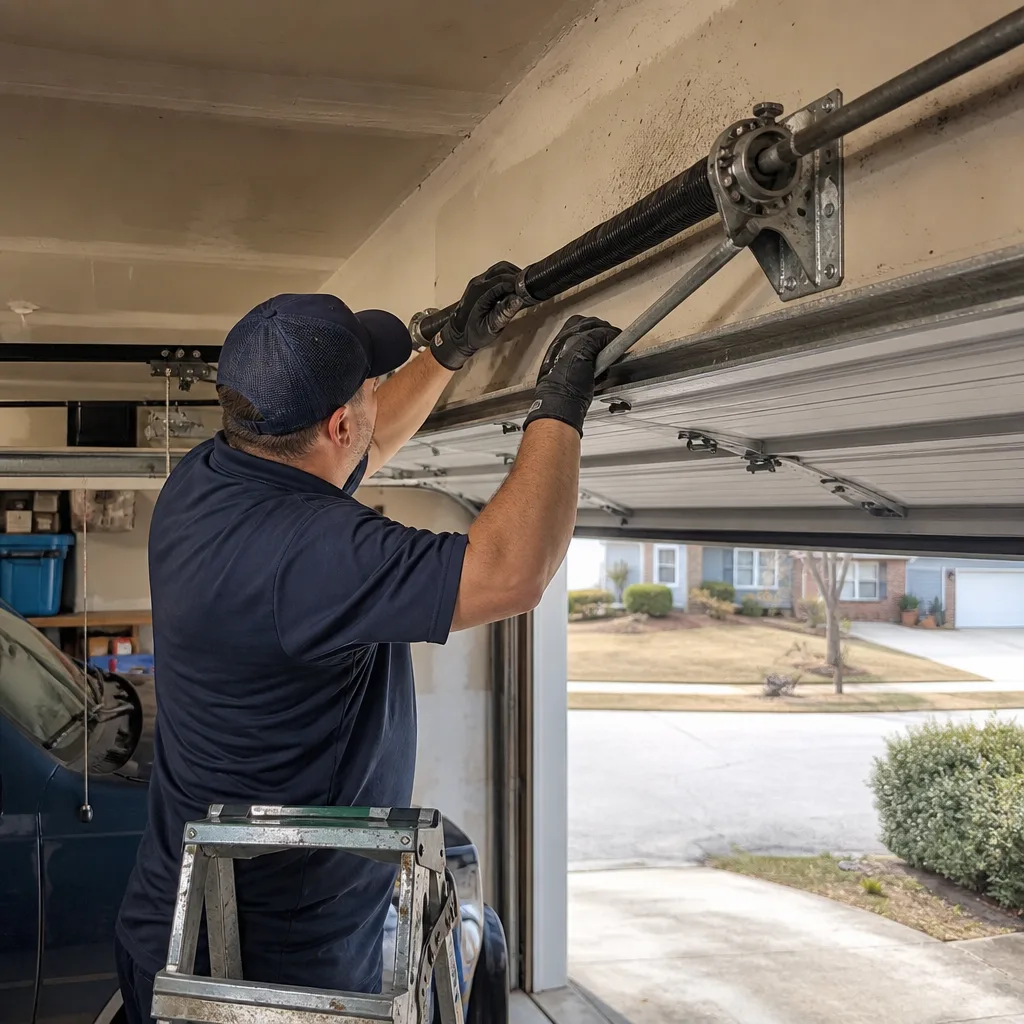 Before
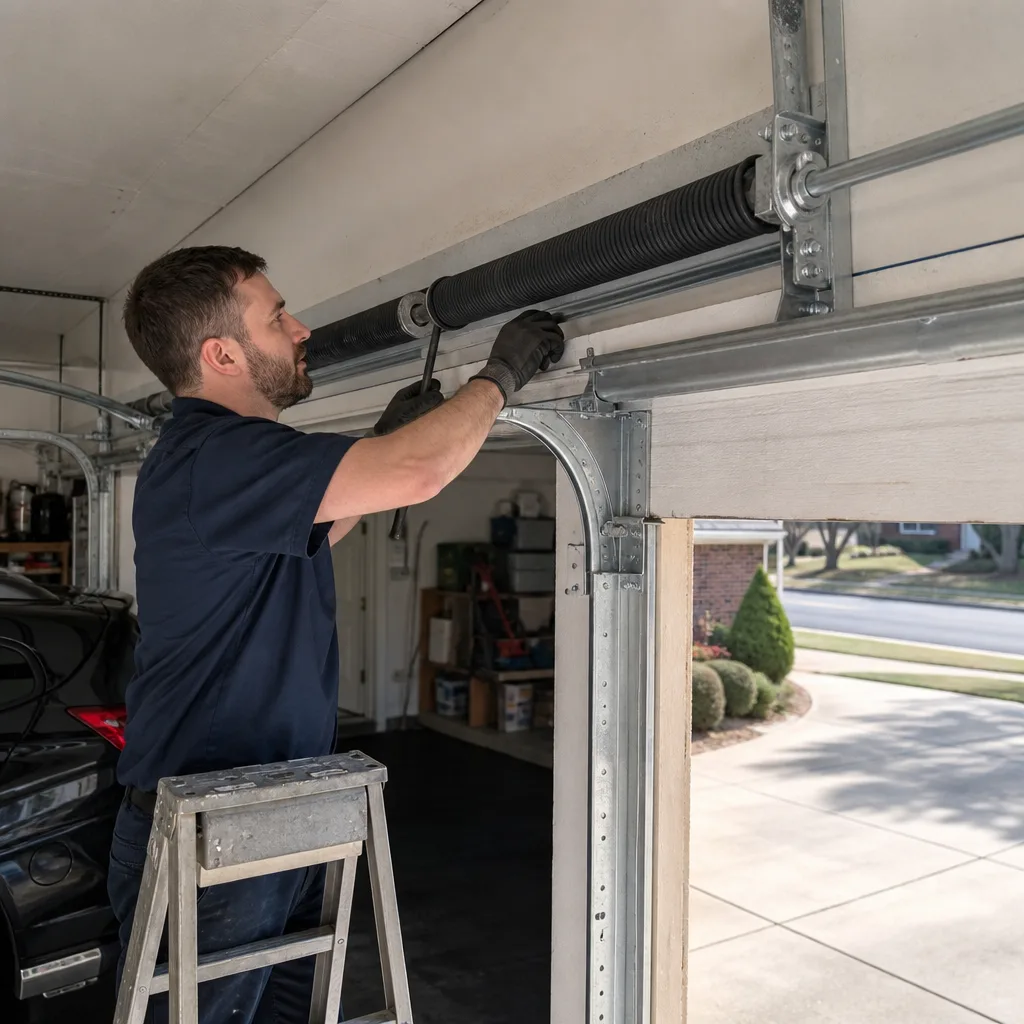 After
After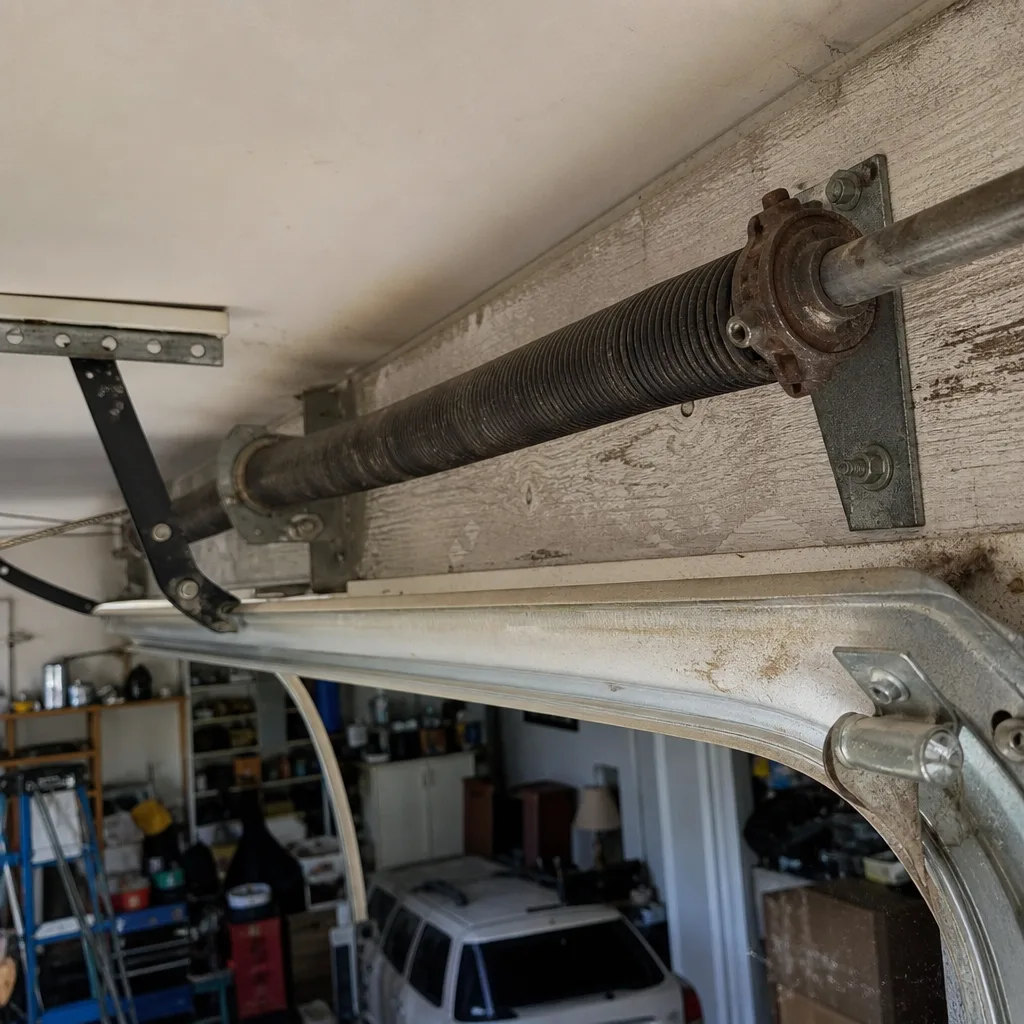 Before
 After
After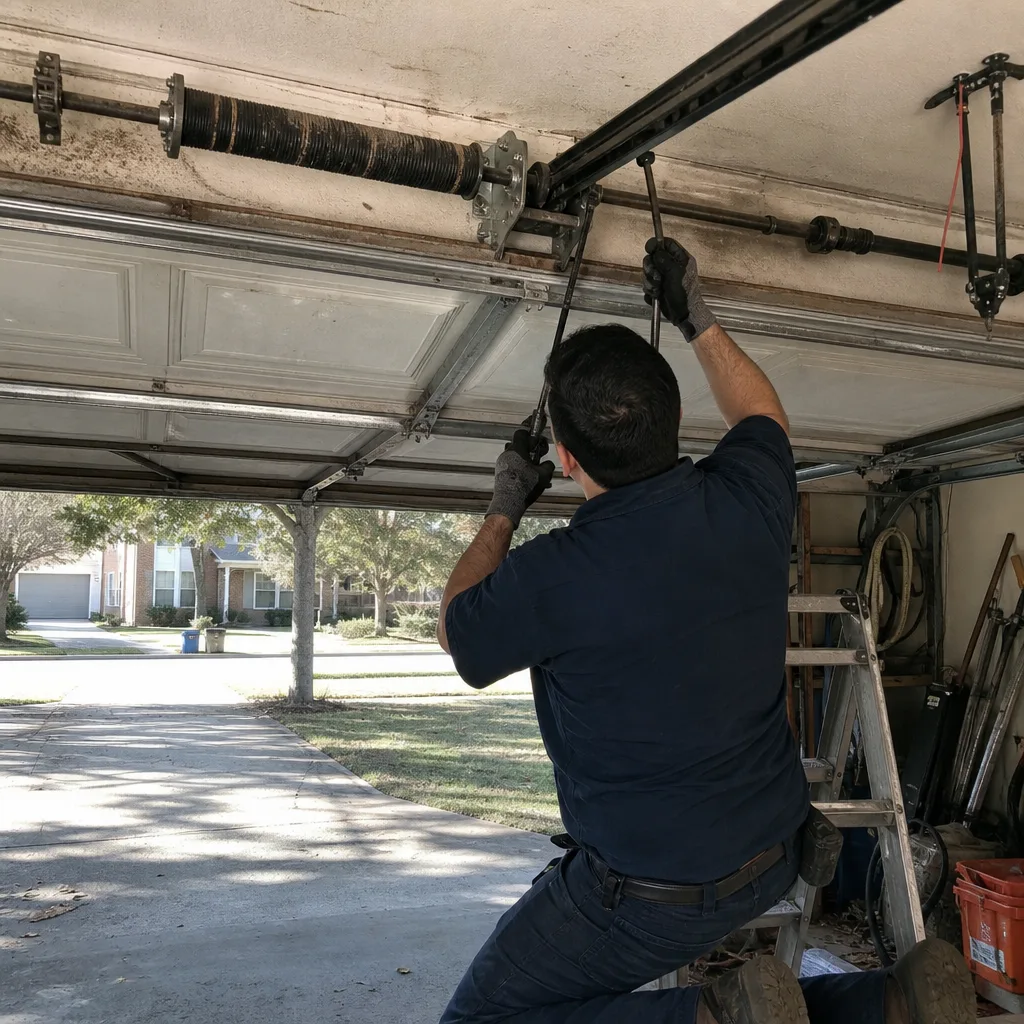 Before
 After
AfterDIY vs Professional Garage Door: The McDonough Homeowner’s Decision Guide
A torsion spring on a standard residential garage door is wound to counterbalance roughly 150 to 300 pounds of door weight. When that spring snaps during a DIY adjustment, the released energy can fracture a hand or wrist before you can react. That is not a liability disclaimer. It is a mechanical fact about a component under constant tension. This guide will walk you through which garage door tasks a competent McDonough homeowner can handle safely, which ones require tools most people don’t own, and where the math on DIY versus professional work actually lands when you factor in risk, code, and the cost of correcting mistakes.
Quick Answer
Most McDonough homeowners can safely handle surface-level garage door maintenance like lubrication, weatherseal replacement, photo-eye cleaning, and panel painting. Torsion spring replacement and cable work carry injury risk that makes professional labor, typically $150 to $250 for spring replacement in McDonough, the cheaper option when total risk is calculated. Any installation work that touches the structural opening or electrical wiring falls under Georgia building code and generally requires a permit even if you do the work yourself, so review Garage Door Permits, Codes & Inspections in GA: What You Need to Know before starting.
Table of Contents
- The Three Categories of Garage Door Work
- What a Competent DIYer Can Safely Do in McDonough
- Tasks That Require Tools Most Homeowners Don’t Own
- The Injury Risk Line: What Disqualifies DIY Regardless of Skill
- Honest Cost Comparison: DIY vs Professional by Task
- Georgia Building Code and DIY Garage Door Work
- What a Failed DIY Repair Looks Like to a Professional
- How to Document DIY Work Correctly
- Common Mistakes to Avoid
- When to Call a Professional
- Frequently Asked Questions
- The Bottom Line
BeforeAfterThe Three Categories of Garage Door Work
Every garage door task in McDonough falls into one of three buckets. Understanding which bucket a job belongs to answers the DIY-versus-professional question faster than any amount of online forum reading. The categories are based on what we have seen across thousands of service calls in Henry County since 2015, and they hold regardless of how handy you are.
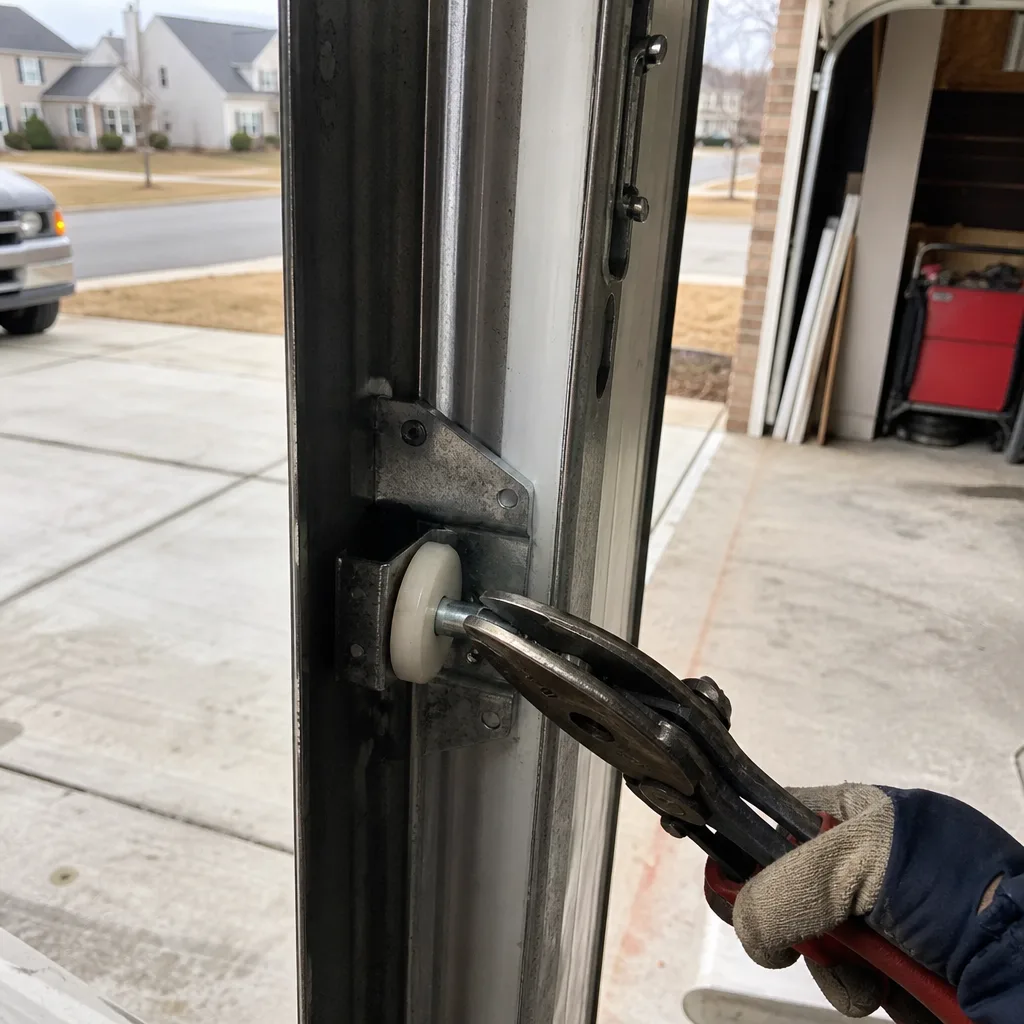
Category One: Surface maintenance. These are tasks where the components you touch are not under dangerous tension and the tools required are already in most McDonough garages. Lubricating rollers and hinges, cleaning photo-eye lenses, tightening visible bolts, replacing bottom weatherseal, and painting panels all belong here. A competent DIYer can do these tasks correctly, and doing them yourself saves meaningful money over time.
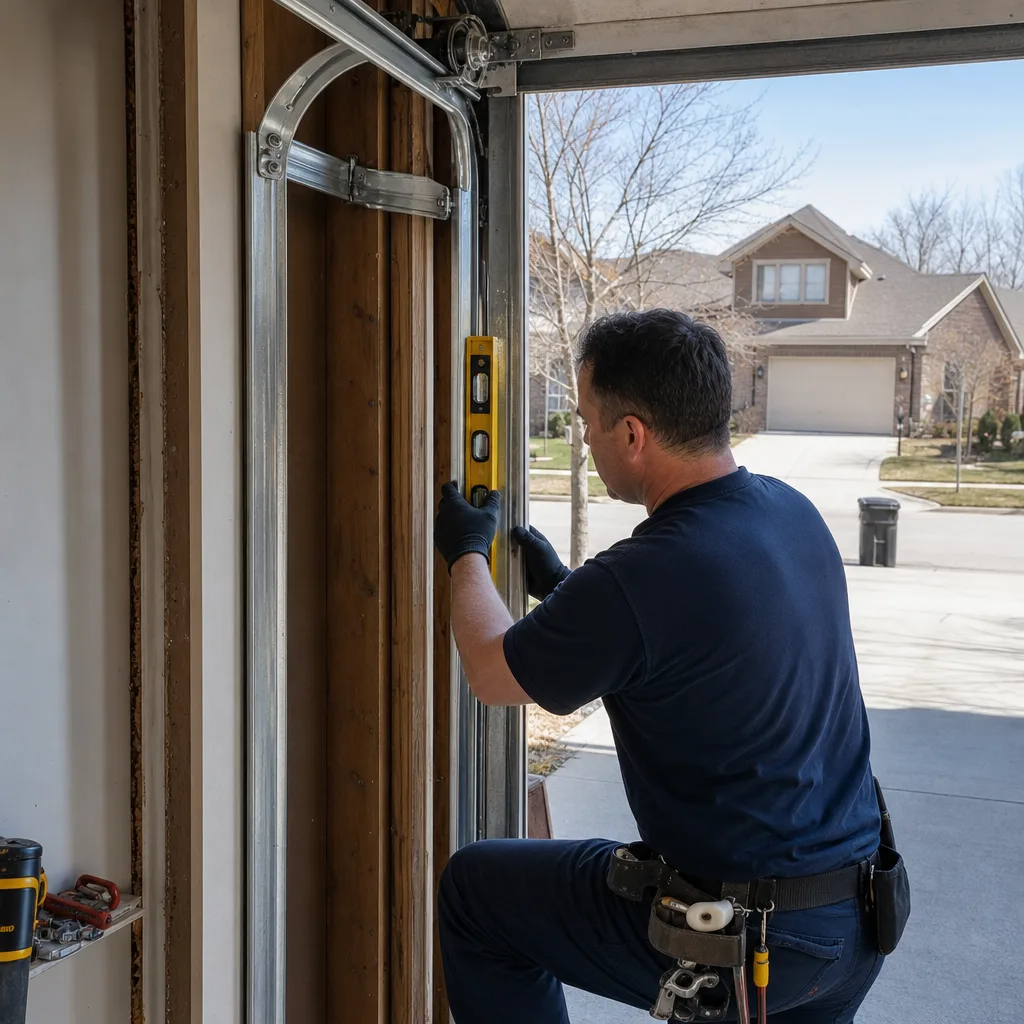
Category Two: Tool-barrier work. These tasks are not inherently dangerous, but they require specialized tools that cost more to buy than the labor to have the job done professionally. Replacing a torsion spring falls partly here, partly in Category Three. Replacing a bent track section requires a level, winding bars if springs are involved, and often a second person. The tool cost typically exceeds the professional labor cost for a one-time job.
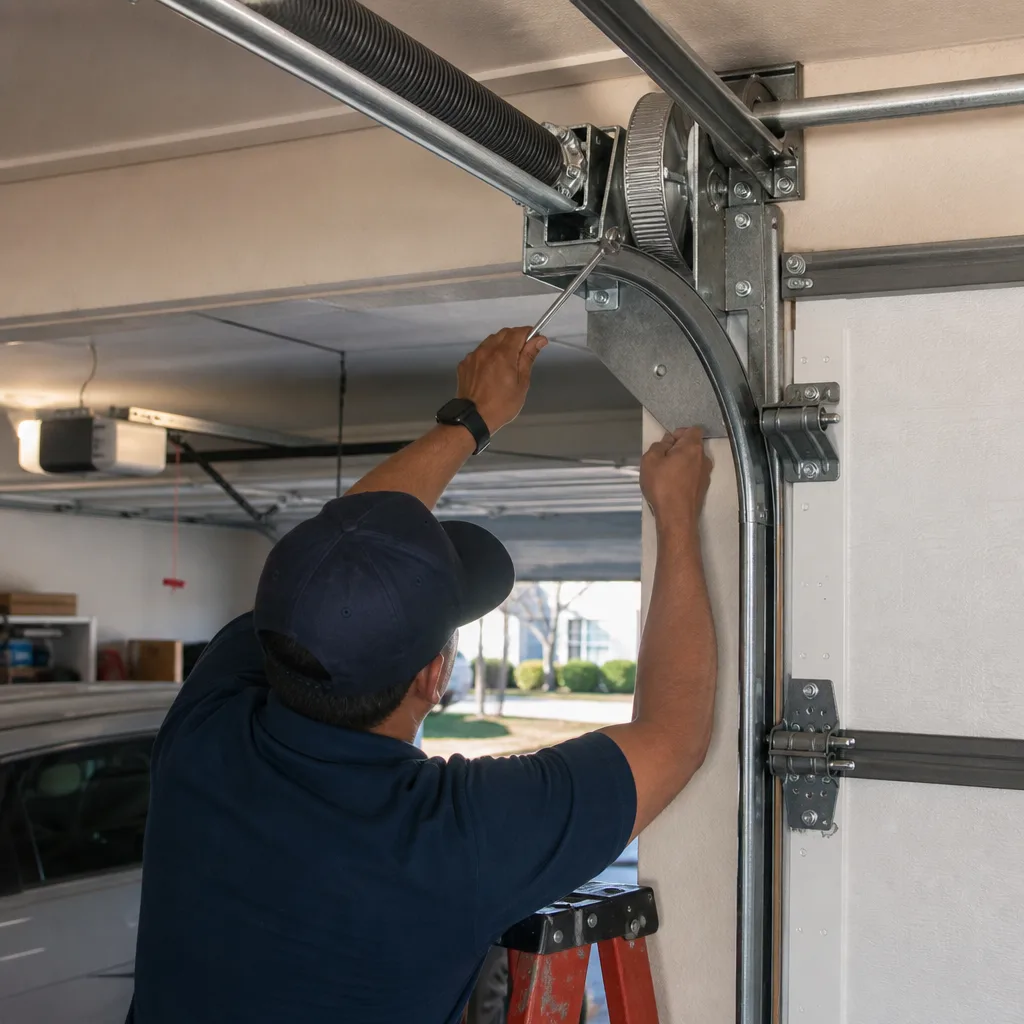
Category Three: Injury-risk work. These tasks involve components under spring tension, cables under load, or electrical connections. Torsion springs, extension springs, lift cables, and opener logic boards all live here. No amount of YouTube preparation changes the physics. When we are called to McDonough homes after a DIY attempt in this category, the correction usually costs more than the original professional repair would have.
What a Competent DIYer Can Safely Do in McDonough
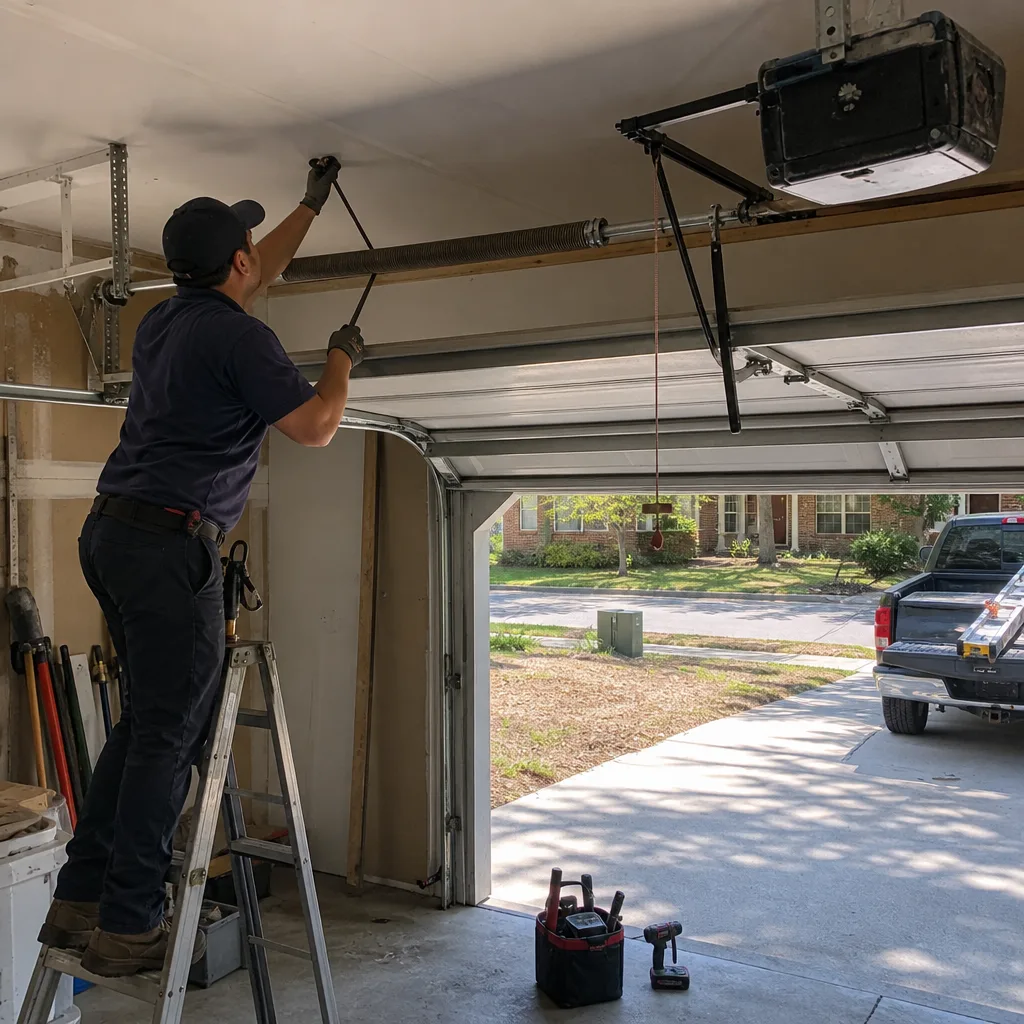
We want to be clear about this because too many garage door companies say “call us for everything.” Several maintenance tasks are genuinely safe for a homeowner to perform, and doing them yourself extends the life of your door; our Garage Door Repair Maintenance Checklist for McDonough Homeowners covers the essentials. McDonough’s climate makes some of these more relevant than homeowners realize.
- Lubricate rollers, hinges, and springs. Twice a year is the right cadence in McDonough, and spring pollen season makes late March one of the better times to do it. Use a white lithium grease on the rollers and hinges, and a light oil spray on the springs. Avoid WD-40; it displaces the heavier lubricant that the parts actually need.
- Clean the photo-eye sensors. The small lenses near the bottom of each track collect Georgia red clay dust and grass clippings faster than you would think. A dry microfiber cloth is all it takes. If the door reverses for no reason, dirty photo-eyes are the cause more often than a failed sensor.
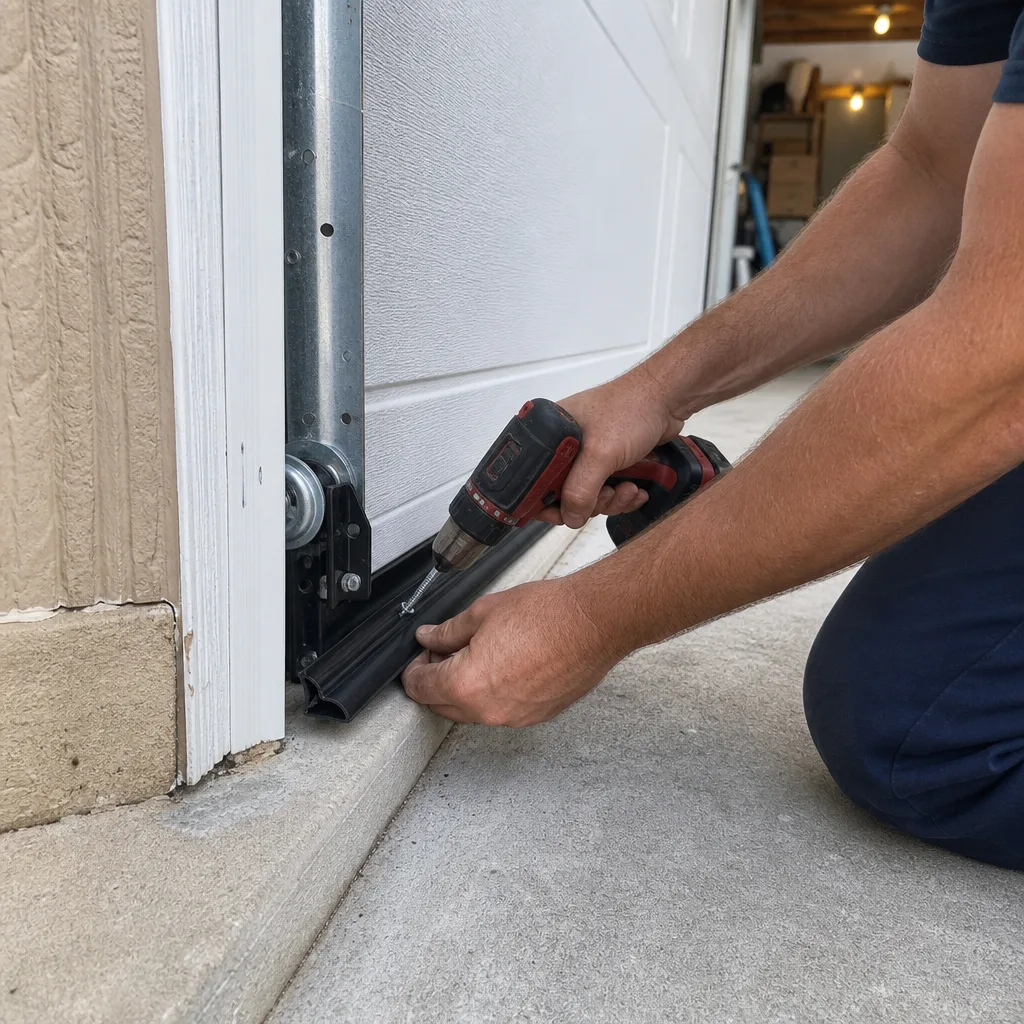
- Replace the bottom weatherseal. The rubber strip along the bottom of the door hardens and cracks in Georgia heat within three to five years. Replacement seals run $40 to $80 at local hardware stores, and installation is a slide-out, slide-in job on most brands. This is a legitimate money saver.
- Paint steel panels. McDonough humidity is hard on factory paint, especially on west-facing doors. A degreaser, a light sanding, a bonding primer, and an exterior acrylic latex give you another five-plus years from the existing door. This saves the $1,200 to $3,500 a new door would cost.
- Tighten visible fasteners. Every three months, walk around the door with a socket set and check the bolts on the hinges, the track brackets, and the opener rail. Vibration loosens them slowly. Tightening what is already there prevents a lot of the squeaks and rattles that eventually become repair calls.
None of these tasks involves releasing spring tension, removing cables, or rewiring anything. That is the line, and it is worth repeating because most DIY injuries we hear about in McDonough start with someone doing a Category One task and then deciding to “fix one more thing” while they are out there.
Tasks That Require Tools Most Homeowners Don’t Own
Some garage door work is not dangerous, but it sits behind a tool barrier. The math on these tasks usually favors calling a professional when you price the equipment honestly.
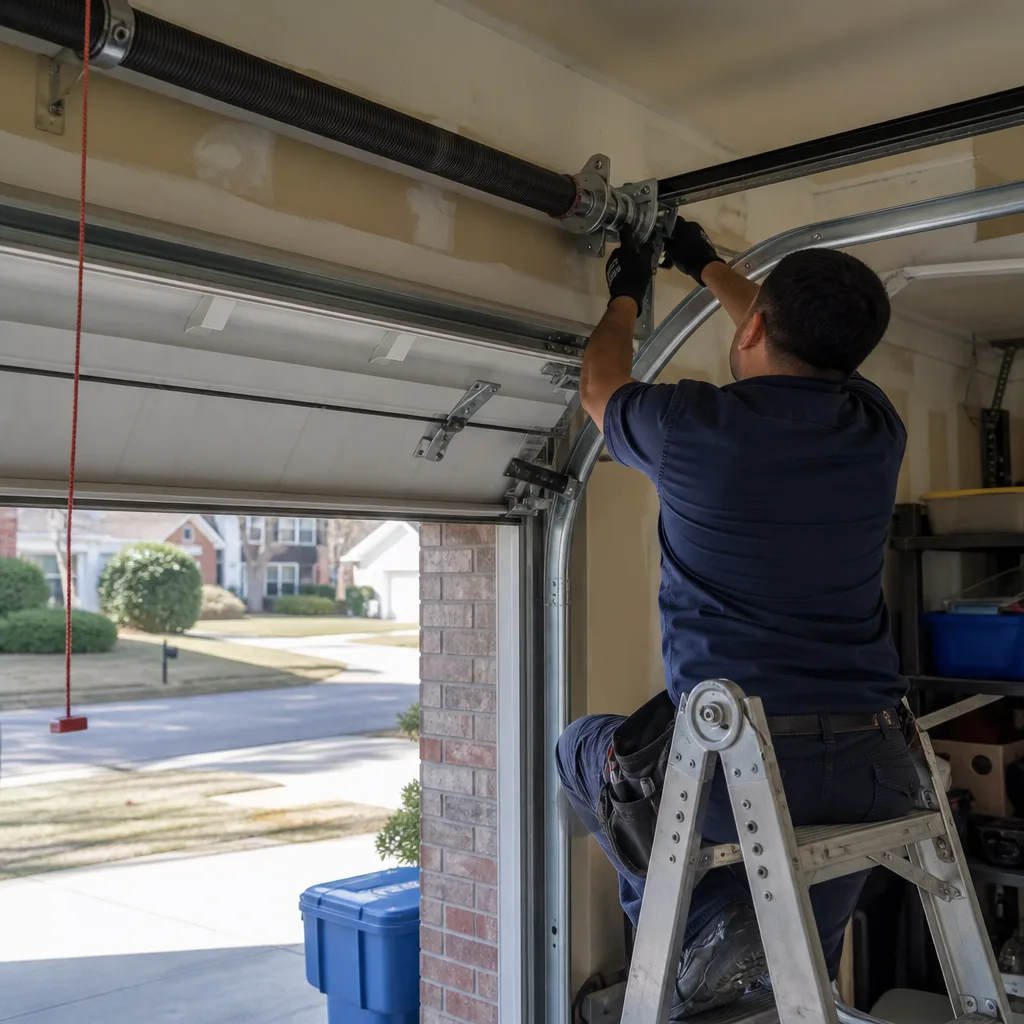
- Torsion spring replacement. The springs themselves run $60 to $120 for a pair. The winding bars, the only safe tool for the job, run $30 to $50. The problem is that winding bars are the bare minimum. A proper setup includes a torque wrench for verifying the correct number of quarter turns, and most McDonough homeowners would also need a step ladder tall enough to work at arm height comfortably, not overhead. Total tool investment for a one-time job: $100 to $200 in tools you may never use again. Professional labor in McDonough for the same job: $150 to $250. The DIY savings shrinks to near zero once tools are factored.
- Track replacement or realignment. Bent track sections require a level at minimum, and realignment often needs a second person holding the section while the first checks plumb. A 4-foot level runs $25 to $60. The labor for professional track work starts around $100 to $180 in McDonough. This one is a genuine judgment call depending on what you already own.
- Opener logic board replacement. The board itself runs $80 to $150, and installation requires a multimeter to verify the power supply is not the actual problem. A basic multimeter is $30. The professional diagnosis and board install usually runs $150 to $250, and the technician carries spare boards so you are not guessing at the diagnosis. This is another case where the tool cost plus the diagnostic uncertainty favors the professional.
- Cable replacement. This one straddles Category Two and Category Three. The cables run $20 to $40 for a pair, but replacing them safely requires releasing spring tension first, which is a Category Three operation. Some homeowners believe they can replace cables without touching the springs. That belief is how we end up doing rework in McDonough neighborhoods like Summit Point and Lake Dow Estates.
The pattern here is simple: when a job requires a tool you will use once, and the professional labor cost is under $250, the DIY path saves less than the public assumes. When the tool cost plus your time is compared honestly against a flat written quote, professional work is often the cheaper option.
The Injury Risk Line: What Disqualifies DIY Regardless of Skill
There is a line in garage door work that skill does not move. The line is set by stored mechanical energy and electrical current. These tasks do not become safe because you watched three videos and bought the right tools. The best McDonough DIYers we know call a professional for these, and they do it without feeling like they lost a test of competence.
Torsion spring work is the clearest case. A standard residential torsion spring is wound 7.5 to 8.25 quarter turns to counterbalance the door. That tension is constant, even when the door is closed and the spring appears still. The winding bars are the only safe interface, and if one slips during winding or unwinding, the stored energy releases through the bar. The mechanical fact is that the human wrist and hand are not rated for that force.
Cable work is the runner-up. The lift cables on a sectional door run through pulleys and attach to the bottom brackets under spring tension. If you attempt to remove a cable without first unwinding the springs, the cable can whip when it releases. The injury pattern we hear about in McDonough is a cut hand or a struck forearm, and it is always from an attempt to save the $150 to $250 professional labor.
Opener electrical work is the third category, and the risk here is less dramatic but more likely. The opener pulls 120 volts from the ceiling outlet and steps it down for the DC motor. Working on the logic board while the unit is plugged in is how McDonough electricians get called to garages for outlet replacement after a short. Fire risk aside, a fried logic board from a wiring error turns a $200 professional repair into a $350 replacement.
Our position as Garage Door Repair in McDonough is this: if the task requires releasing spring tension or touching electrical wiring, the professional labor cost is cheaper than the total cost of the risk. That is not a sales pitch. It is the same calculation we would run on our own homes.
Honest Cost Comparison: DIY vs Professional by Task
The DIY-versus-professional decision is a financial one for most McDonough homeowners, so let us put the numbers on the table; see our Garage Door Cost Breakdown: The McDonough Homeowner’s Reference for 2026 for deeper context. These are the ranges we see in Henry County as of this writing, and they include both parts and tools for the DIY column and parts plus labor for the professional column.
Cost Breakdown by Task
- Lubrication and cleaning: DIY $15 to $30 in supplies. Professional $80 to $120. Verdict: DIY. Clear savings, no meaningful risk.
- Bottom weatherseal replacement: DIY $40 to $80. Professional $90 to $140. Verdict: DIY for most homeowners. The installation is genuinely simple on most brands.
- Panel painting: DIY $60 to $120 in materials. Professional $300 to $600 for repainting. Verdict: DIY if you have the time and patience for prep work. McDonough humidity means waiting for a low-humidity stretch for proper cure.
- Roller replacement: DIY $30 to $50 for nylon rollers. Professional $100 to $150. Verdict: DIY if the door has no tension on the rollers. If the bottom rollers need replacement, the spring tension comes into play, and the professional route becomes the honest answer.
- Torsion spring replacement: DIY $80 to $170 including winding bars you may use once. Professional $150 to $250 labor plus the cost of the springs. Verdict: Professional. The DIY savings is under $100 on a job where a slip is a trip to the emergency room.
- Cable replacement: DIY $40 to $80 in parts and tools. Professional $120 to $200. Verdict: Professional. The cable tension is tied to the spring tension, and the DIY path requires the dangerous step of releasing it first.
- Photo-eye sensor replacement: DIY $40 to $60 for a new sensor. Professional $100 to $150. Verdict: DIY for a simple swap. If the sensor is wired into the opener and the wiring is not modular, professional diagnosis saves the guess-and-check cycle.
- Track realignment: DIY $25 to $60 for a level and shims. Professional $100 to $180. Verdict: This is a coin flip. If you already own a level and have a second pair of hands, DIY is viable. If not, the professional route costs about the same and comes with a written scope.
The pattern holds across almost every category: DIY savings are real for surface maintenance and cosmetic work, and they vanish or turn negative once spring tension, cables, or wiring enter the job. The math does not care how confident you feel.
Georgia Building Code and DIY Garage Door Work
Georgia building code applies to garage door work whether you hire a professional or do the job yourself. This is the part of the DIY conversation that almost no one in McDonough has before starting, and it is the part that can create problems with insurers and future buyers.
The relevant Georgia code provisions are in the International Residential Code (IRC), which Georgia adopts with amendments. Section R309 covers garages and carports. The key point for homeowners is that any work that alters the structural opening of the garage requires a building permit from Henry County, regardless of who performs the labor. That means removing an existing door and installing a new one in a different size opening, enlarging the opening, or converting a garage door opening to a different use all trigger the permit requirement.
Replacing a garage door in the same size opening, with no structural changes, generally does not require a permit in Henry County. The same goes for spring replacement, opener replacement, and most repair work. The line is structural alteration, not the presence of a professional.
What this means for the McDonough homeowner is practical: if your DIY project is a same-size door replacement, the code path is straightforward. If your project involves changing the opening dimensions, you are doing permitted work, and that means inspections, potential corrections, and a permit on file that future buyers will see. A professional garage door installer handles the permit paperwork as part of the written scope. A DIYer handling structural work assumes the liability for permit compliance, and that liability does not disappear when the house is sold.
For Garage Door Installation in McDonough, we include the permit coordination in the written quote when the job requires one. If the job does not require a permit, the quote says that too, in writing, so there is no ambiguity for the homeowner’s records.
What a Failed DIY Repair Looks Like to a Professional
We get called to McDonough homes to correct DIY attempts more often than most homeowners would guess. The pattern is consistent enough that we can describe what we typically find.
The most common failed DIY repair is a torsion spring that was wound incorrectly. The homeowner replaced the spring successfully, but wound it the wrong number of quarter turns. The door feels heavy or flies up on its own, or the opener strains against the imbalance until the travel limits are damaged. The professional correction involves verifying the spring wire diameter and inside diameter against the door weight, then resetting the wind count correctly. The correction cost is usually $100 to $200 on top of what the homeowner already spent on the spring. The original professional repair would have cost $150 to $250 total.
The second most common call is a photo-eye or limit switch adjustment that went wrong. The homeowner watched a video about adjusting the travel limits and now the door reverses at the wrong point or does not close fully. The opener’s logic board has to be reprogrammed or, in worse cases, the plastic gear in the opener head has been stripped from repeated forced operation. A stripped gear means an opener replacement at $350 to $600 installed, versus the $100 diagnosis the original adjustment would have cost.
We also see cable derailments from DIY attempts. A cable popped off the drum, the homeowner tried to re-seat it without unwinding the springs, and the cable is now crossed and frayed. The new cable pair plus the labor to un-cross and re-tension runs around $150 to $250. The original issue, if caught before the DIY attempt, would have been a $75 cable re-seat.
The theme is consistent: DIY failures in McDonough cost more to correct than the original professional repair would have cost in the first place. That is not a reason to avoid all DIY work. It is a reason to choose the DIY tasks carefully and sit out the ones where the downside is a mechanical failure under tension.
How to Document DIY Work Correctly
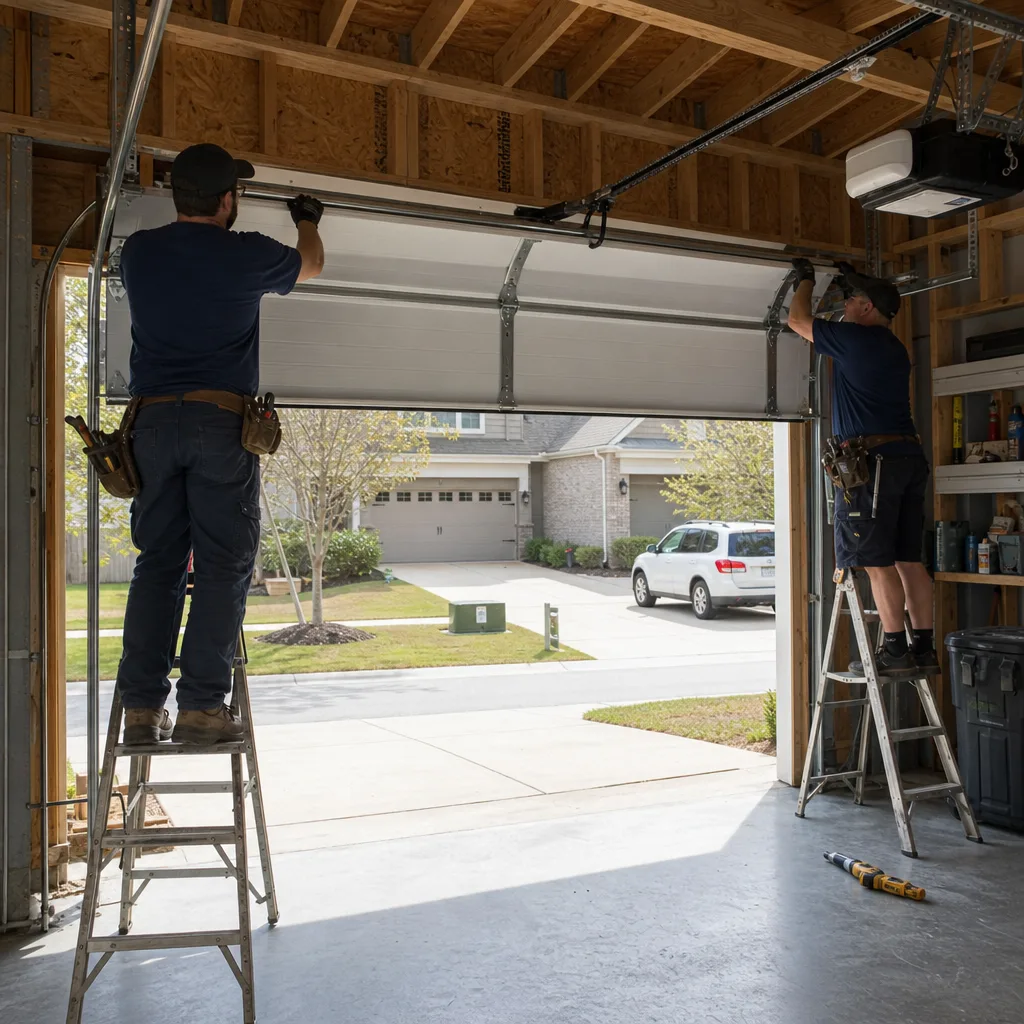
When you complete DIY garage door work correctly, you want a record of what was done and when. This serves two purposes. First, it establishes a maintenance history that adds credibility if you sell the McDonough home. Second, it creates a clear paper trail if a future failure is traced back to the component you worked on, which matters for warranty claims and insurance conversations.
The documentation standard we hold ourselves to at Servo is a photo record of what we found and what we changed. You can apply the same standard to your own work.
- Photograph before starting. Take a picture of the component before you touch it: the spring, the rollers, the weatherseal, the opener. This shows the starting condition.
- Photograph the parts you remove. If you replace a weatherseal or a set of rollers, lay the old parts out and photograph them next to the new ones. This shows what actually changed.
- Photograph the finished work. A picture of the installed part after completion closes the loop.
- Keep the receipt for the parts. Staple it to a one-paragraph note with the date, the task performed, and the condition you found. This is the written record.
- Store everything together. A folder in the garage or a note on your phone works. What matters is that the record exists if a future buyer or insurer asks when the spring was last replaced.
Good documentation is not a professional secret. It is the thing that separates a defensible maintenance history from a verbal claim no one can verify. Clause 4 of The Haven Standard, the requirement to photograph the failed component before quoting a replacement, exists because homeowners deserve the same evidence a professional keeps for themselves.
Common Mistakes to Avoid
- Using the wrong lubricant. WD-40 is a solvent, not a long-term lubricant. It strips the heavier grease the rollers and hinges need. McDonough’s dust-heavy air makes proper lubrication even more important, because the dust clings to dry surfaces worse than greased ones.
- Attempting spring work with improvised tools. Screwdrivers, pry bars, and rebar are not winding bars. Every spring-related injury we hear about in Henry County starts with an improvised tool that slipped. If you are doing spring work, buy the right bars. If you are not buying the right bars, do not do spring work.
- Ignoring the balance test. Pull the release handle and lift the door manually. A balanced door stays put when lifted to waist height. A door that drops or rises needs the spring tension corrected before the opener gets stressed. This test costs nothing and catches imbalance problems before they become motor failures.
- Replacing an opener without checking the door balance first. A new opener installed on an unbalanced door fails within a year or two. The opener’s motor and gear teeth are not designed to compensate for spring tension problems. Balance the door first, then replace the opener.
- Skipping the Georgia permit check for structural changes. If your DIY project touches the opening dimensions, the permit is on you. Henry County inspection records are public, and future buyers and insurers can see unpermitted structural work. The downside of skipping the check is not a fine; it is a sale complication years later.
- Assuming all garage door brands use the same parts. A LiftMaster spring does not interchange with a Wayne Dalton spring, a Chamberlain opener gear does not fit a Genie motor, and Raynor track is not compatible with Craftsman hardware. Order the wrong part online and you have added return shipping and delay to your project for zero savings.
When to Call a Professional
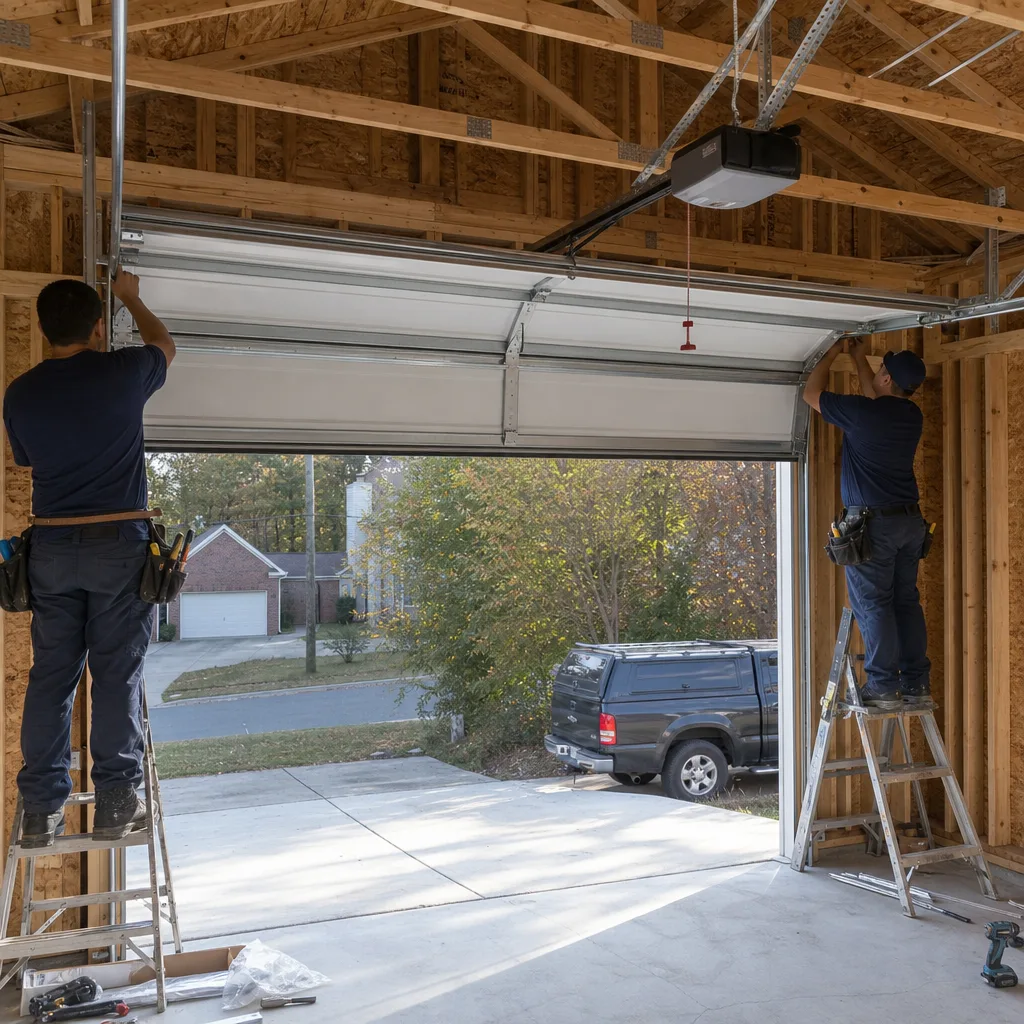
Three scenarios pull the professional decision out of the judgment zone and make it automatic. First, if the spring is broken. A snapped torsion spring is a visible failure, and replacing it means winding a new spring under tension, which is Category Three work. Second, if a cable has come off the drum or shows fraying. Cable issues are spring-adjacent, and the safe correction requires releasing the spring first. Third, if the door is off its tracks or the track is visibly bent. That is a load-bearing situation, and forcing the door creates a hazard.
If you are in one of those situations, Servo Garage Doors McDonough offers free estimates in McDonough. Call (470) 928-4767 and you will get a live person, not a recording, 24 hours a day. We quote every job with a flat written price and a written scope before any work starts, so the number you hear is the number you pay.
Frequently Asked Questions
Professional torsion spring replacement in McDonough typically runs $150 to $250 in labor, plus $60 to $120 for the springs themselves, landing most jobs between $210 and $370 total. The labor range reflects the spring wire diameter, the number of springs, and whether the door is a standard or custom size. Call (470) 928-4767 for a written quote specific to your door.
No. Torsion springs are wound under enough stored tension to counterbalance 150 to 300 pounds of door, and the winding process requires specialized bars and specific technique. A slip during winding releases that energy through the tool. The $150 to $250 professional labor cost is the safer route when total risk is counted.
Yes. The rubber bottom seal on a sectional door slides out of the aluminum retainer and the new one slides back in, and the materials run $40 to $80 locally. McDonough humidity and Georgia summer heat harden seals within three to five years, so most homeowners here will do this at least once. No spring tension or wiring is involved.
Structural changes to the garage door opening require a permit in Henry County, including enlarging the opening or converting it to a different use. Same-size door replacement, spring replacement, opener replacement, and most repairs do not require a permit. The line is whether the opening dimensions change.
A spring wound with the wrong number of quarter turns typically costs $100 to $200 to correct professionally in McDonough, on top of what the homeowner already spent on the spring. The original professional replacement would have been $210 to $370 total. Failed DIY opener adjustments that strip the internal gear usually mean a full opener replacement at $350 to $600.
Servo Garage Doors McDonough offers free estimates, and the quote is delivered as a flat written price with a written scope before any work starts. There is no estimate fee and no obligation. Call (470) 928-4767 to schedule the visit.
We service all major garage door brands including LiftMaster, Chamberlain, Genie, Clopay, Amarr, Wayne Dalton, Craftsman, and Raynor. The parts for common models are carried on the truck, so most repairs are completed the same day rather than ordered after the fact.
The Bottom Line
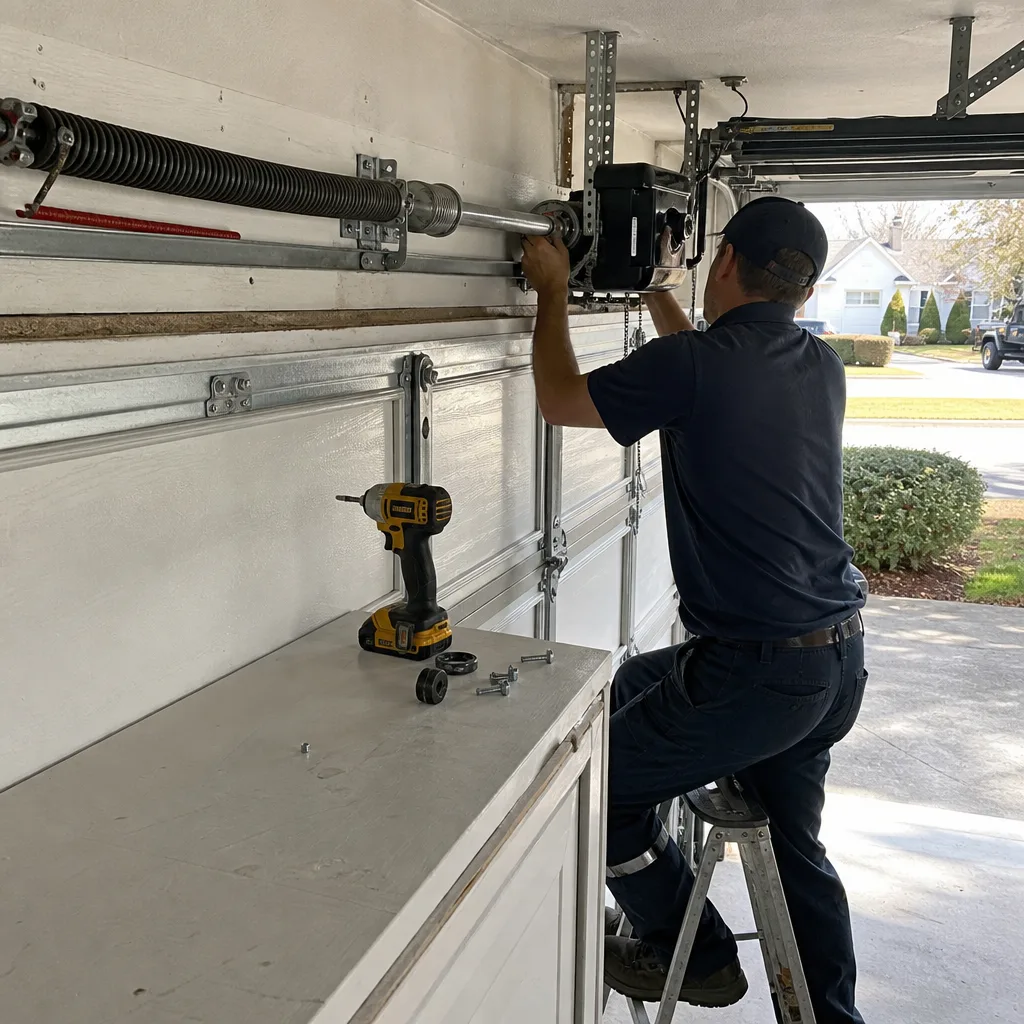
The DIY-versus-professional decision for garage doors in McDonough is not about skill or prudence. It is about which tasks carry stored mechanical energy or electrical current, and which do not. Lubrication, weatherseal replacement, photo-eye cleaning, and panel painting are honest DIY territory. Torsion spring work, cable replacement, and opener wiring are professional territory, and the labor cost in McDonough is low enough that the DIY savings does not justify the risk. Structural changes trigger Georgia permit requirements whether you hire or not. When the job crosses the risk line, call a professional. When it does not, document what you did, keep the receipt, and move on. For additional help, browse more guides & resources from our team.
Garage Door Opener Repair & Installation in McDonough | Servo Garage Doors McDonough home
Written by Marcus Deller, Owner at Servo Garage Doors McDonough, serving McDonough since 2015.