
Last updated September 20, 2026
Full 25-point door and opener safety check with every visit - springs, cables, rollers, tracks, and your LiftMaster or Chamberlain opener included
You get a price before we start. It does not change when the truck arrives.
 Before
 After
After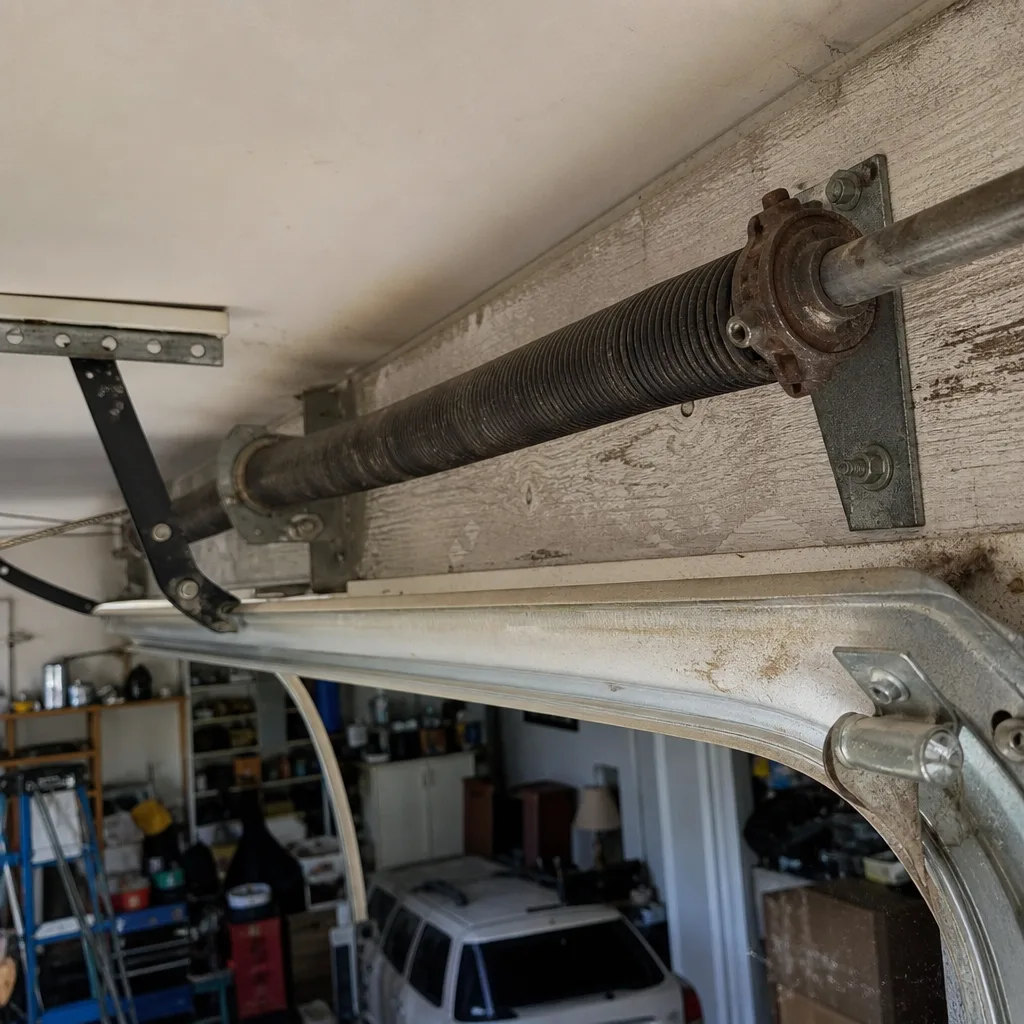 Before
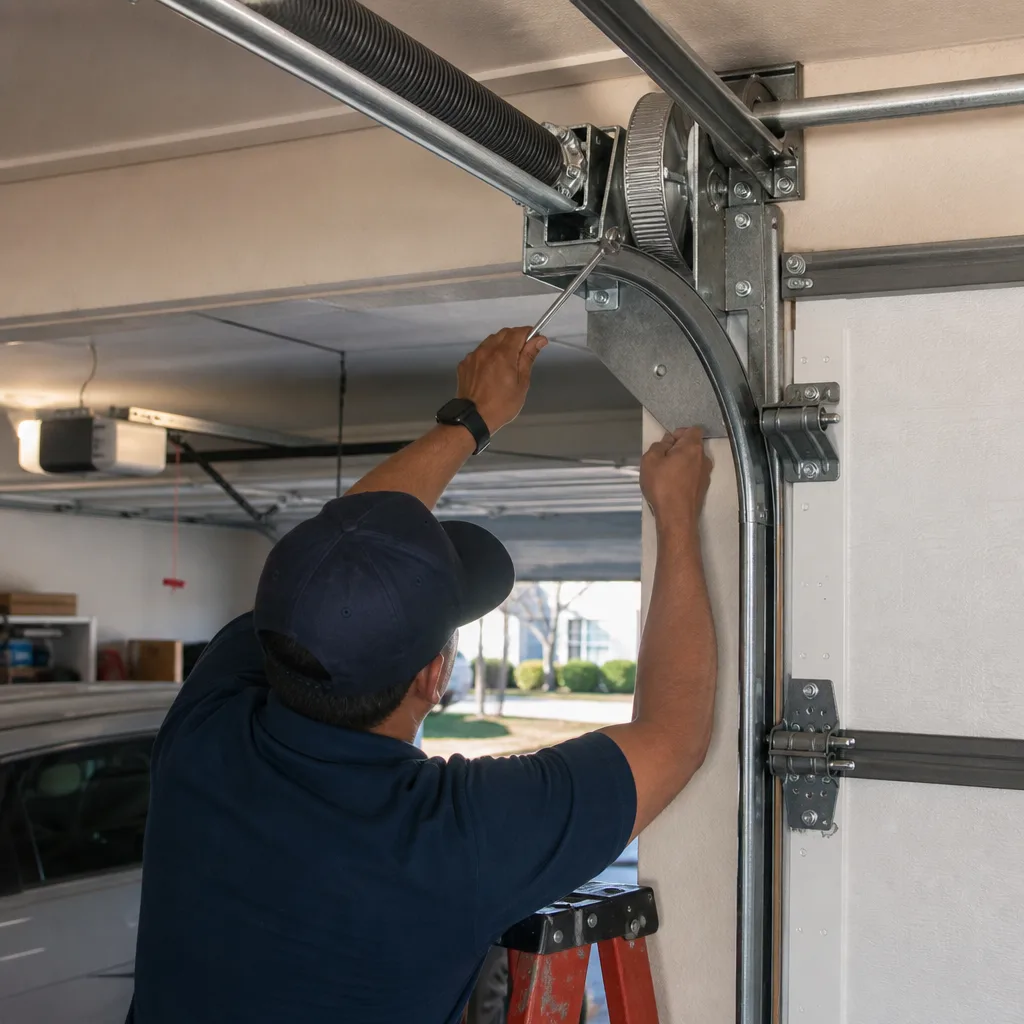 After
After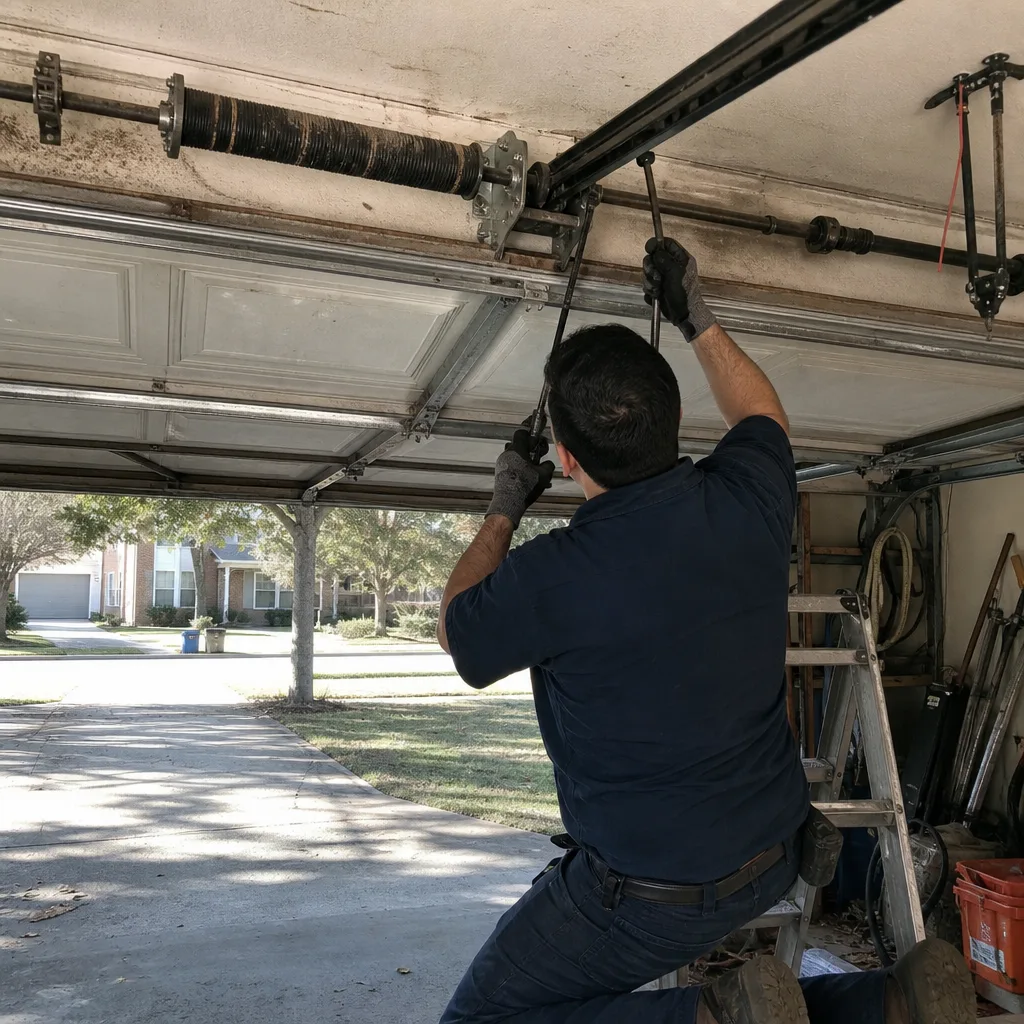 Before
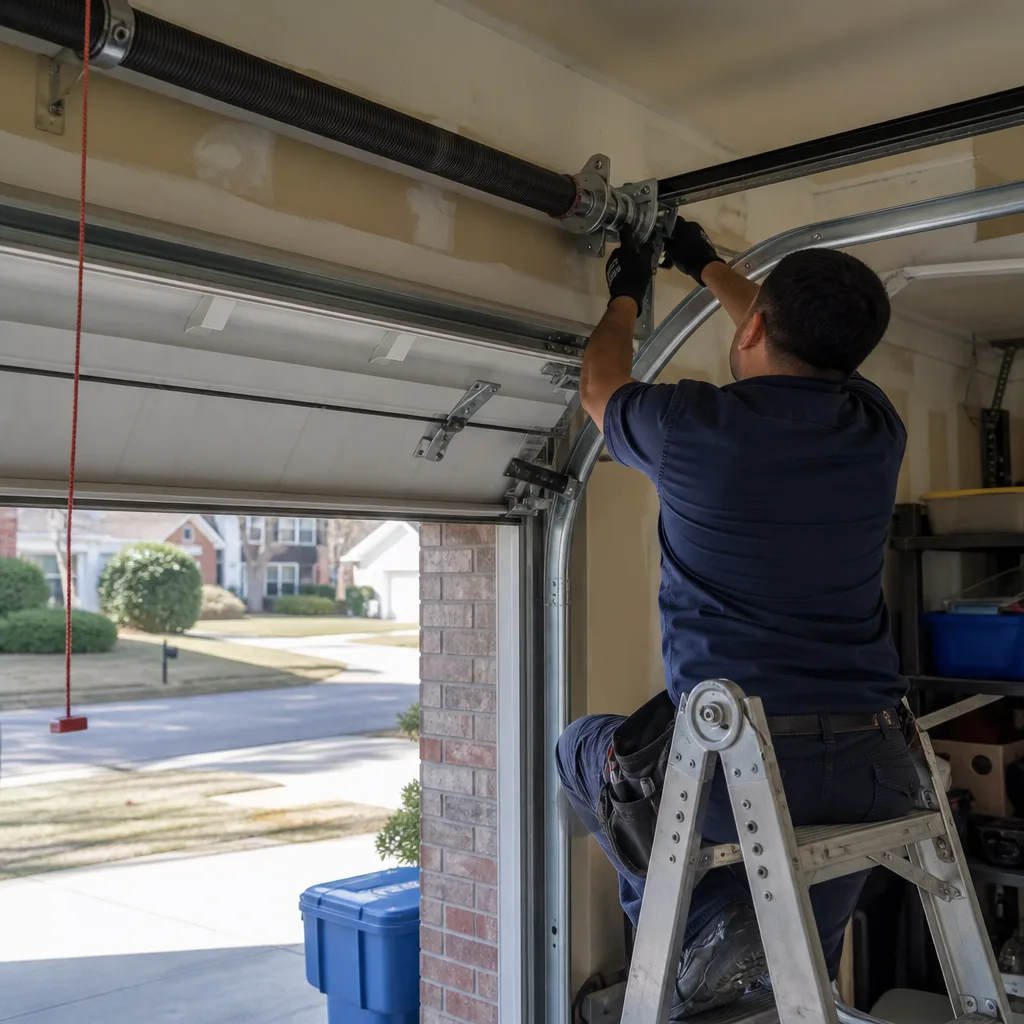 After
AfterSeasonal Garage Door Care for McDonough: Year-Round Homeowner’s Guide
McDonough averages 218 days above 70°F annually. That is not a background detail - it is the primary reason bottom-seal rubber in this zip code hardens and cracks closer to a three-year replacement interval than the five-year interval manufacturers print on packaging calibrated for temperate climates. This guide covers the month-by-month maintenance schedule that actually matches Henry County’s climate, the two failure windows that generate most of our emergency calls, and the specific checks that cost nothing but prevent the repairs that cost plenty. For a deeper dive, see The Complete Guide to Garage Door in McDonough.
Quick Answer
Seasonal garage door maintenance in McDonough means scheduling two focused inspection windows each year: one in late March before humidity settles in, and one in late September before the first cold snap. The two highest-failure periods are August, when heat degrades opener capacitors and rubber seals, and January, when cold makes bottom seals brittle enough to tear and shifts photo-eye alignment. A homeowner who checks springs, seals, and opener force settings in those windows avoids most emergency calls entirely. Most seasonal checks take under twenty minutes and require no special tools.
Table of Contents
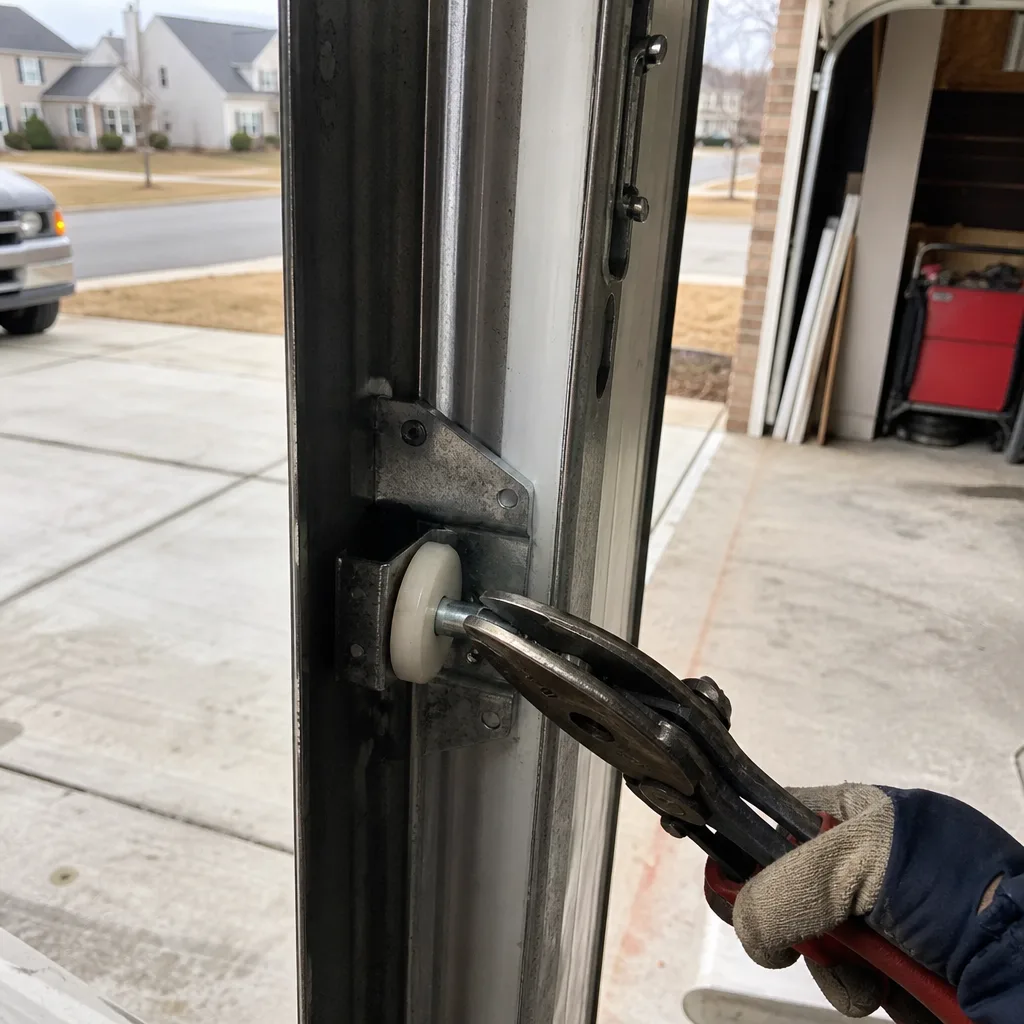
- Why McDonough’s Climate Is Harder on Garage Doors Than the Manual Assumes
- Spring Maintenance: March Through May
- Summer Heat Protocol: June Through August
- Fall Preparation: September Through November
- Winter Cold Snap Protocol: December Through February
- Month-by-Month Task Calendar
- Storm Preparation for McDonough Homeowners
- Common Mistakes to Avoid
- When to Call a Professional
- Frequently Asked Questions
BeforeAfterWhy McDonough’s Climate Is Harder on Garage Doors Than the Manual Assumes
Manufacturer maintenance schedules assume a temperate baseline: moderate temperatures, average humidity, no extreme swings. McDonough delivers none of those. The average summer high sits near 90°F with humidity regularly exceeding 70 percent. Winter lows dip into the low 30s often enough to harden rubber. Spring brings thunderstorms that drive moisture into wood panels. The result is a wear pattern we see consistently across the county: seals fail at three years instead of five, opener capacitors degrade at four years instead of seven, and torsion spring life lands closer to seven years than the ten some packaging suggests.
The good news is that these failures telegraph themselves. A capacitor that’s about to fail makes the opener hum louder before it goes. A bottom seal shows visible cracks before it tears. A spring losing tension causes the door to feel heavier before it breaks. Seasonal maintenance is simply the discipline of checking those warning signs on a schedule instead of discovering them at 7:20 a.m. on a workday when the door won’t open. For McDonough homeowners, the schedule that matters runs on two clocks at once: the calendar year and the heat index. We’ll walk through both below.
If you bought your home between 2015 and 2025, your garage door is likely original equipment. That means the opener, springs, and seals have all been aging through several McDonough summers already. The best first step is a baseline inspection, which you can do yourself in one afternoon using the sections that follow.
Spring Maintenance: March Through May
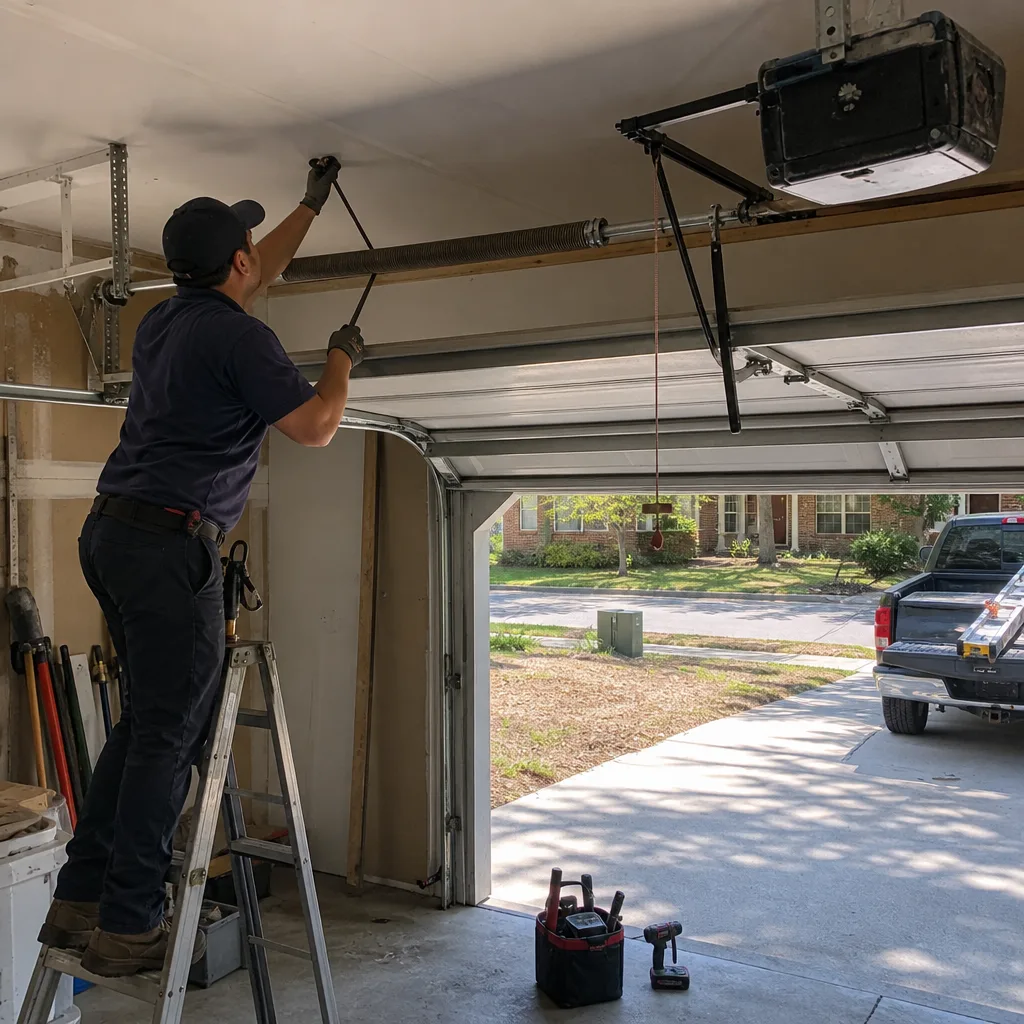
Spring in McDonough is usually pleasant: the low humidity window between late March and early May is the best time all year to work on a garage door. The concrete isn’t too hot to kneel on, the metal parts aren’t cold enough to stiffen, and you can leave the door open while you work without fighting either the AC or the mosquitos. Here’s the full checklist we follow on our own spring service visits, and what each item accomplishes.
The Spring Checklist: What to Do and What It Prevents
1. Wash the door exterior and inspect the paint or finish. Pollen in Henry County is aggressive. It settles into the top seams of steel doors and holds moisture against the metal, which accelerates rust at the panel edges along the top row. Use a car-wash soap, a soft-bristle brush, and a hose. Do not use a pressure washer within two feet of the panel seams, weatherstrip, or the bottom seal. The pressure drives water into places it doesn’t belong.
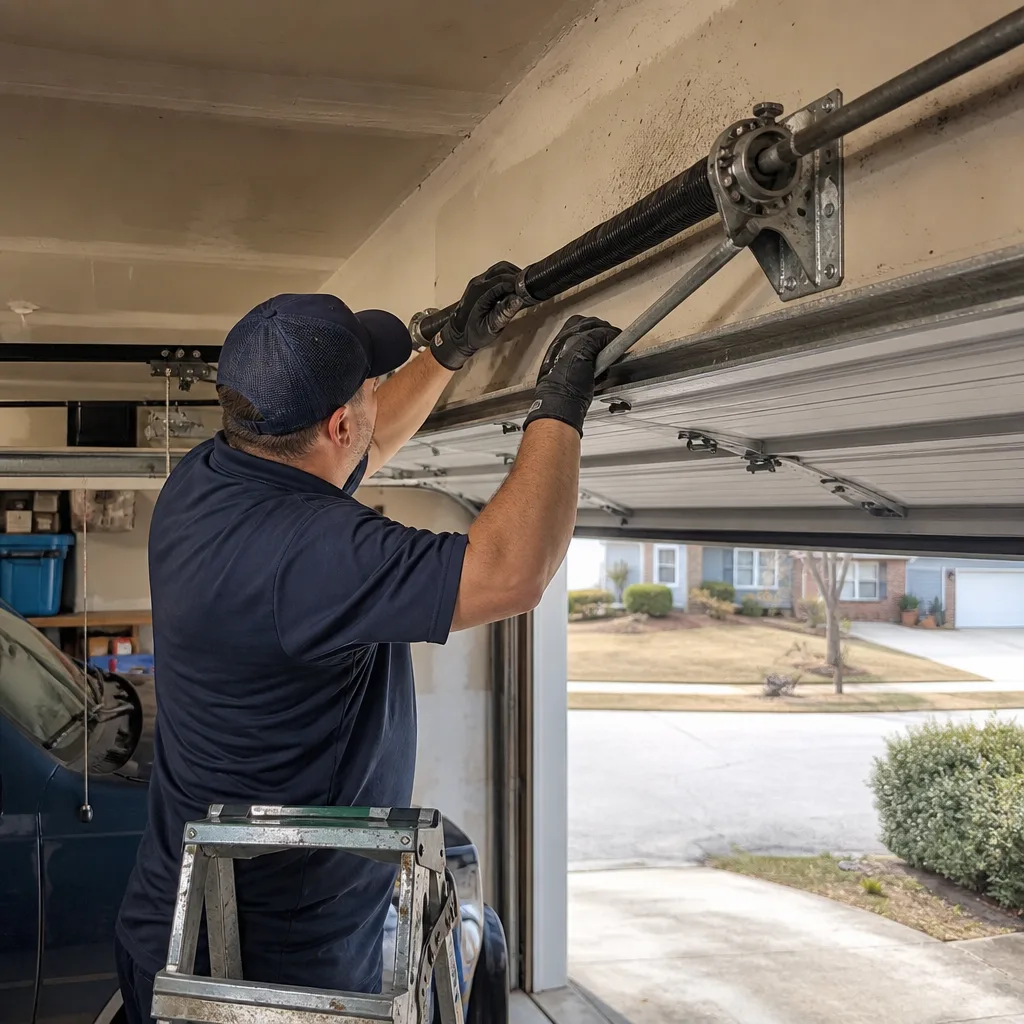
2. Clean and lubricate the rollers, hinges, and torsion springs. Use a garage door lubricant with a straw applicator, not WD-40. WD-40 is a solvent; it strips the grease from sealed bearings and shortens their life. Spray each hinge pin, each roller bearing (especially nylon rollers, which are quieter but need lubrication more often), and the full length of each torsion spring coil. Two seconds of spray per hinge is enough; more just drips onto the track and collects dust.
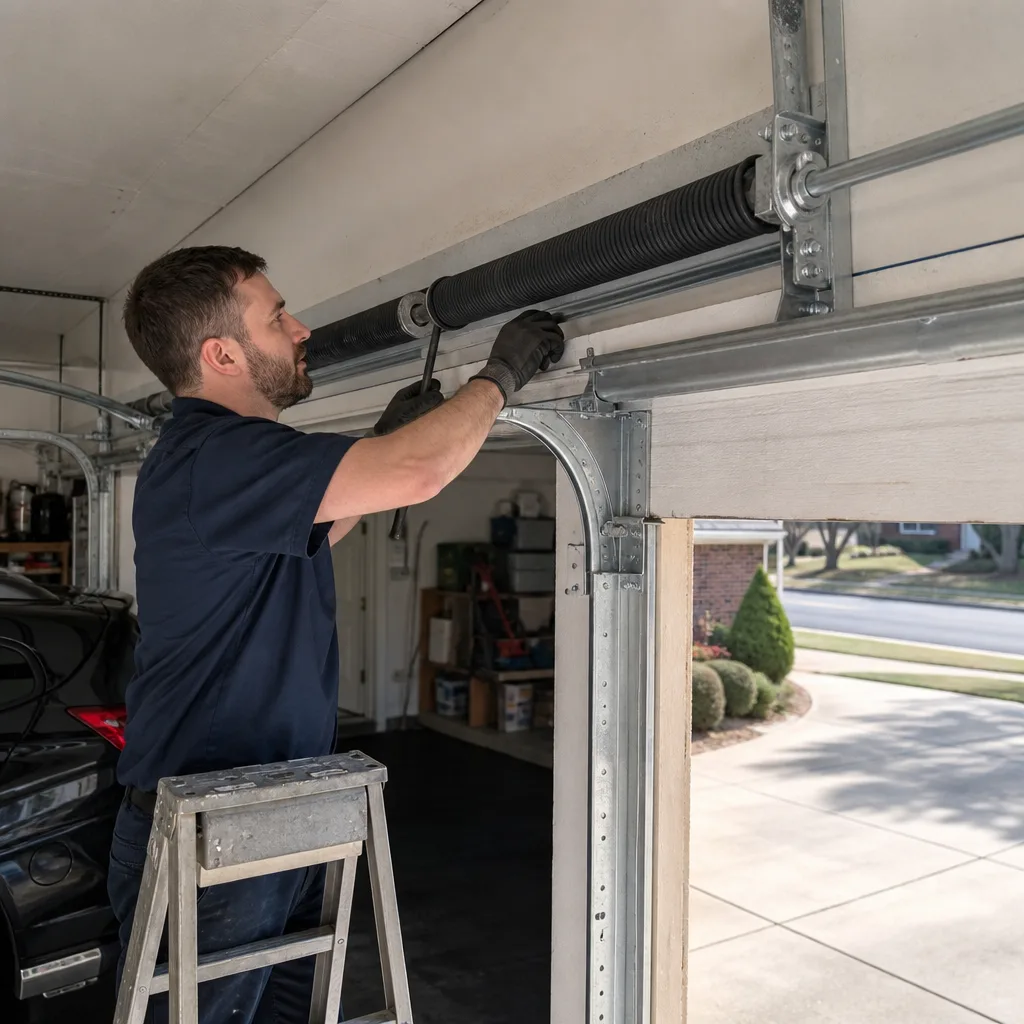
3. Check the balance of the door. Pull the manual release cord (with the door closed) and lift the door by hand. A properly balanced door should rise to waist height and stay put without support. If it creeps down, the springs are losing tension; if it shoots up, the springs are overtensioned. Both are warning signs that the springs are nearing end of life. Do not adjust torsion springs yourself - the tension stored in a single spring is enough to cause serious injury. This is the one check where we tell every homeowner the same thing: observe, note, call a professional if it fails.
4. Test the auto-reverse safety feature. Place a 2×4 flat on the floor under the door and close it. The door should reverse within two seconds of contacting the wood. This is a non-negotiable safety check, and it’s required by federal law for any opener manufactured after 1993. If the door doesn’t reverse, stop using the opener and schedule a service call. The problem is usually a limit switch that has drifted out of adjustment, a twenty-minute fix that re-aligns the force settings.
5. Inspect the weatherstrip and bottom seal. Look for cracks, gaps where the seal has pulled away from the aluminum retainer, or daylight visible under the closed door. Replace any damaged section now, while the weather is mild, because spring replacement means you’re not doing the same job in January with numb fingers. A replacement bottom seal for a standard 16-foot door runs $15 to $40 in materials and takes about half an hour with a rubber mallet.
6. Tighten all visible hardware. The door cycles multiple times a day, every day. Vibration loosens hinge bolts, track brackets, and handle hardware. A 7/16-inch socket and ten minutes of tightening saves real money later; loose track brackets are one of the most common causes of roller derailment, which is one of the most expensive non-spring repairs we do.
Summer Heat Protocol: June Through August
McDonough’s summer heat is the single biggest underestimated factor in garage door opener failure. The problem starts with the opener’s duty cycle. A standard residential opener is rated for intermittent operation: open, close, maybe once more, then rest. On a 90-degree day, an opener mounted in an uninsulated garage that has been baking since noon can be 110 degrees before the first cycle. Run the opener three or four times in quick succession - say, the kids going out and coming back in during summer break - and the motor climbs past its thermal limit. That’s the condition under which capacitors fail.
How August Heat Kills Openers, and the $15 Part That Prevents a $200 Call
The capacitor is a $15 component that stores the electrical charge needed to give the motor its startup jolt. Capacitors have a finite thermal life, and heat shortens it. The failure signature is predictable: the opener hums but the motor doesn’t turn, or the motor strains to start and then smokes. When the capacitor fails in August, the motor usually overheats shortly after, which doubles the repair cost. The prevention is a two-minute heat check we do on every summer visit: inspect the capacitor for a bulging top, and feel the opener housing after a cycle. If the housing is too hot to hold your hand against for five seconds, the motor is working in conditions it wasn’t designed for. Reduce cycle frequency during the hottest hours, add ventilation or a garage exhaust fan, and if the capacitor shows any bulging or the motor hums before starting, replace the capacitor now, before the motor joins it.
One more note on summer: the sun-facing side of the door. In McDonough, west-facing garage doors pick up direct afternoon sun from about 2 p.m. until sunset. That’s five hours of radiant heat on the paint, the weatherstrip, and - through the metal core of a steel door - on the interior plastic parts. We’ve measured west-facing door surfaces at 140°F on July afternoons. That’s enough to soften the adhesive on older weatherstrip and to accelerate seal degradation. The bottom seal in particular gets the double whammy: radiant heat from above, and reflected heat from the concrete below.
What a Failing Seal Looks Like Before It Tears
Check the bottom seal once a month in summer. Press a finger into the rubber. Healthy seal material springs back immediately. A seal that has been baked by a McDonough summer leaves an impression for a second or two and feels chalky. Look at the corners: that’s where the seal flexes every time the door cycles, and in Henry County heat, it’s where the first cracks appear. Cracks smaller than a quarter-inch are cosmetic; cracks that run all the way through the seal mean a tear is imminent. The replacement is simple and the part is cheap - a standard 16-foot bottom seal runs $15 to $40 at the hardware store - but tearing it mid-cycle is not where you want to discover the problem, because a torn seal drags against the track and can pull the retainer off the bottom of the door.
Fall Preparation: September Through November
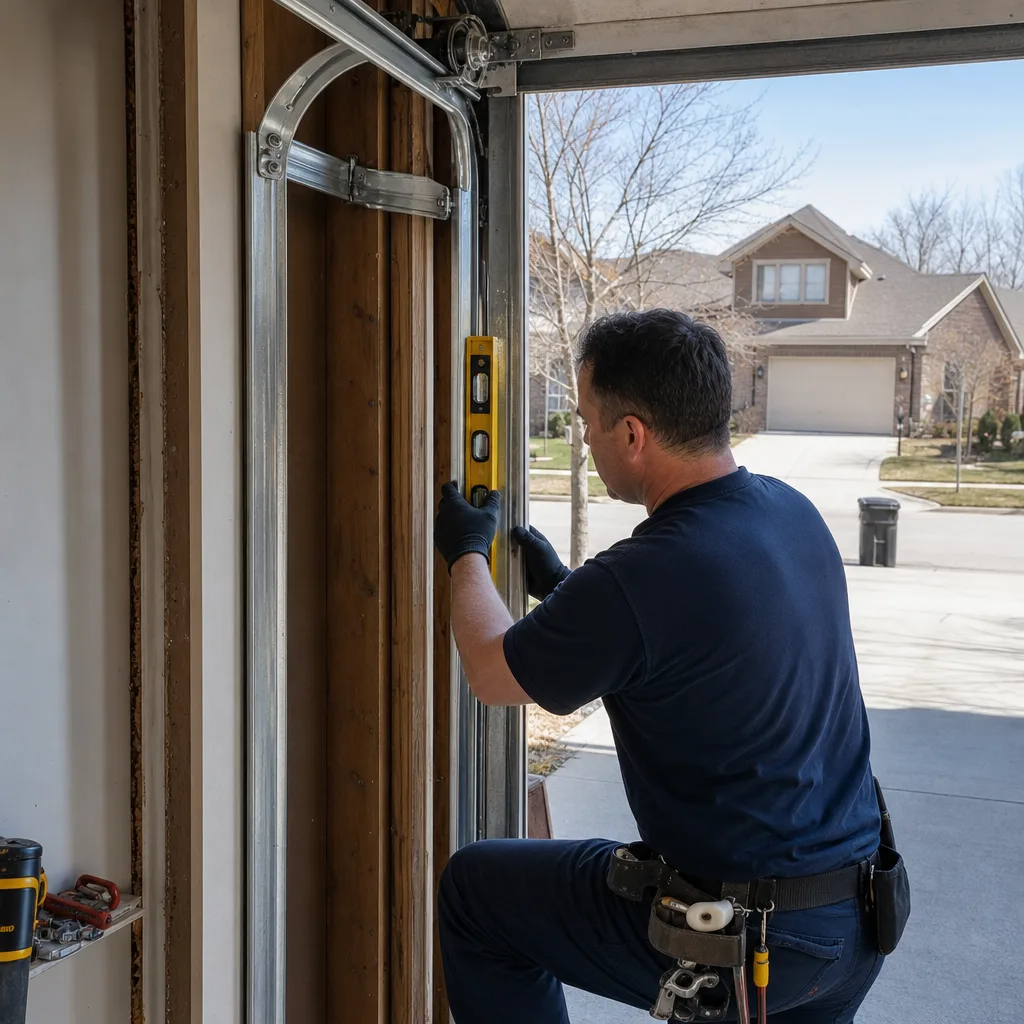
Late September in McDonough is the natural checkpoint before the temperature starts dropping. The heat hasn’t done its worst damage yet - that peaks in August - but the first cold snap arrives fast once it comes. We recommend one full inspection in late September or early October, and then a lighter check in November.
The Complete Fall Checklist
- Re-inspect the bottom seal. Summer is done; now you’re looking at the seam where the seal meets the concrete. Look for daylight, debris trapped in the channel, or sections where the seal has hardened and no longer compresses fully. A seal that doesn’t compress leaves a gap that lets in cold air, mice, and leaves - all of which are worse problems in McDonough’s mild-but-damp winters than almost anywhere else.
- Test the door balance again. A door that passed balance testing in March may not pass in October. Spring tension changes with temperature - cold steel contracts, which increases tension slightly, while hot steel relaxes. A door that’s marginal in October will be worse in January.
- Clean the photo-eye lenses. The photo-eye sensors (the two small lenses mounted six inches off the floor on each side of the door opening) accumulate dust and spiderwebs all summer. A dry cloth and a quick alignment check - the green indicator light should be steady, not flickering - prevents the single most common wintertime opener complaint.
- Inspect the weatherstrip along the sides and top. The vertical weatherstrip is usually the first to fail on west-facing doors, since it takes the afternoon sun. Look for cracks where the strip folds, and for any section that has pulled away from the jamb.
- Lubricate moving parts one more time. Fall lubrication does more than spring lubrication, because it’s meant to stay on the parts through the cold season. Go light. Over-lubrication attracts grit, and grit in the tracks causes more winter problems than dry parts do.
Winter Cold Snap Protocol: December Through February
McDonough winters are mild compared to the Midwest, but they produce a distinctive problem: seal-to-concrete bonding. It happens when the overnight temperature drops below freezing, moisture condenses on the concrete slab under the door, and the bottom seal freezes to that moisture. The door is now glued shut by ice. Here’s the right way to handle it, and the expensive mistake to avoid.
The Cold Snaps That Catch Homeowners Off Guard
The temperature threshold that matters for seal bonding is about 28°F, especially when the day before was above freezing and the ground is wet. Henry County sees enough of these nights between December and February that we take calls about stuck doors every winter. The protocol is straightforward:
Step 1: Do not hit the opener button. The motor doesn’t know the seal is frozen. It will strain against the ice, which either strips the opener gear (a $150+ repair) or tears the seal (a $40 part plus a service call).
Step 2: Pull the manual release cord. This disconnects the door from the opener carriage. The door is now free to move by hand.
Step 3: Rock the door gently. Lift the handle a half-inch and set it down, repeat two or three times. The seal usually releases with a crack of ice. If it doesn’t release after three or four attempts, the seal is more thoroughly bonded - go to step 4.
Step 4: Warm the seal from inside, not outside. Run a hair dryer along the inside bottom edge of the door for three to five minutes, keeping it moving. Do not use hot water, do not pour salt on the seal (salt accelerates rubber breakdown), and do not pry with a shovel, which tears the seal.
Step 5: After the door releases, treat the seal. Wipe the bottom seal dry and spray it with a silicone lubricant. The silicone leaves a film that prevents re-freezing for about a week, which is usually enough to get through a cold snap. Reapply after each freeze-thaw cycle.
One more winter note: cold affects photo-eye alignment on some houses. The metal track brackets contract in cold weather, and if the track was only marginally aligned to begin with, the sensors drift out of line. The symptom is reversed operation: the door goes down fine, but won’t close, because the photo-eyes think something is in the way. The fix is usually a small alignment adjustment on the sensor bracket - a two-minute fix if you know to look for it, and an emergency service call if you don’t.
Month-by-Month Task Calendar
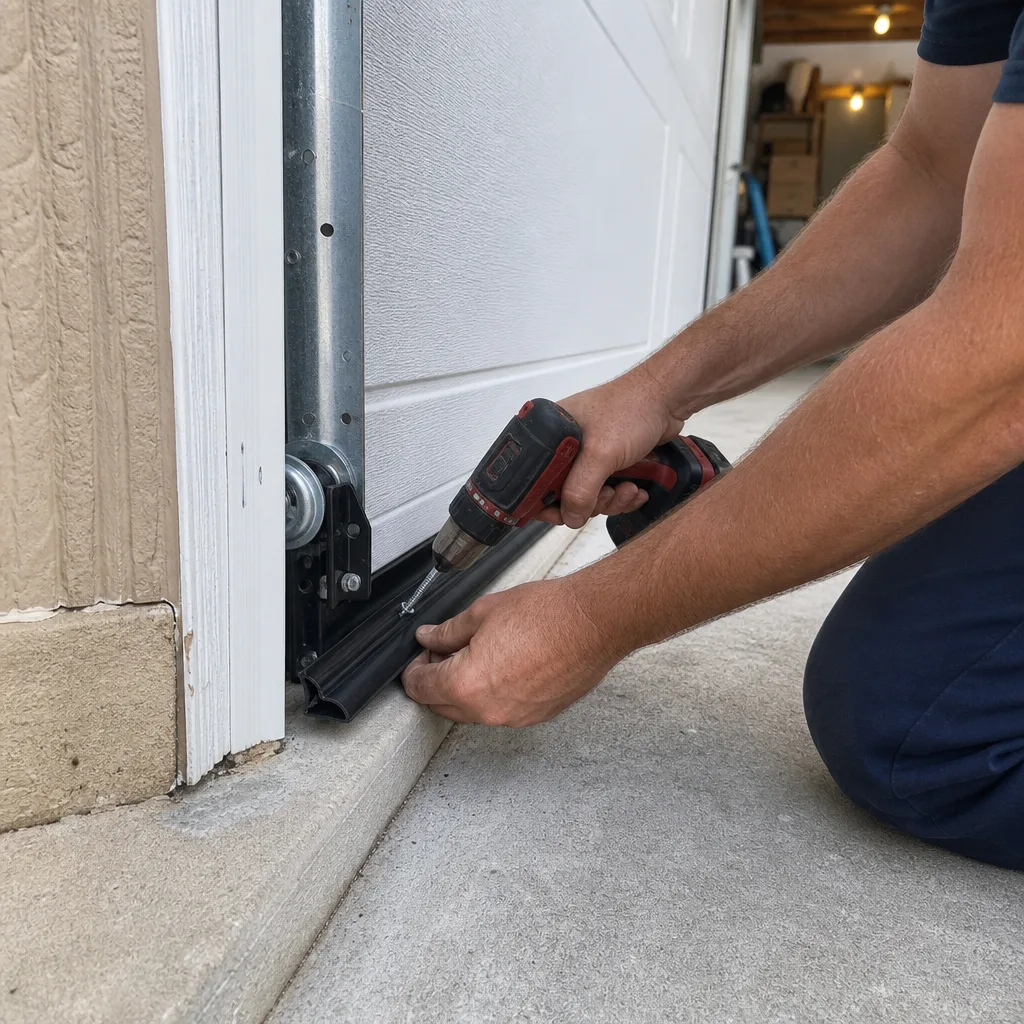
Here’s the entire year condensed into a single reference list, keyed to McDonough’s climate rather than a generic four-season framework. Print it and tape it to the inside of the garage door track. Each task takes under ten minutes except where noted.
January
- Check bottom seal for freeze damage after each cold snap
- Check photo-eye alignment if the door reverses for no visible reason
- Keep the bottom seal dry; silicone spray after thaw cycles
February
- Same cold-snap protocol as January
- Inspect the door for rust spots where road salt or de-icer has splashed up
- Listen for grinding or squealing during operation - cold makes lubrication stiff
March
- Full spring maintenance: wash, lubricate, balance test, auto-reverse test (45 minutes)
- Inspect and replace bottom seal if needed while weather is mild
- Check weatherstrip adhesive on the door frame
April
- Pollen cleanup: wash the top panel seam before pollen hardens
- Check for any small animals (mice, etc.) that nested during winter
- Test the opener’s force settings if the door feels heavier than usual
May
- Start the summer watch: make a note of how hot the garage feels during mid-day
- Check opener capacitor for signs of bulging
- Clean the photo-eye lenses (they collect spring pollen)
June
- Begin reduced cycle frequency during the hottest hours
- Check the bottom seal for early signs of summer heat damage
- Ensure the garage has ventilation if it doesn’t already
July
- Monthly bottom seal check: finger-press test for rebound
- Check opener housing temperature after a cycle
- Inspect the top panel for paint fade or rust formation on west-facing doors
August
- Peak heat month: be disciplined about cycle frequency
- Inspect capacitor for bulging; replace if questionable (a $15 part now, a $200+ opener motor later)
- Check that the emergency release pull still works smoothly
September
- Full fall inspection: seals, balance, lubrication, photo-eyes, hardware (45 minutes)
- Clean out the garage door track channels
- Check that the manual release cord isn’t frayed or binding
October
- Final pre-cold-snap check on bottom seal integrity
- Test the door balance; schedule spring replacement if marginal
- Clean photo-eye lenses one last time before the spider-web season ends
November
- Light check: operate door, listen, watch for slow or jerky movement
- Clean the door panels before winter, especially the top seam
- Verify the auto-reverse safety feature one more time
December
- Begin cold snap protocol as needed
- Check bottom seal for moisture accumulation after rain or frost
- If the door starts sticking, deal with it before a hard freeze
Storm Preparation for McDonough Homeowners
McDonough sits far enough inland that hurricanes arrive as tropical storms or remnants, but the wind still gets here. The garage door is the largest single opening in the house, and it’s the structural weak point most homeowners don’t think about until the wind is already pulling at the panels. Here’s the pre-storm checklist that matters for this area, and the documentation steps to take after a storm if you file an insurance claim.
Before a Named Storm Reaches Henry County
- Close the door and keep it closed. A closed garage door is far stronger than an open one in high wind, and an open garage door can fold like a kite if the wind catches it.
- Lock the door if it has a manual slide lock. This prevents the wind from lifting the door slightly and shaking the panels against the track.
- Disconnect the opener if you expect a power outage. If the power goes out while the door is partially open, the opener loses its position. When power returns, some openers travel to the wrong limit and jam. Pulling the release cord before the storm prevents this.
- Check that the weatherstrip is intact. Wind-driven rain enters through any gap in the bottom seal or side weatherstrip. A missing quarter-inch of seal becomes a surprising amount of water in a two-hour downpour.
- Move vehicles against the door if you’re in a wind-prone area. This adds bracing to the lower panel, which is where wind pressure concentrates.
After the Storm: Document Before You Clean
If the door takes wind damage, photograph everything before you move anything. Document the panels from both sides, the track, the opener mounting, and the weatherstrip. Note whether the door was impacted by debris or by wind pressure alone. This documentation matters for insurance, and it’s the same principle we operate on: the evidence tells the story. Our own service visits include a documented photo record of what was found and what was done, because Clause 4 of The Haven Standard requires the customer to see the failed part before anyone quotes a replacement. That’s not a gimmick; it’s how a repair estimate should work.
Common Mistakes to Avoid
- Lubricating with WD-40. WD-40 is a penetrant and water displacer, not a lubricant. It strips grease from roller bearings and shortens their life. Use a dedicated garage door lubricant, which contains the right lithium or silicone formulation.
- Ignoring a door that feels heavier than it used to. A heavier-feeling door means the springs are losing tension. That’s a progressive condition; it doesn’t correct itself. The door gets heavier and heavier until the spring breaks, usually on a morning when you’re already late.
- Prying a frozen door open. In McDonough’s winter, the freeze-thaw cycle bonds the bottom seal to the concrete. Prying tears the seal and usually damages the retainer, doubling the repair cost. Use the five-step protocol above.
- Running the opener repeatedly during August heat. The duty cycle rating assumes intermittent use in moderate temperatures. During McDonough’s hottest weeks, the motor needs rest between cycles or the capacitor fails.
- Skipping the auto-reverse test. It’s the most important safety feature on the door, and it’s the one most often overlooked. A door that doesn’t reverse on contact is dangerous, and a limit switch that has drifted is a simple fix - if you catch it.
- Replacing the bottom seal without cleaning the retainer channel. Old rubber and debris in the aluminum retainer prevent the new seal from seating properly. The new seal won’t seal, and you’ll have spent the money twice.
- Waiting until a door won’t open to call for service. By the time the door won’t move, the failure has usually been developing for weeks. The seal was cracked, the spring was losing tension, the capacitor was bulging. Seasonal checks catch these before they become emergency calls.
When to Call a Professional
Some seasonal tasks are inspection only. Torsion springs are under enough tension to cause serious injury, and the adjustment should never be a DIY job. If the door fails the balance test, if the springs show visible gaps or rust, or if the opener motor hums without moving the door, stop using the door and call someone who can show you the failed part. The same applies to cables, which carry the spring tension and can snap during inspection. Garage Door Repair in McDonough covers these systematically, and the diagnostic process starts with what we find, not what we assume.
For any seasonal service, Servo Garage Doors McDonough offers free estimates in McDonough - call (470) 928-4767. That estimate is a flat, written price with a written scope, delivered before any work starts, per Clause 1 of The Haven Standard. If another company has already quoted a written estimate, bring it: the Free Second Opinion applies to any competing written estimate, no coupon required. And if you’re not sure whether a seasonal check is worth the call, we’d rather you call and find out it’s nothing than wait until it’s something.
Frequently Asked Questions
A full seasonal maintenance visit in McDonough typically runs $89 to $149, depending on the door type and whether any small adjustments or lubrication are needed; parts like bottom seals and capacitors are quoted separately on a flat written estimate before any work begins. For detailed pricing on parts and labor, see our Garage Door Cost Breakdown: The McDonough Homeowner’s Reference for 2026.
Twice a year is the right interval for McDonough: once in late March before summer humidity and heat set in, and once in late September before the first hard cold snap. Doors that face west or get heavy daily use (four or more cycles a day) usually benefit from three visits a year.
The bottom seal is the component we replace most often in McDonough, because the heat accelerates rubber degradation to roughly a three-year replacement interval. It’s also the cheapest fix when caught early; a new seal runs $15 to $40 in materials, and the replacement takes under an hour.
The door feels heavier than it used to, makes a snapping or popping sound during operation, or fails the balance test (when you lift it by hand to waist height, it won’t stay put). In McDonough’s climate, torsion springs typically last seven to nine years on a door that cycles twice a day. Never attempt to adjust or replace a torsion spring yourself; the tension is dangerous, and a professional should handle it.
Yes, for repair and seasonal maintenance work, same-day service is available in McDonough and the surrounding Henry County area; call (470) 928-4767 for an exact time, and a live person will answer, not a recording. For installation and full door replacement, we schedule a measure and provide a written price before ordering anything.
No. The price we quote before starting is the price you pay. That’s Clause 1 of The Haven Standard: a flat, written price and a written scope, delivered before any work begins. If we find something unexpected, we document it with photos and show you the failed part before quoting any additional work, per Clause 4. Call (470) 928-4767 for the exact price on your door - no visit required for most common repairs.
The Bottom Line
McDonough’s climate drives a maintenance reality that generic garage door advice ignores. The heat degrades rubber and capacitors faster than manufacturer baselines assume. The cold snaps cause freeze-bonding and photo-eye drift that catch homeowners off guard. The fix for all of it is a disciplined schedule: two full inspections a year, monthly checks during the two failure windows, and replacements made while the weather is mild rather than during an emergency. That schedule costs about ninety minutes a year and roughly nothing in tools - and it prevents the repair calls that make up most of our winter and late-summer service volume. If you want a professional set of eyes on it, Servo Garage Doors McDonough home to see how we work, or call (470) 928-4767 for a free estimate, written and flat before any work starts. Whether you need Garage Door Installation in McDonough or Garage Door Opener Repair & Installation in McDonough, we’ll document what we find.
Written by Marcus Deller, Owner at Servo Garage Doors McDonough, serving McDonough since 2015. Browse more guides & resources from our team.