
Full 25-point door and opener safety check with every visit - springs, cables, rollers, tracks, and your LiftMaster or Chamberlain opener included
You get a price before we start. It does not change when the truck arrives.
 Before
 After
After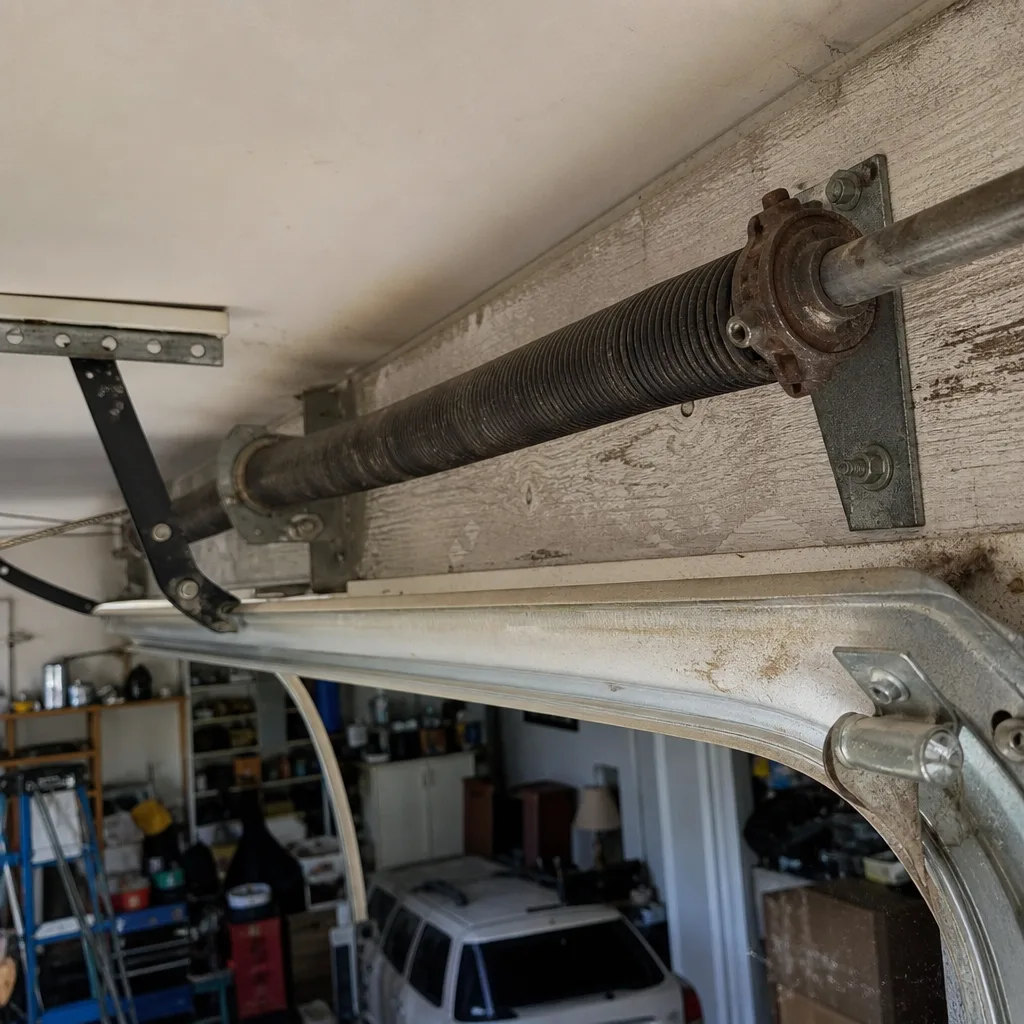 Before
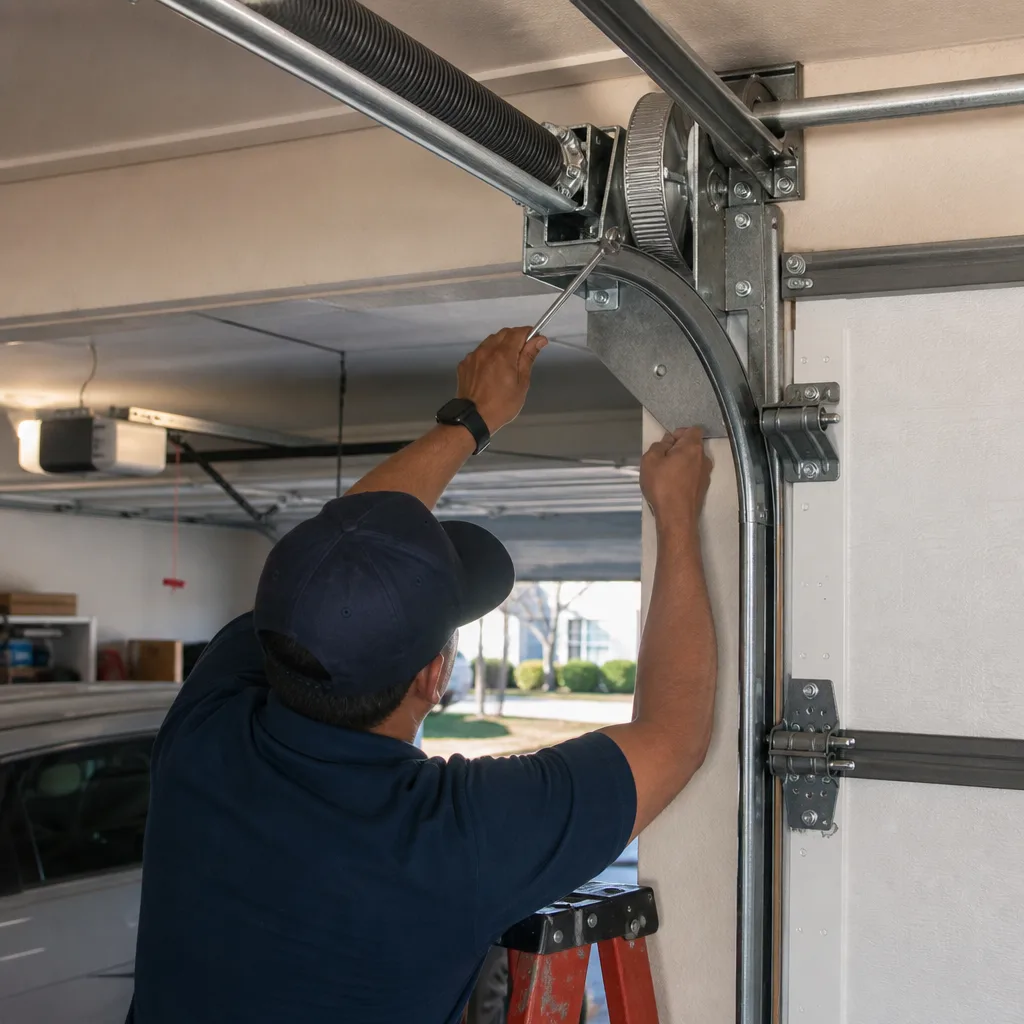 After
After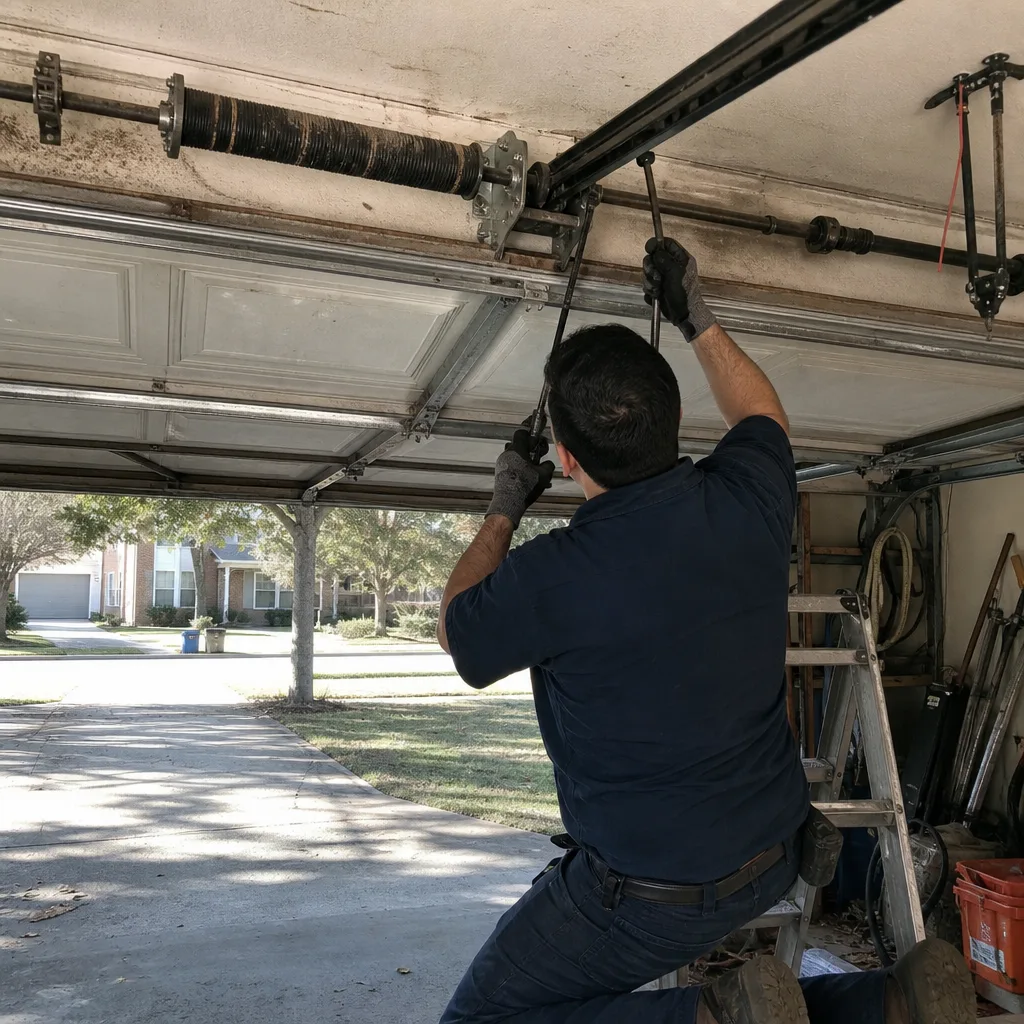 Before
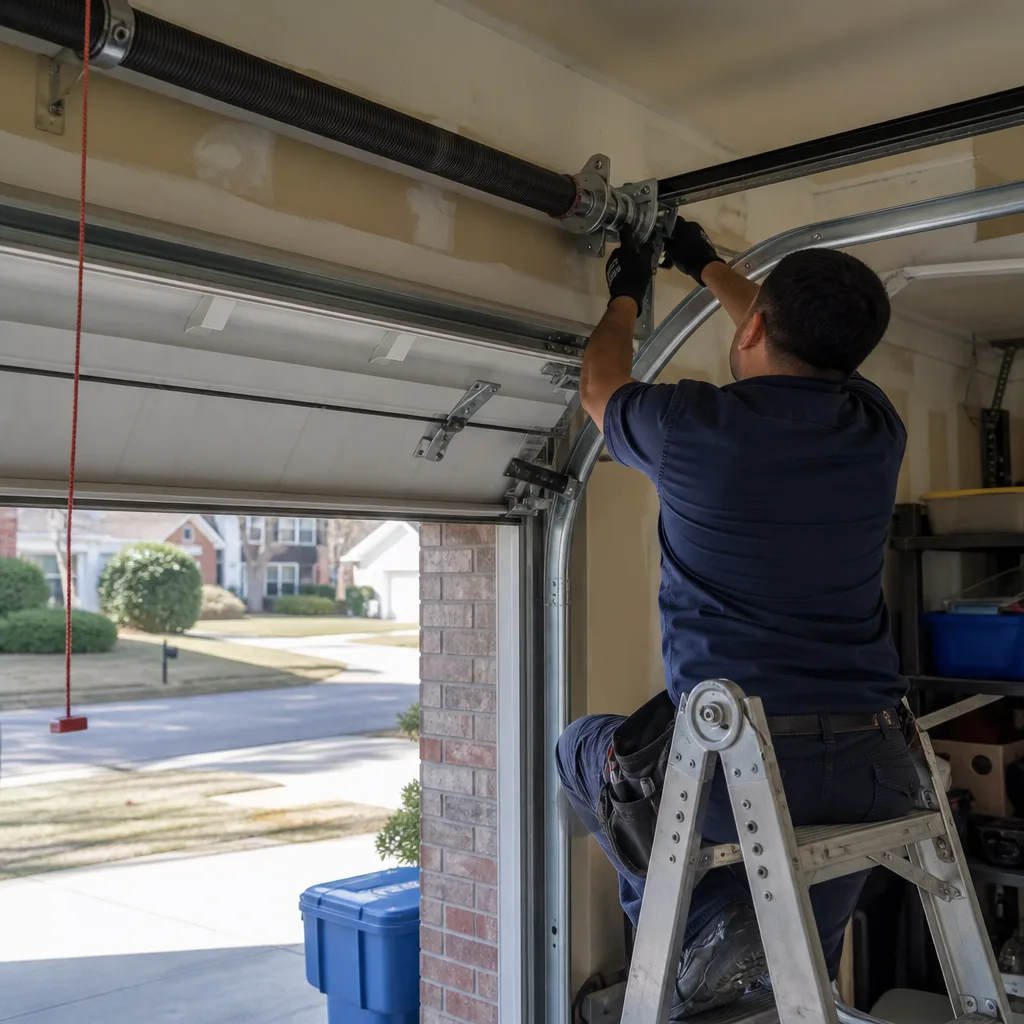 After
AfterWayne Dalton Weather Seal Replacement: The McDonough Owner’s Guide
We stock and install Wayne Dalton-compatible bottom weather seal replacement throughout McDonough, typically for $110-$220 installed, and we carry the common profiles on the truck so most swaps happen same-day. You usually find this part failed when you notice daylight under the door, water staining along the garage floor after a hard rain, or a snake of black rubber peeling away from the aluminum retainer. The fix is straightforward, but matching the right seal profile to your specific Wayne Dalton model is where most owners hit a wall. Here’s exactly what you need to know before you pick up the phone.
Which Wayne Dalton Models This Applies To
Wayne Dalton has used two dominant bottom seal systems over the years: the T-style bulb seal that slides into a single aluminum channel on residential doors like the 8000, 8100, and 9100 series, and the wider P-style bulb found on the 9600 and 9700 series and most ThermoMark doors. The difference matters more than most people expect. A T-bulb forced into a P-channel will hold for about a month before it tears at the neck, and a P-bulb in a T-channel will fold under the door instead of compressing against the threshold. We measure the channel opening before we quote anything, because the part number on a 12-year-old door is often worn off or painted over. Servo Garage Doors McDonough is an independent service provider, not affiliated with Wayne Dalton, but we carry their OEM profiles along with a quality aftermarket equivalent we’ve seen hold up better in Georgia humidity than some factory seals.
OEM vs. Aftermarket: What We Actually Recommend
OEM Wayne Dalton seals are made from EPDM rubber, and for most McDonough garages they do fine. But EPDM gets stiff after six or seven Georgia summers, and once it stops compressing, water follows the path of least resistance straight under the door. The aftermarket bulb we stock for Wayne Dalton applications uses a softer durometer EPDM that keeps its flex longer, and it runs about fifteen to twenty percent less than the OEM part. We install both and we’ll show you the price difference in writing before we touch anything. If you have a ThermoMark door, stick with Wayne Dalton’s own seal. The ThermoMark channel is slightly narrower than the residential standard, and the aftermarket bulb seats too tight and won’t slide without tearing.
Signs Your Wayne Dalton Weather Seal Replacement Is Failing
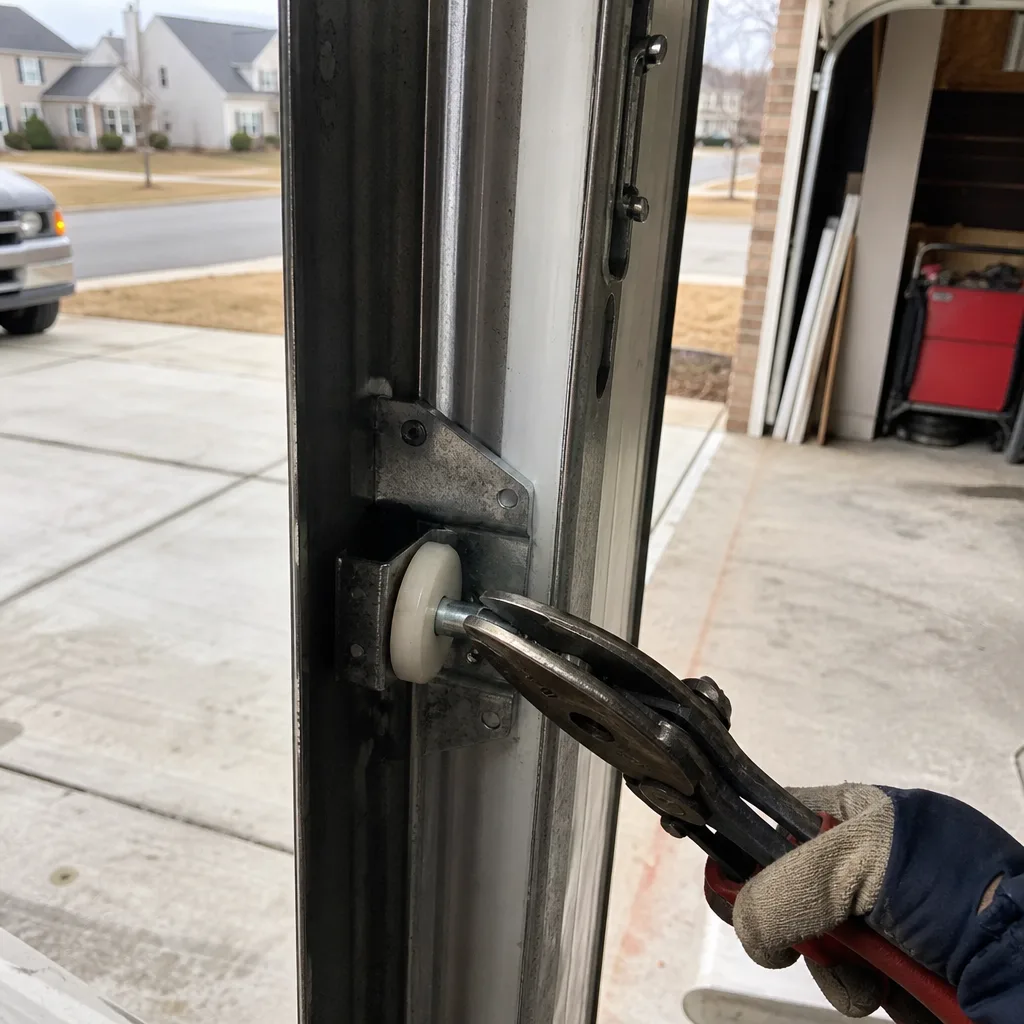
- Daylight visible under the closed door. The seal has flattened past the point of recovery. Once the bulb loses its round profile, it can’t bridge the gap between the door bottom and the slab anymore.
- Water or leaf debris on the garage floor after rain. McDonough storms push water sideways, and a flat seal acts like a squeegee that leaves a gap. The telltale is a wet line that follows the direction of the storm, not the direction of the driveway slope.
- The rubber pulls out of the channel when the door opens. The seal has lost its grip, usually because the channel has been pried wider by years of compression or the seal itself has shrunk lengthwise. It’ll keep getting worse until it drops out completely mid-cycle.
- Rodent droppings or chewed spots along the seal edges. Mice and rats chew EPDM for nesting material, and a torn seal is an open invitation. We see this more in the older subdivisions off McGarity Road and around Nash Farm where the lots back up to tree lines.
- A gap at one corner but not the other. This is usually the seal shrinking over time, not the door being out of level. If the gap swings with the seasons, it’s the rubber. If it never changes, we’ll check the door itself while we’re there.
BeforeAfterReplacement Cost & What’s Included
Installed Wayne Dalton weather seal replacement in McDonough runs $110-$220, and the range comes down to door width, channel type, and whether we’re installing OEM or the aftermarket equivalent we stock. A standard 16-foot double door is at the top of that range. A single 9-foot door with a standard T-channel usually lands near the bottom. That price includes removing the old seal, cleaning the channel, cutting the new seal to exact length, sliding it in, and testing the door through several full cycles. You get the written price before we start, per Clause 1 of The Haven Standard, and the photo record when we finish, per Clause 4. The work carries our 365-Day Done Right Promise: if the seal tears at the neck or pulls loose within a year, we’re back to make it right without another invoice.
DIY or Call Us?
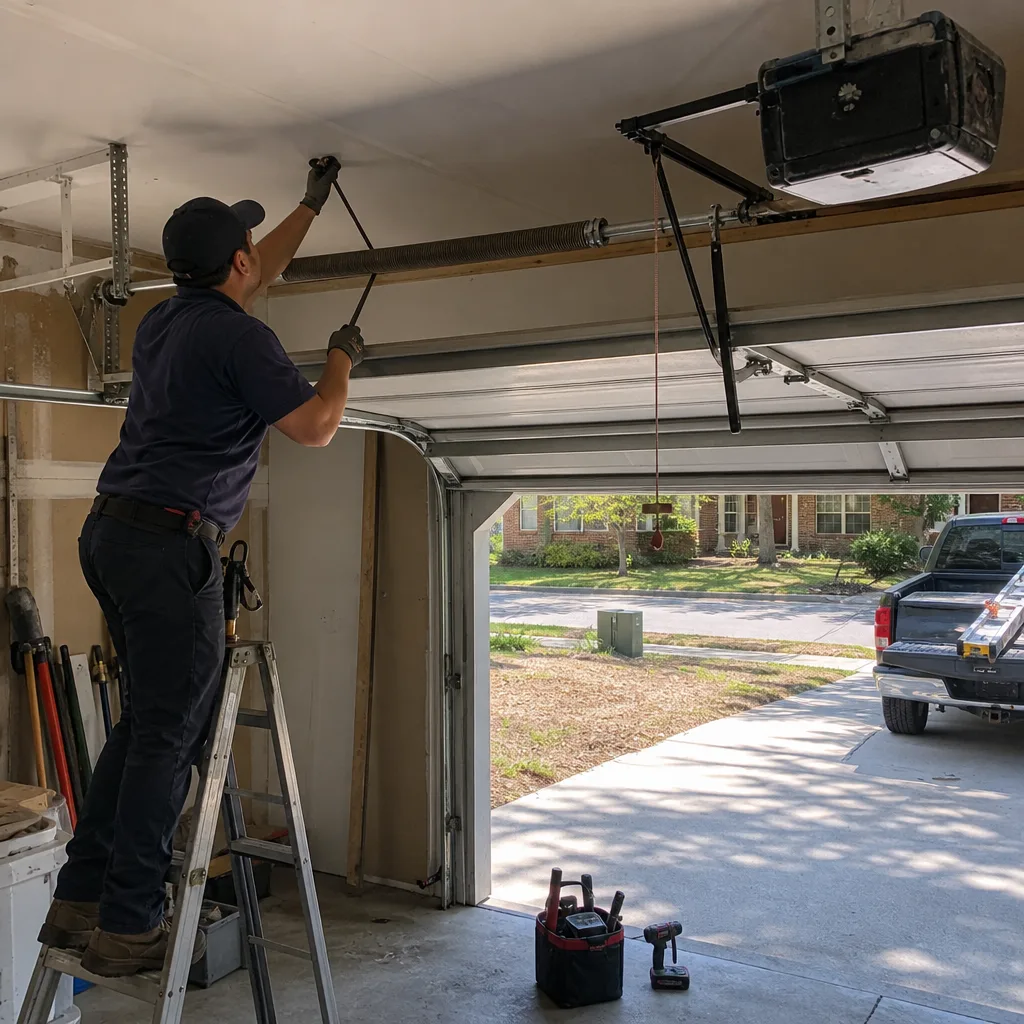
Sliding a new seal into a clean, undamaged channel is one of the safer garage door jobs there is. If your channel is straight and you’ve confirmed the profile, you can do it yourself in under an hour with a utility knife, a flathead screwdriver, and some dish soap for lubricating the channel. But the part that trips people is step one: getting the right seal. The wrong bulb profile wastes your money, and a stretched or kinked channel will chew through a new seal in weeks. If your aluminum channel is bent at the corners, or the old seal is glued in place from a previous owner’s fix, you’re better off letting us handle it. Marcus Deller’s habit is to name the part number and the dollar range before anything comes off the wall, so a quick call to (470) 928-4767 gets you a straight answer either way.
FAQs
Expect five to eight years from a quality EPDM seal in Henry County’s heat and humidity, with aftermarket softer durometer bulbs lasting on the higher end of that range. Doors that face west and catch afternoon sun tend to age the rubber faster. We’ve seen seals still serviceable at ten years and others brittle at four, but five to eight is the realistic window. If you’re unsure whether yours has life left, call (470) 928-4767 and we’ll tell you straight what the read is.
No. The failure is material, not mechanical: once the rubber has flattened, torn, or shrunk, no adhesive or re-seating will restore it. Patching never works because water finds the seam and the patch compounds the problem. Replacement is the repair. The part is inexpensive enough that repair-versus-replace isn’t a real debate the way it might be with a torsion spring or a panel.
Most replacements take 30 to 45 minutes on site, including pulling the old seal, cleaning the channel, fitting the new length, and cycling the door to confirm the seal sits flat. If the channel is damaged and needs straightening or re-fastening, that can add time. We typically handle this as a same-day service when we have the profile on the truck, which we do for the common Wayne Dalton residential lines.
We carry the most common Wayne Dalton T-bulb and P-bulb profiles, plus the aftermarket equivalent we recommend, on the truck for immediate installation across McDonough. If you have a less common series, such as a ThermoMark door with its narrower channel, we can usually have the correct seal in hand within one to two business days. Call (470) 928-4767 with your model number, and we’ll confirm stock before you schedule anything.
Written by Marcus Deller, Owner, Servo Garage Doors McDonough at Servo Garage Doors McDonough, serving McDonough and nearby areas.