
Last updated September 20, 2026
Full 25-point door and opener safety check with every visit - springs, cables, rollers, tracks, and your LiftMaster or Chamberlain opener included
You get a price before we start. It does not change when the truck arrives.
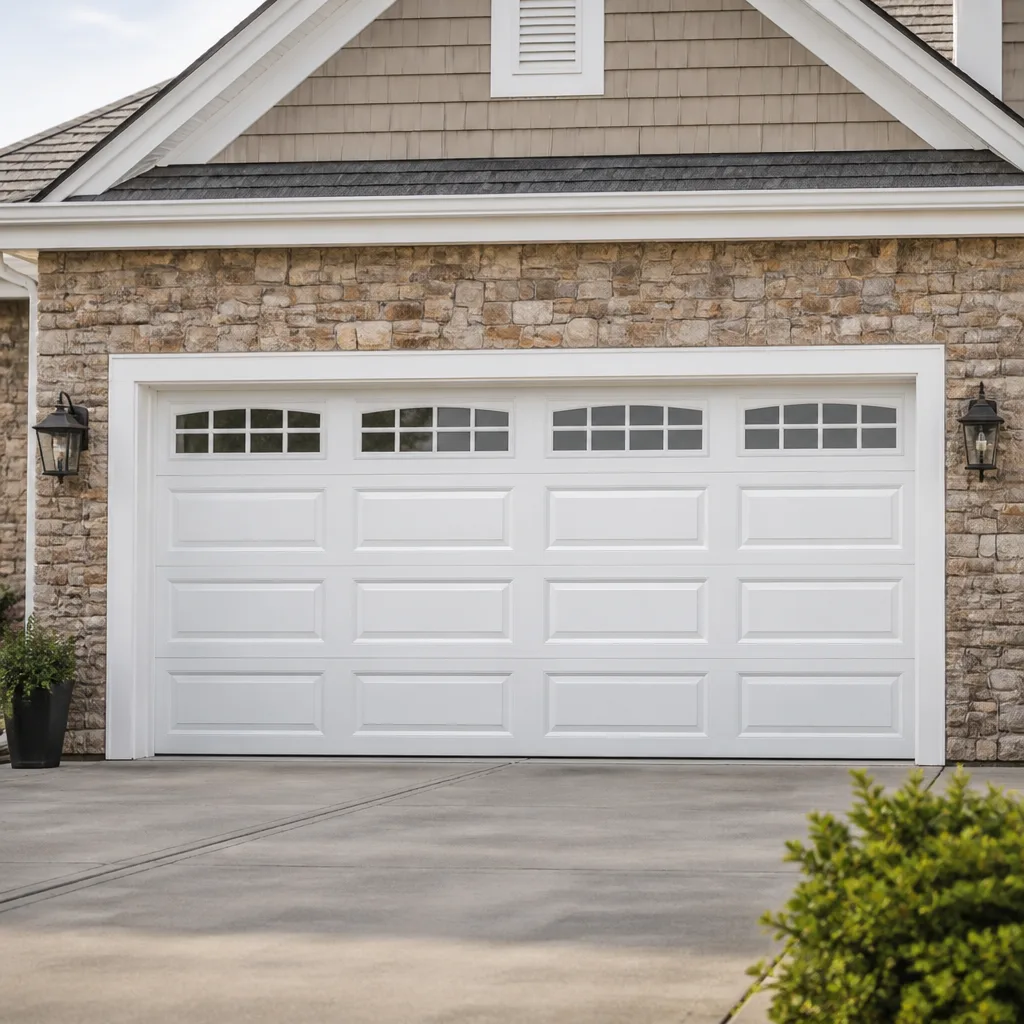
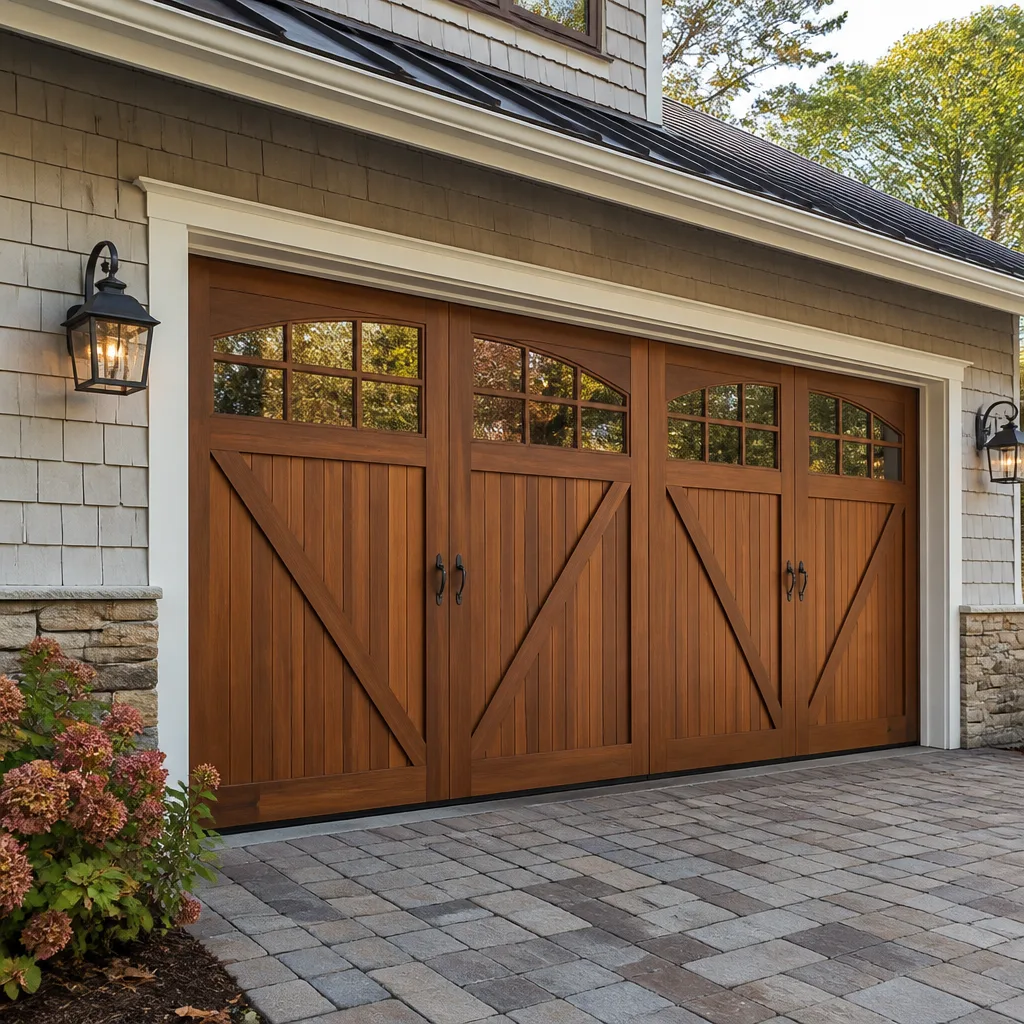
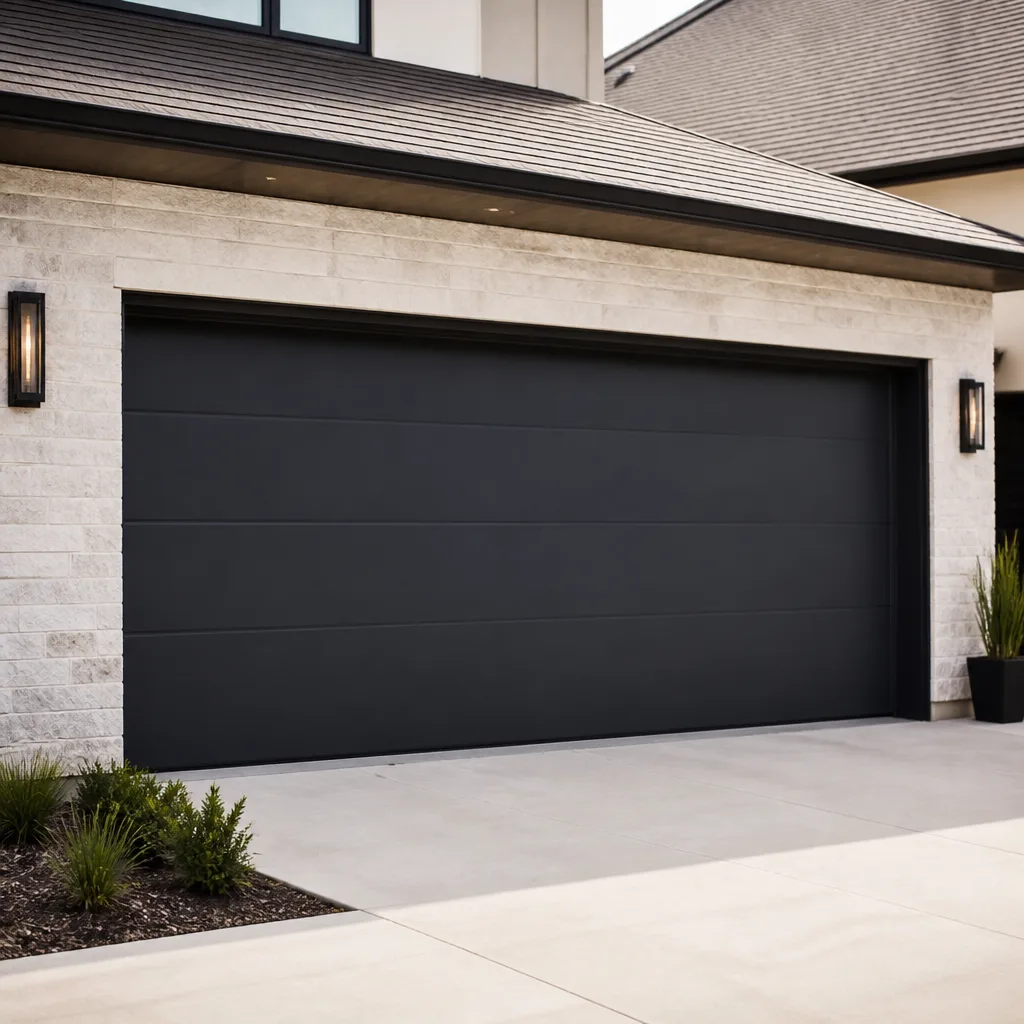
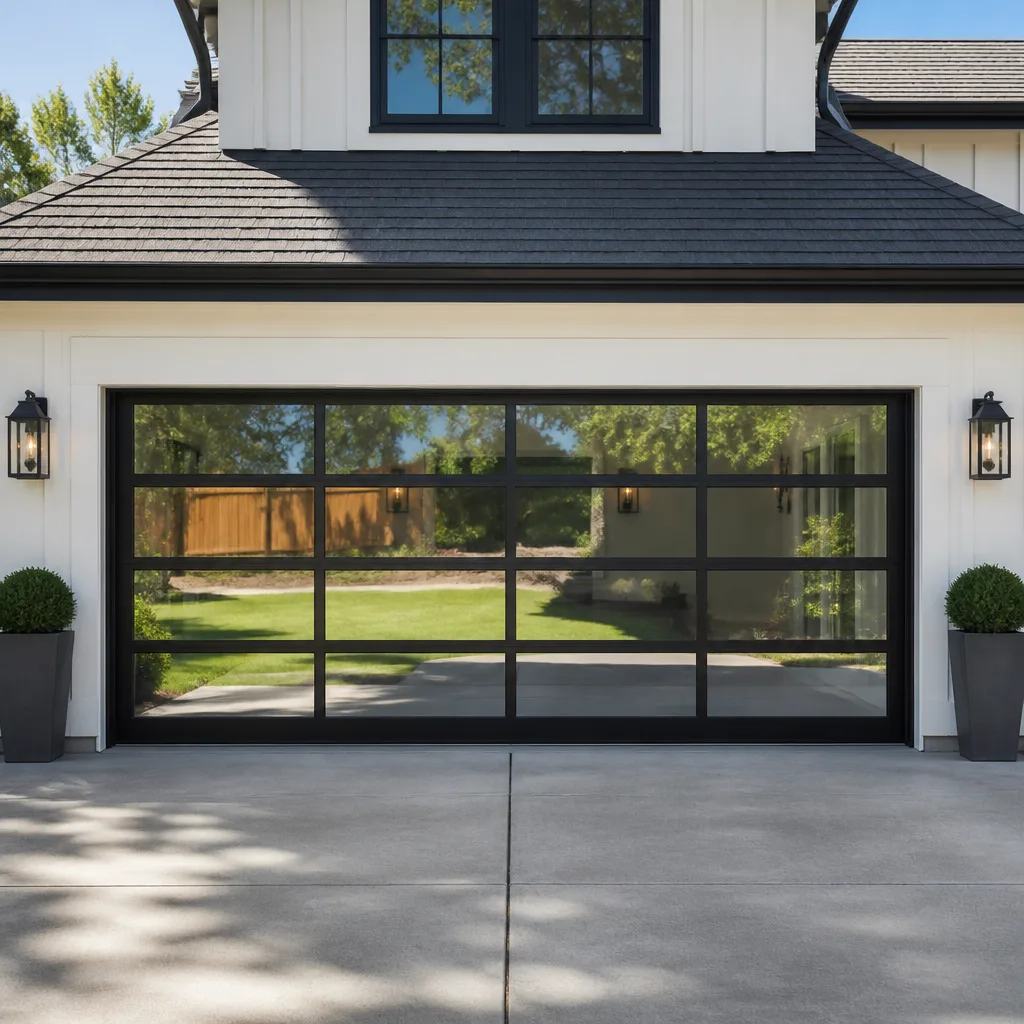
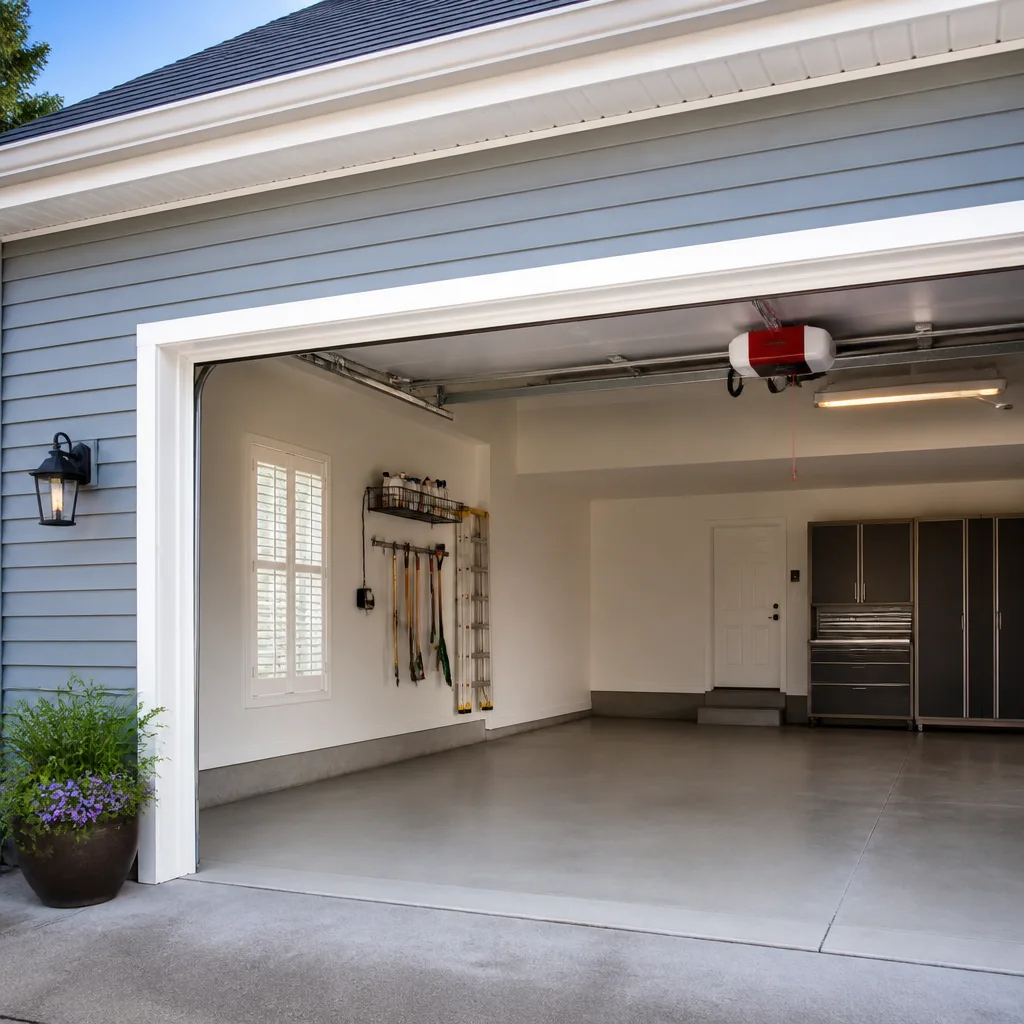
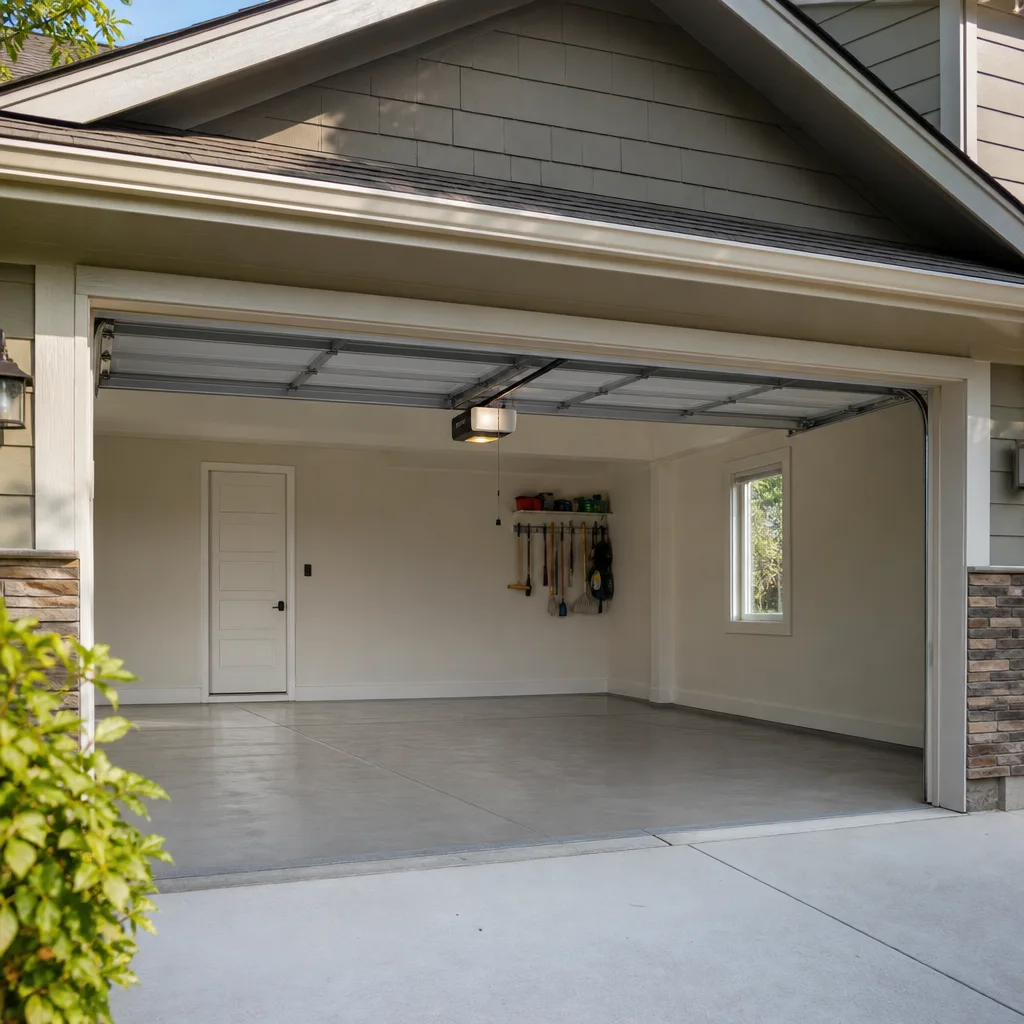
 Before
 After
After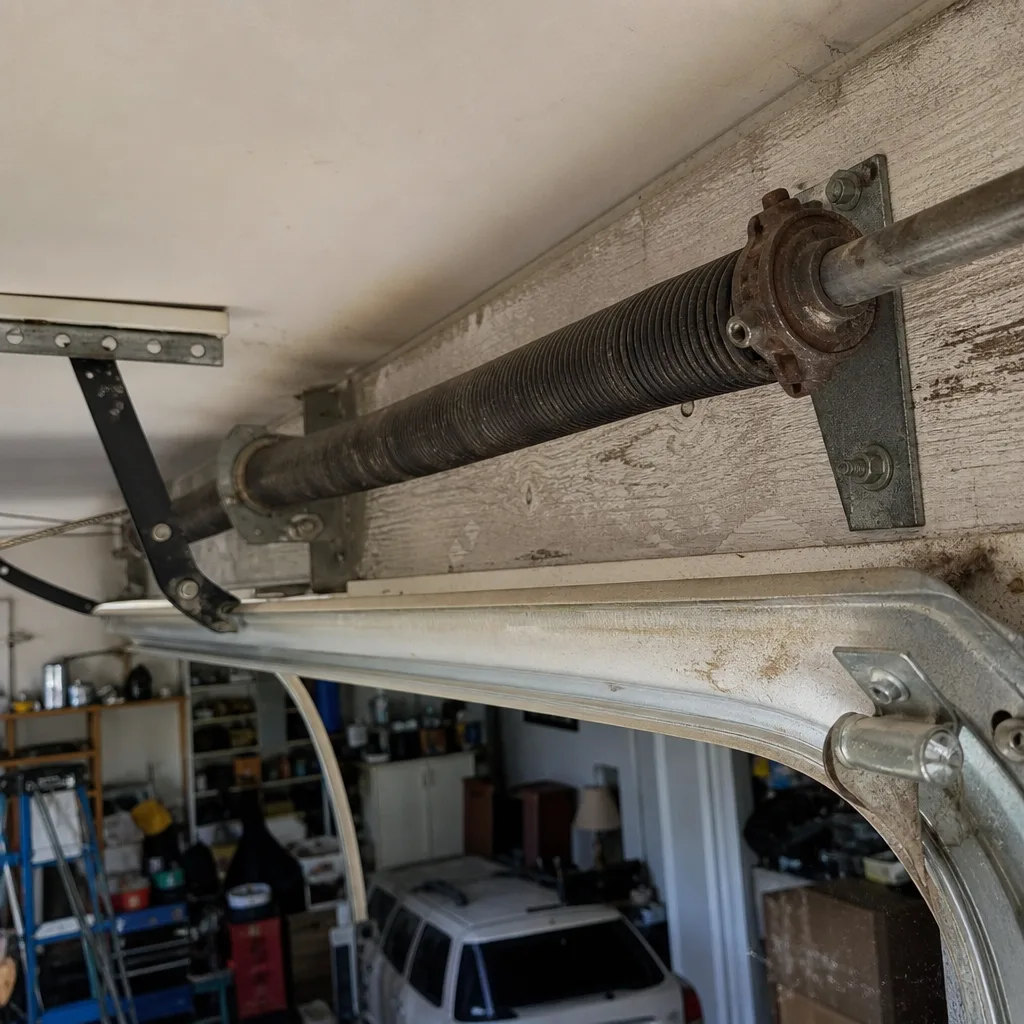 Before
 After
After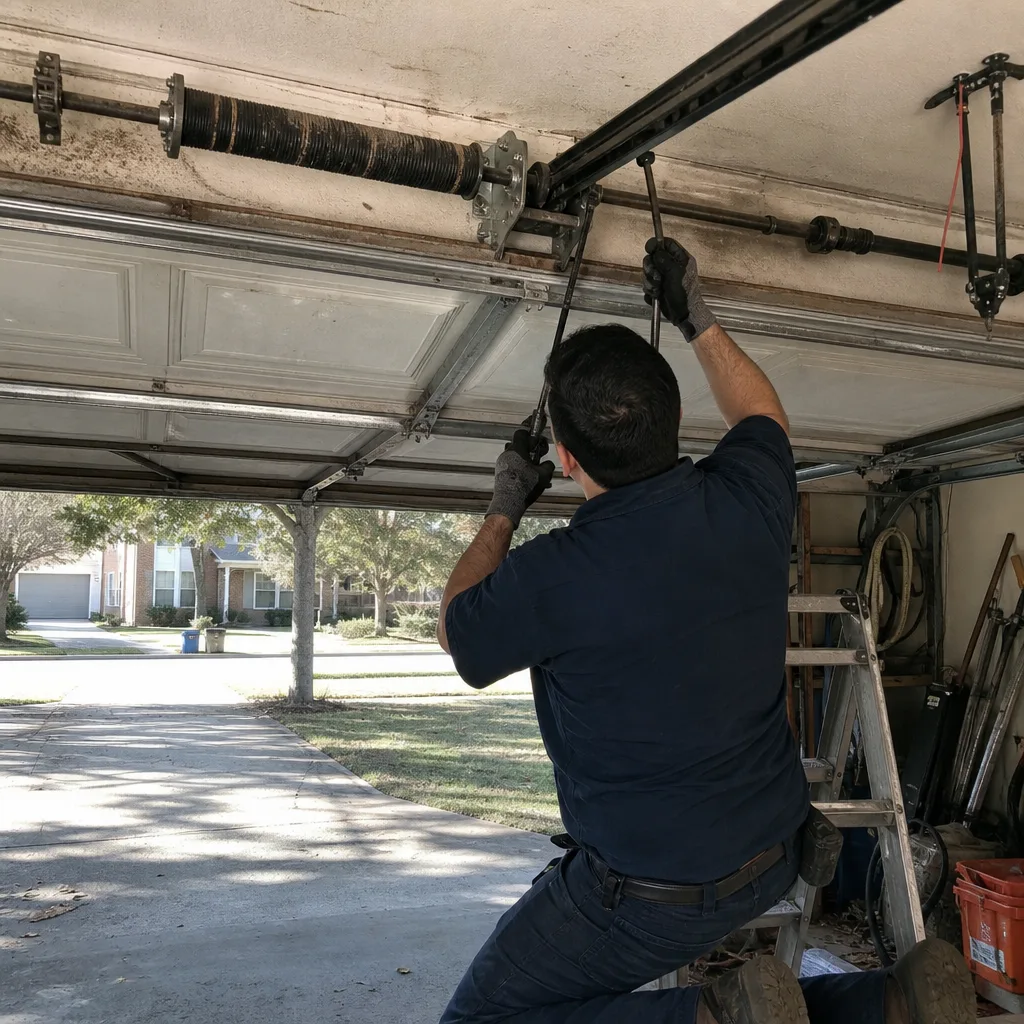 Before
 After
AfterThe Complete Guide to Garage Door in McDonough
Most McDonough homeowners replace an entire garage door when a single torsion spring, a $150 to $300 part, is the only component that has actually failed. The confusion starts because the door “won’t open,” and “won’t open” sounds like a door problem rather than a spring problem. But a garage door is not one machine. It is four separate subsystems, springs, tracks, the opener, and weatherseal, working in sequence. Each fails on its own timeline, and each has its own repair cost. This guide maps those subsystems so you can identify what actually broke before you call anyone in McDonough.
Quick Answer
A garage door system in McDonough breaks down into four subsystems: springs, tracks and rollers, the opener, and weatherseal. Each subsystem fails independently, has its own price range, and requires a different repair approach. Before calling a contractor, identify which subsystem has failed by reading the symptoms against the map in this guide. That single step determines whether you are looking at a $150 spring replacement or a $2,800 full door replacement.
Table of Contents
- The Four-Subsystem Map: How Your Garage Door Actually Works
- McDonough Housing Stock: Why Your Door Is the Size It Is
- How to Read Your Door’s Hardware Labels Before Calling Anyone
- Single-Subsystem Jobs vs. Cross-Subsystem Jobs: Where the Decision Actually Lives
- What a Written, Photographed Quote Should Include
- What Each Subsystem Costs to Repair in McDonough
- Common Mistakes to Avoid
- When to Call a Professional
- Frequently Asked Questions
BeforeAfterThe Four-Subsystem Map: How Your Garage Door Actually Works
A garage door in McDonough is not a single device that either works or does not. It is four subsystems that each carry a distinct job, and when one fails, the others keep doing their work until the imbalance tears something else apart. Understanding this map is the difference between replacing a spring for $250 and replacing an entire door for $2,800 because no one caught the spring in time.
Subsystem One: The Springs (Torsion and Extension)
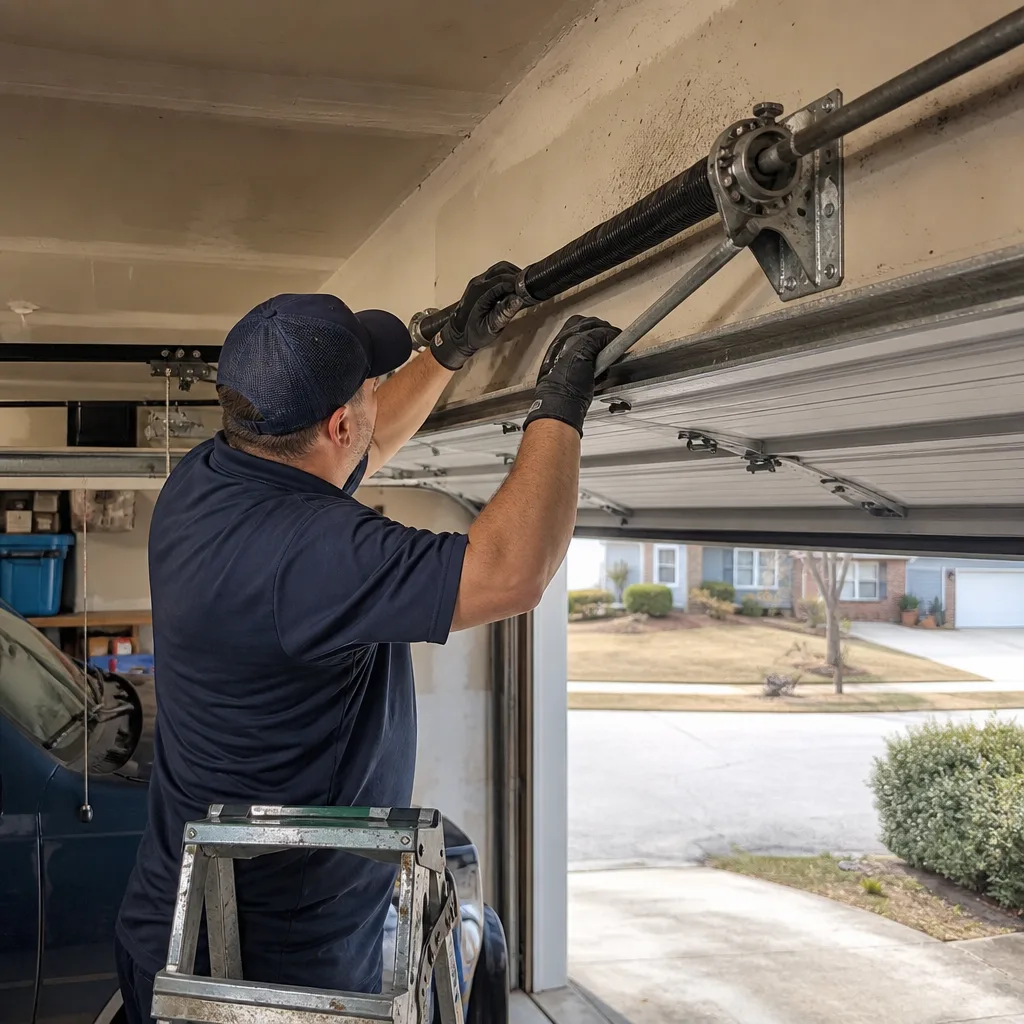
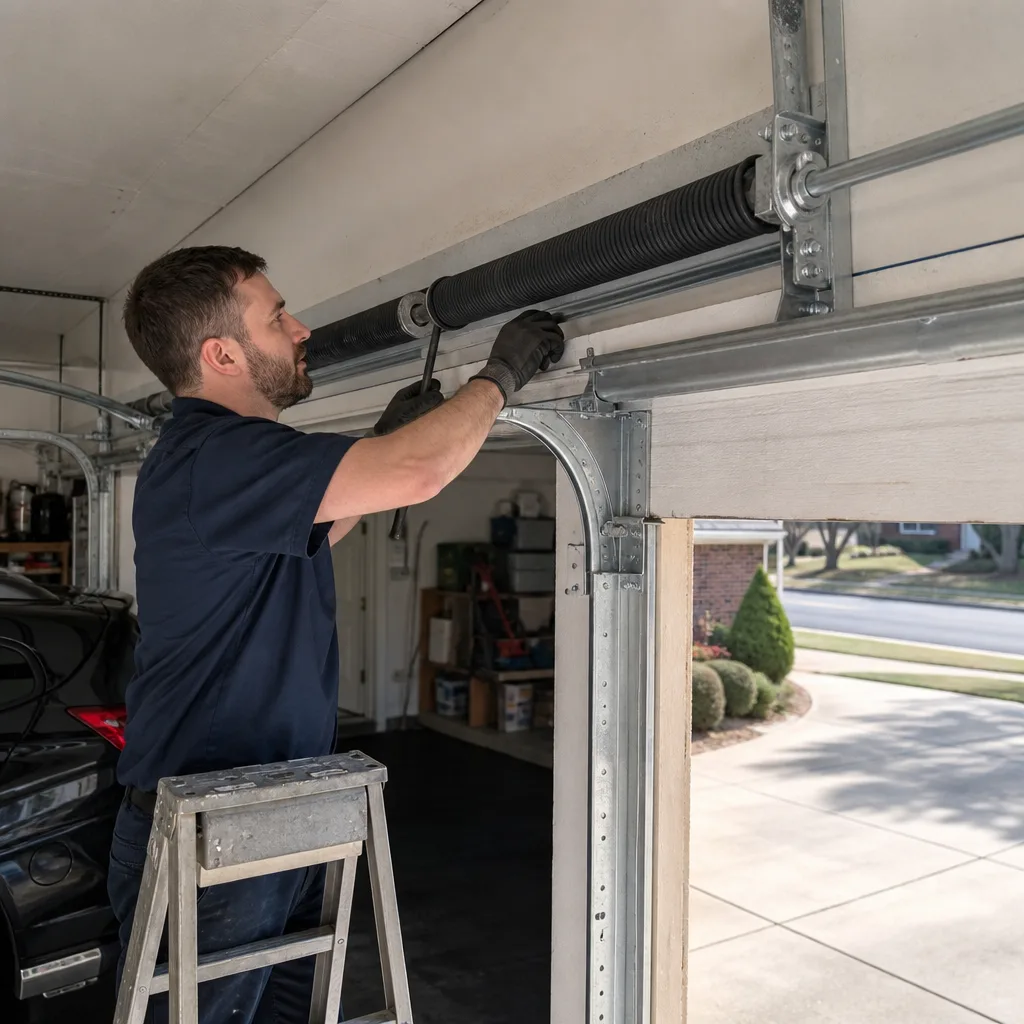
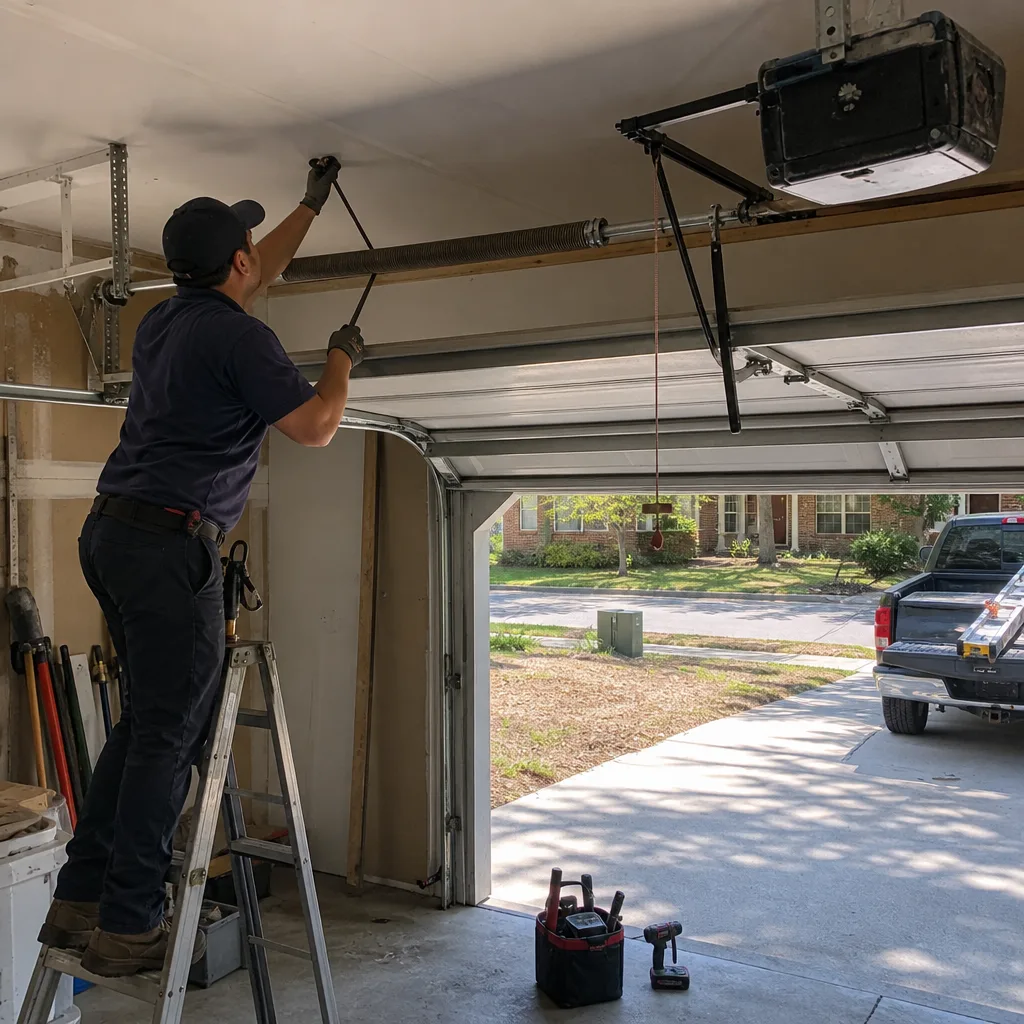
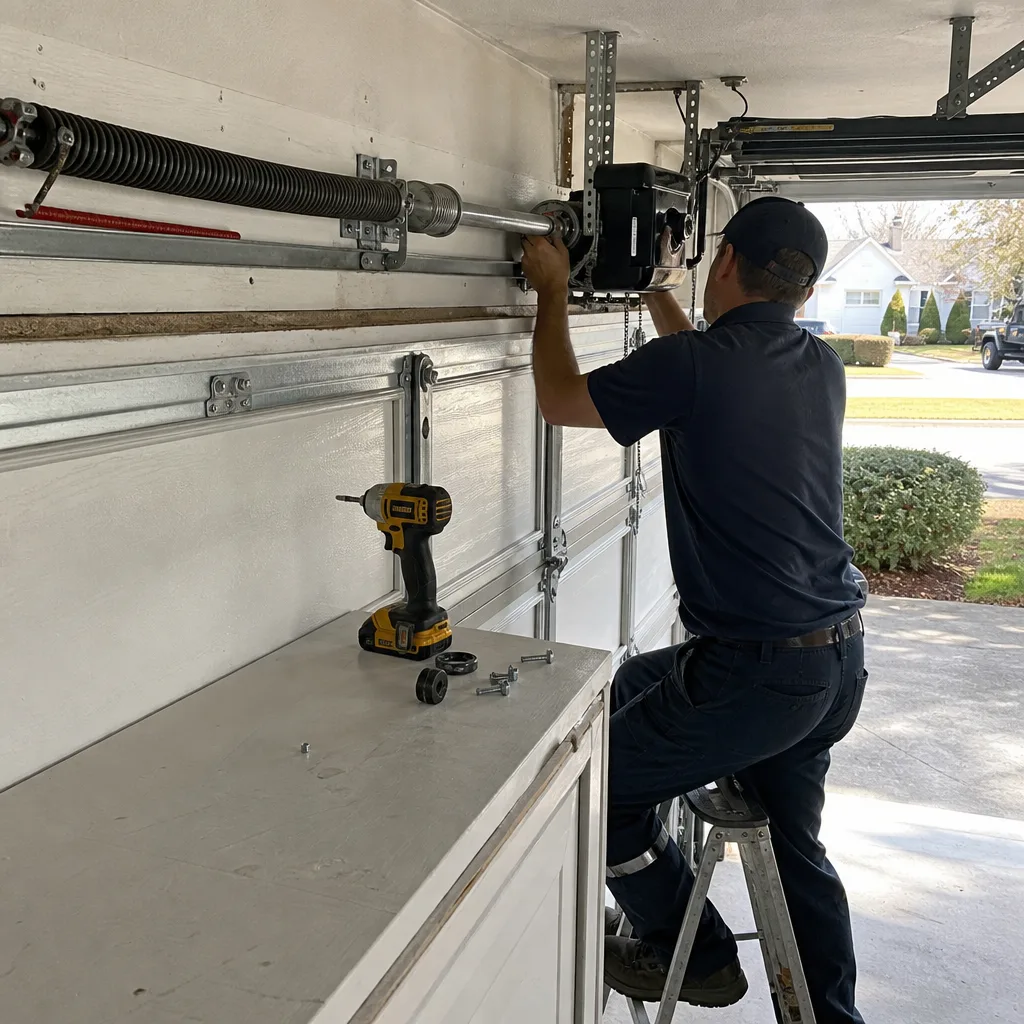
The springs carry the actual weight of the door. On a standard 16-foot-wide double door in McDonough, that weight runs between 160 and 220 pounds depending on the panel material and insulation. Torsion springs, mounted on a shaft above the door opening, wind and unwind to counterbalance that weight. Extension springs, mounted on both sides of the track, stretch and contract instead. Most doors built after 2005 in Henry County use torsion springs, and they are rated for a cycle life, typically 10,000 cycles, which translates to roughly 7 to 10 years of normal use. When a torsion spring breaks, you hear it. It sounds like a gunshot inside the garage. The door will not lift because the opener is not strong enough to move 180 pounds on its own.
Subsystem Two: The Tracks and Rollers
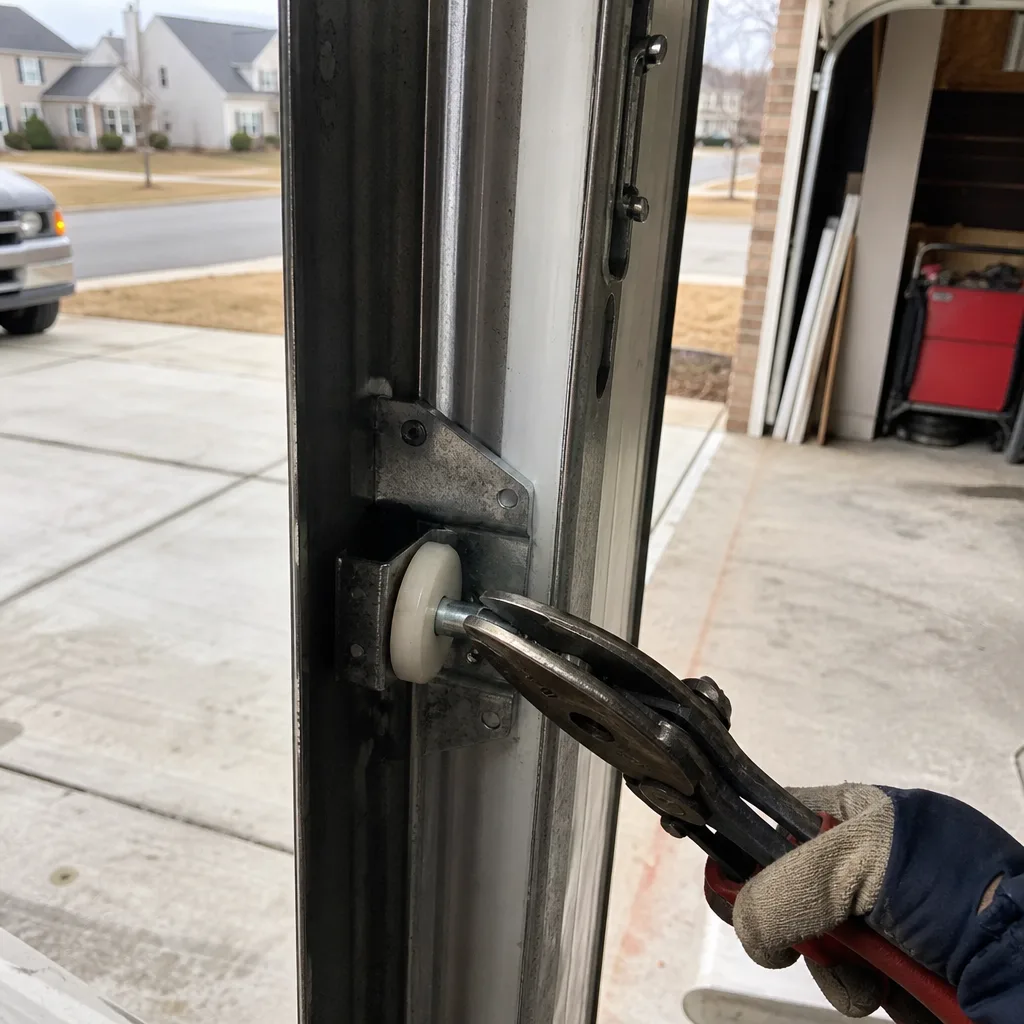
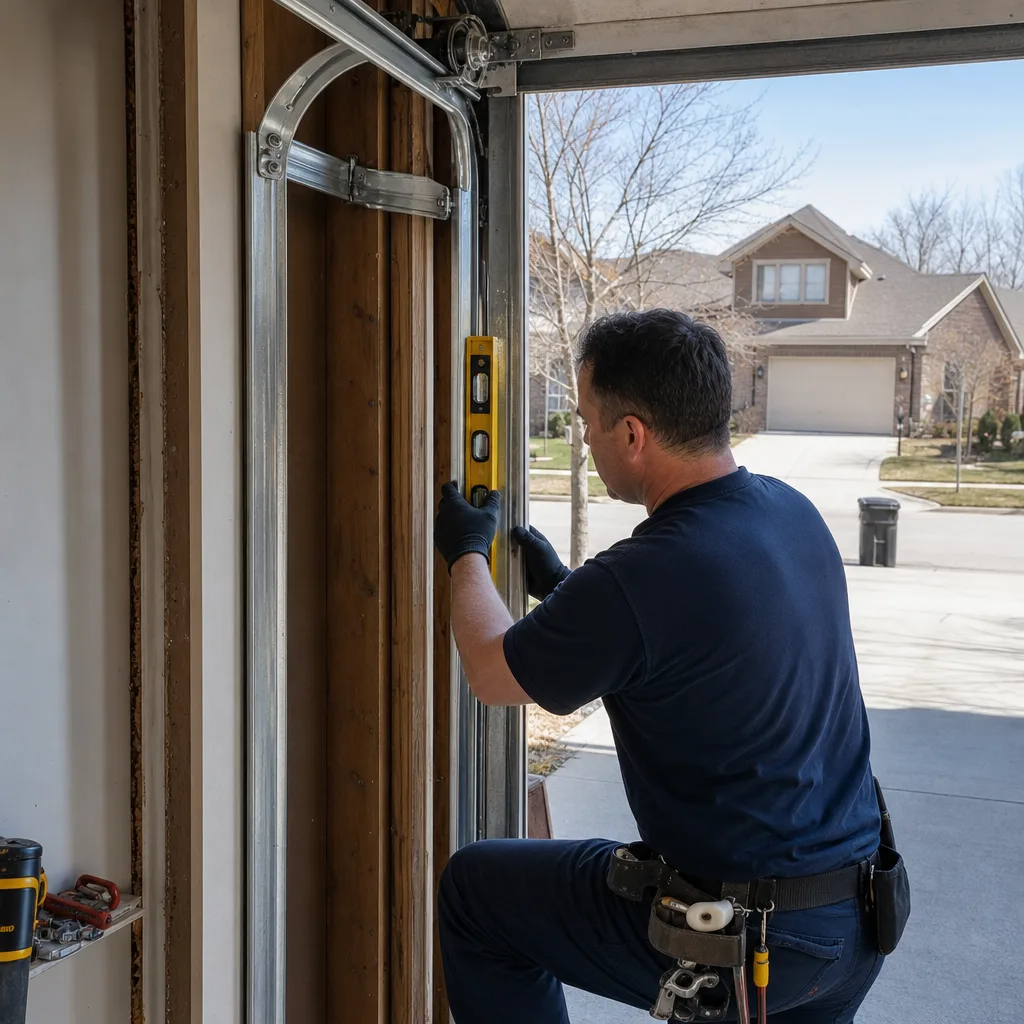
The tracks are the steel rails that guide the door from vertical to horizontal and back. The rollers, typically nylon or steel wheels, ride inside those tracks. This subsystem handles alignment, not weight. When a track is dented or a roller is worn flat, the door still works, but it grinds, jerks, or makes a rumble you can feel through the wall. Left alone, bad rollers put lateral stress on the tracks, which puts torque on the hinges, which eventually cracks a panel. Track problems are almost always cascading failures: something small went wrong first, and the track took the damage.
Subsystem Three: The Opener
The opener is the motor unit mounted to the ceiling, connected to the door by a trolley carriage and a belt, chain, or screw drive. It does not lift the door. It only moves it, which the springs make possible. The opener contains a logic board, limit switches, a receiver, and in newer units, a DC motor. In McDonough, where power flickers during summer thunderstorms, we regularly see logic boards that have taken a surge and now behave erratically, opening halfway, reversing for no reason, or ignoring the remote entirely. The opener is also the subsystem most likely to be replaced unnecessarily when the actual failure is in the springs.
Subsystem Four: The Weatherseal and Bottom Seal
The weatherseal is the rubber strip along the bottom of the door and the vinyl trim around the sides and top. Its job is environmental: it keeps out rain, leaves, and in Henry County, the fine red clay dust that blows up from unpaved driveways and construction lots. A failed bottom seal lets water pool at the door base, which rusts the bottom panel, warps the track brackets, and invites pests. It is the cheapest subsystem to repair, under $50 in most cases, and the one most often ignored until a bigger problem appears.
We have walked into garages across McDonough where the homeowner was quoted a full door replacement elsewhere, and the actual failure was a single roller and a cracked seal. The subsystem map exists so you can see the difference yourself before anyone quotes you anything. If you are looking for more detail on how repair decisions are made, our Garage Door Repair in McDonough page walks through the diagnostic process the same way a technician would.
McDonough Housing Stock: Why Your Door Is the Size It Is
McDonough’s housing stock tells you more about your garage door than the door itself does. The city grew in two main waves: an early wave of ranch-style homes built between 1985 and 1999, and a larger wave of subdivision construction between 2000 and 2015. Each wave produced different door configurations, and knowing which wave your house belongs to narrows down what you are likely dealing with.
Homes built in the 1985 to 1999 wave, concentrated in neighborhoods off McGarity Road and around the Square, typically have single-wide garage doors, either 8 feet or 9 feet wide, with extension springs mounted on the side tracks. These springs are cheaper to replace than torsion springs, generally $120 to $200 for a pair, but they wear out faster and are less safe when they snap because they are not enclosed in a shaft. Homes built between 2000 and 2015, the subdivisions off Highway 20 and Jonesboro Road that define much of modern McDonough, are mostly double-wide doors at 16 feet wide by 7 feet tall, with torsion springs and steel or aluminum panel construction. These doors are heavier, which means the spring is under more tension.
Door size matters because it dictates spring size, and spring size dictates both price and safety. A 16-foot door needs a torsion spring with a wire diameter between 0.218 inches and 0.273 inches, depending on the door’s exact weight. That is not a number a contractor should guess at. That is a number a contractor should read off the existing spring’s winding cone or the manufacturer label on the door. If a quote does not specify the spring size, the contractor has not actually measured anything.
The climate in Henry County also plays a role. McDonough gets enough humidity in the summer to rust unprotected steel rollers and enough overnight freeze cycles in January to make old weatherseal brittle. Doors that face west, common in many McDonough subdivisions, take direct afternoon sun, which degrades rubber seals faster than doors facing north or south. These are not obscure details. They are the difference between a seal lasting six years or eleven.
How to Read Your Door’s Hardware Labels Before Calling Anyone
Every garage door carries identifying information on its hardware. Reading it takes ten minutes and puts you in a position no contractor can manipulate: you will already know your door’s spring size, panel type, and opener model before anyone walks through the garage. Here is a numbered process that works on any door in McDonough.
- Check the inside of the bottom panel for the door manufacturer label. This label, usually in the bottom left or right corner of the lowest panel, lists the door model, the door width and height, and sometimes the original spring configuration. Write down the model number. If the door is a Clopay, the model will start with a letter like “E” or “H.” Amarr doors will list a series number. Wayne Dalton doors, common in older McDonough subdivisions, will list the model on the side of the track near the bottom bracket.
- Read the spring size off the spring itself. On a torsion spring, look at the winding cone or spring cap. There will be a number sequence like “.225 2 24” or “218-2-24.” The first number is the wire diameter in thousandths of an inch. The second is the inside diameter in inches. The third is the length in inches. This three-number sequence is the spring’s identity, and any repair quote should reference it.
- Check the opener motor for the model number. LiftMaster and Chamberlain units carry a model sticker on the side of the motor housing. Genie units have it on the back. The model number tells you the opener’s horsepower, drive type, and year of manufacture. If the unit was made before 2008 and still uses a chain drive, it is louder than modern belt drives and lacks battery backup, which matters in McDonough when summer storms knock out power.
- Count the panels and check the construction material. Soild steel panels are heavier than aluminum or vinyl and require stronger springs. Insulated panels add weight but reduce garage temperature swing, which matters in Henry County summers where garage interiors regularly exceed 100 degrees. If you see a dented panel, note which position it occupies: bottom panels replace for less than top panels, but only if the spring is still matched to the door weight.
- Photograph everything. The label, the spring, the opener sticker, and the track condition. You now have documentation that will make any quote you receive more precise.
This is the same process we walk through on every Garage Door Opener Repair & Installation in McDonough call, and it is also the first thing a homeowner should do when they notice a new sound or vibration. You do not need to know what the numbers mean. You need the numbers, so the person quoting you can prove they do.
Single-Subsystem Jobs vs. Cross-Subsystem Jobs: Where the Decision Actually Lives
Most garage door problems in McDonough are single-subsystem jobs. One part failed, and replacing it restores the system to proper function. The repair is fast, the price is contained, and the door continues to serve. But some failures are cross-subsystem problems, and those are the ones where replacement conversations become legitimate. Here is how to tell the difference.
Single-Subsystem Repairs
These are the jobs where one component failed, and the rest of the door is sound. A broken torsion spring is a single-subsystem job: replace it, reset the tension, and the door balances again. A failed opener logic board is a single-subsystem job: replace the board or the opener head, and the door moves again. A cracked bottom seal is a single-subsystem job: pull the old seal, slide in a new one, and the door is sealed again. These repairs typically cost under $400 and take under two hours. The key is that the other three subsystems are inspected and found functional. A competent contractor will tell you what they checked and what they found, not just what they replaced.
Cross-Subsystem Failures
These are the doors where the problem has spread. A door that has been running with a broken spring for more than six months will have a damaged opener gear because the motor has been straining against the unbalanced weight. That is two subsystems failed: springs and opener. A door with bent tracks and cracked rollers and a warped bottom panel from water damage is three subsystems: track, rollers, and seal, with the panel itself compromised. When two or more subsystems have failed simultaneously, the repair total often approaches 50 to 60 percent of a full replacement cost, and at that point the math changes. A complete Garage Door Installation in McDonough might make more sense than a piecemeal repair that leaves a 12-year-old door with a new opener but original panels.
The decision between repair and replacement is not about the age of the door. It is about how many subsystems are still functional. A 20-year-old door with one broken spring and otherwise sound hardware is a $250 repair. A 10-year-old door with a broken spring, a stripped opener gear, and rusting track brackets is a replacement conversation. The differentiation is inspection, not intuition, and that inspection should be documented.
What a Written, Photographed Quote Should Include
Every contractor in McDonough will give you a verbal estimate. Most will write a number on a business card. Very few will hand you a document that specifies the work, the parts, and the price in writing before asking you to commit. That document is the single strongest signal of a contractor’s competence, and its absence is an equally strong signal. Here is what a legitimate written quote should contain.
- Part specifications, not categories. The quote should say “torsion spring, 0.225-inch wire diameter, 2-inch inside diameter, 24-inch length” not “spring.” If the part is not specified, the contractor has not measured it, and the price is a guess.
- Labor cost separated from parts cost. You should see exactly what the parts cost and exactly what the labor costs. Combined totals obscure the markup and make comparison impossible.
- Clear scope of work. The quote should list every task: remove and dispose of old spring, install new spring, reset tension, lubricate rollers, test balance, photograph completed work. If the scope is vague, the invoice will be creative.
- Photos of the failed component. This is the part that separates documented work from guesswork. Before any quote is finalized, you should be shown a photo of the broken spring, the worn roller, or the corroded bracket. If a contractor refuses to show you the failed part, ask yourself why. The founding rule at Servo Garage Doors McDonough is that the customer sees the failed component before anyone quotes a replacement, and that rule exists because it removes the entire trust burden from the transaction. You should be able to point at a photo and say “yes, that is broken” without relying on anyone’s word.
- Flat price, not an estimate range. The quote should be a single dollar figure that does not change unless the scope changes in writing. If the price ends in a question mark, the contractor has not finished their work.
We have built our entire process around this documentation because we have seen what happens when it is missing. A homeowner in a McDonough subdivision is quoted $450 for a spring repair, the technician arrives and says the door is “in worse shape than expected,” and the final invoice is $1,100. The scope of work was never written down, so the scope is whatever the technician says it is. A written quote prevents that conversation from ever happening. That is Clause 1 of The Haven Standard, and it is the reason our quotes are flat, written, and delivered before any work begins.
What Each Subsystem Costs to Repair in McDonough
Garage door repair pricing in the McDonough market is consistent across most reputable contractors. The variables are door size, part quality, and whether the contractor charges by the hour or by the job. Hourly billing on standard repairs is a red flag: it creates an incentive for slowness. Fixed-price repair, which is the standard in Henry County, keeps the invoice predictable. Here is the current pricing map by subsystem for the McDonough area.
Spring Replacement Costs
A single torsion spring replacement in McDonough, parts and labor, runs $180 to $340 depending on wire diameter and cycle rating. A pair runs $280 to $520. Extension springs are cheaper, $120 to $200 per pair, but they are only found on older doors. Higher-cycle springs, rated for 25,000 cycles instead of the standard 10,000, cost $60 to $100 more and make sense if you plan to stay in the house for more than seven years. We quote the spring size from the label or the existing spring’s winding cone, never from a guess, because a spring that is one wire gauge too light will fail in under three years.
Track and Roller Costs
Replacing a full set of rollers, 10 to 12 depending on door height, costs $90 to $160 for nylon and $40 to $80 for steel. Nylon rollers are quieter and do not rust, which matters in McDonough’s humidity. Replacing or straightening a damaged section of track costs $110 to $260 per section. Replacing both vertical tracks and the horizontal rails runs $400 to $700. Track damage is almost always a result of a preceding failure, usually a broken roller or a door that was forced open, so the underlying cause must be identified or the new track will suffer the same fate.
Opener Repair and Replacement Costs
Repairing an existing opener, a new logic board, a limit switch, a receiver, or a stripped gear, costs $90 to $200 depending on the part and the brand. Replacing an entire opener with a belt-drive unit, including installation and removal of the old unit, runs $400 to $650 for a standard LiftMaster or Chamberlain and $500 to $750 for a quiet DC-motor unit with battery backup. In McDonough, battery backup is worth considering: summer thunderstorms knock out power often enough that a garage door you cannot open during an outage is a legitimate problem.
Weatherseal and Bottom Seal Costs
A bottom seal replacement costs $40 to $90. Full perimeter seal replacement, including the trim, costs $150 to $300. This is the cheapest subsystem and the one most often deferred, but a failed seal in McDonough does more than let in water. It invites rodents seeking warmth in the winter and can lead to bottom panel rust that turns a $50 repair into a $400 panel replacement.
Full Replacement Costs
A complete single-wide door replacement in McDonough starts around $1,100 for a basic steel door and runs to $2,200 for insulated. A double-wide replacement starts at $1,400 and runs to $3,200 depending on panel material, insulation rating, and spring configuration. These are installed prices with the old door removed and disposed of. If a quote falls significantly below these ranges, ask what spring is being installed and whether the old door is included in the scope.
Every price above is quoted and agreed before any work starts. That is not a courtesy. It is the way the work should be done, and any contractor in McDonough who will not put a flat price in writing before starting should be asked to leave the property. For a more detailed breakdown, the Garage Door Repair in McDonough page walks through each repair type with specific part numbers and brand compatibility.
Common Mistakes to Avoid
- Replacing the opener when the spring is broken. A door that will not lift is usually a spring problem, not an opener problem. If the opener motor hums but the door does not move, the spring has failed. Replacing the opener anyway leaves the broken spring in place and the new opener will destroy its own gear within months.
- Ignoring a new sound for more than a week. A rumble, grind, or pop is a subsystem beginning to fail. In McDonough, a noise that starts in the spring often ends in a snapped cable and a door that crashes down on one side, bending the tracks and cracking a panel. The longer the sound is ignored, the more subsystems get involved.
- Accepting a verbal quote without documentation. A number spoken aloud and a number written down are different legal instruments. If the quote is not written, the scope is not fixed, and the price is not protected. Always insist on a written price before any work begins.
- Lubricating a squeaking roller with WD-40. WD-40 is a degreaser, not a lubricant. It strips the protective coating from metal parts and accelerates wear. Rollers and hinges should be lubed with a lithium-based grease or a garage-door-specific lubricant. A squeaking roller is usually a worn roller, and lubricating it buys weeks, not months.
- Replacing the bottom seal without checking the door balance. A new seal on an unbalanced door gets shredded within a season. The seal is the cheapest part, but the balance is what protects it. If the door does not hold level at mid-opening, the springs are the real problem.
- Assuming the cheapest quote is the same work. Two quotes in McDonough for the same “spring replacement” can differ by $150 because one contractor is installing a 10,000-cycle spring and the other is installing a 25,000-cycle spring. The price difference is in the part specification, and only a written quote reveals it.
When to Call a Professional
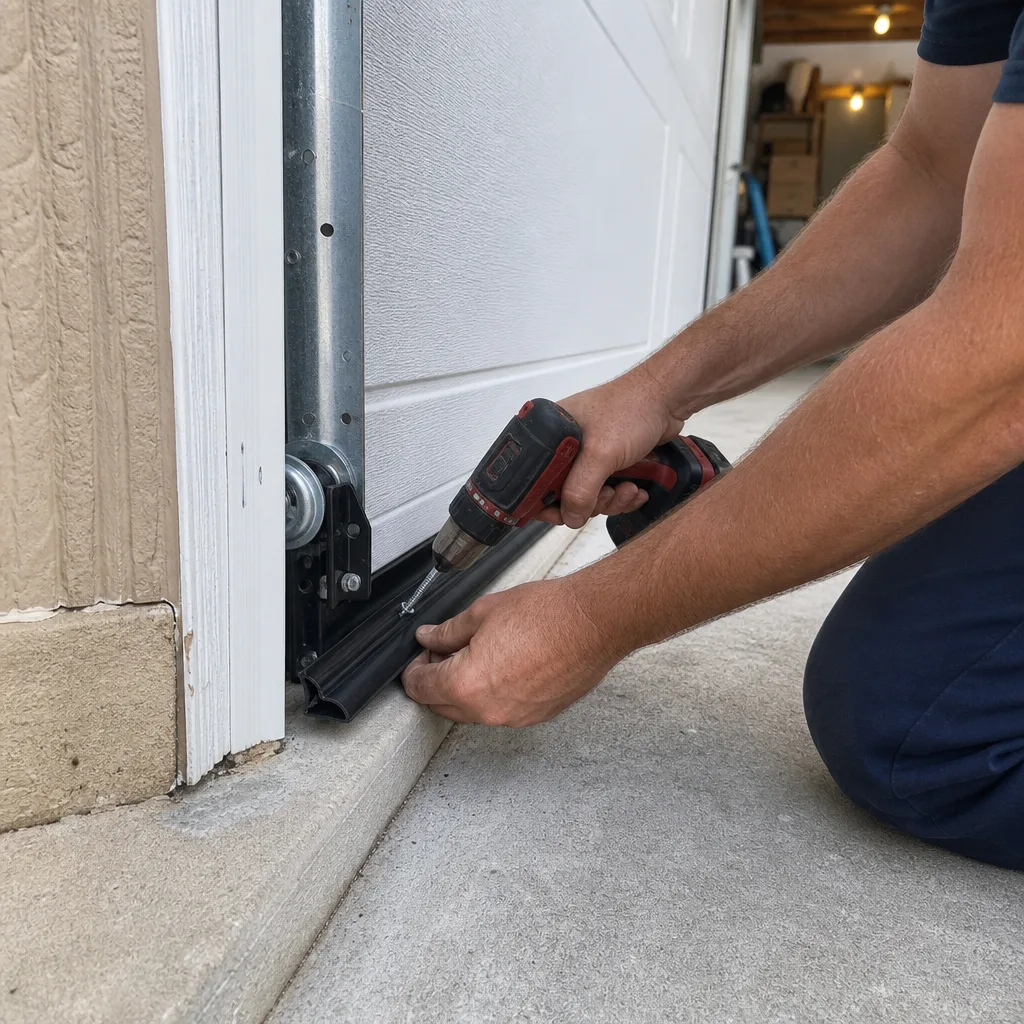
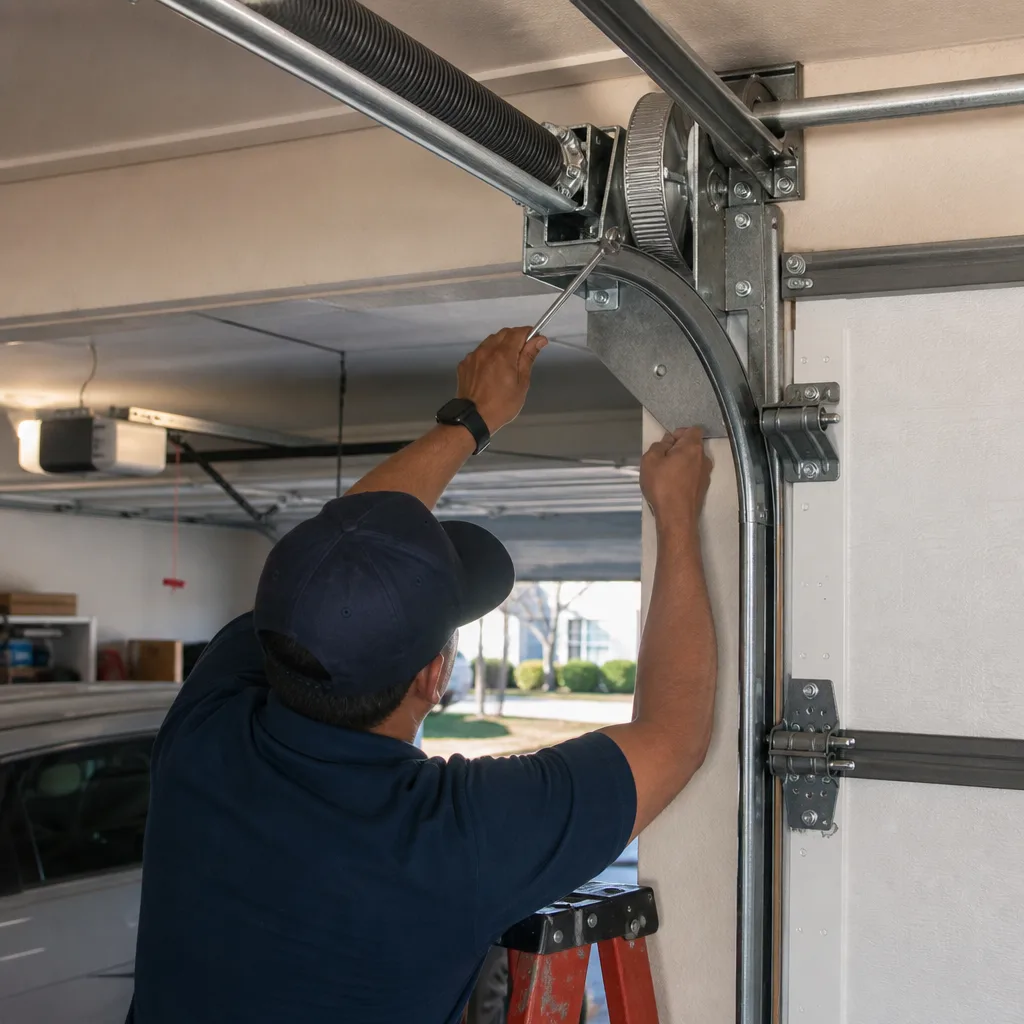
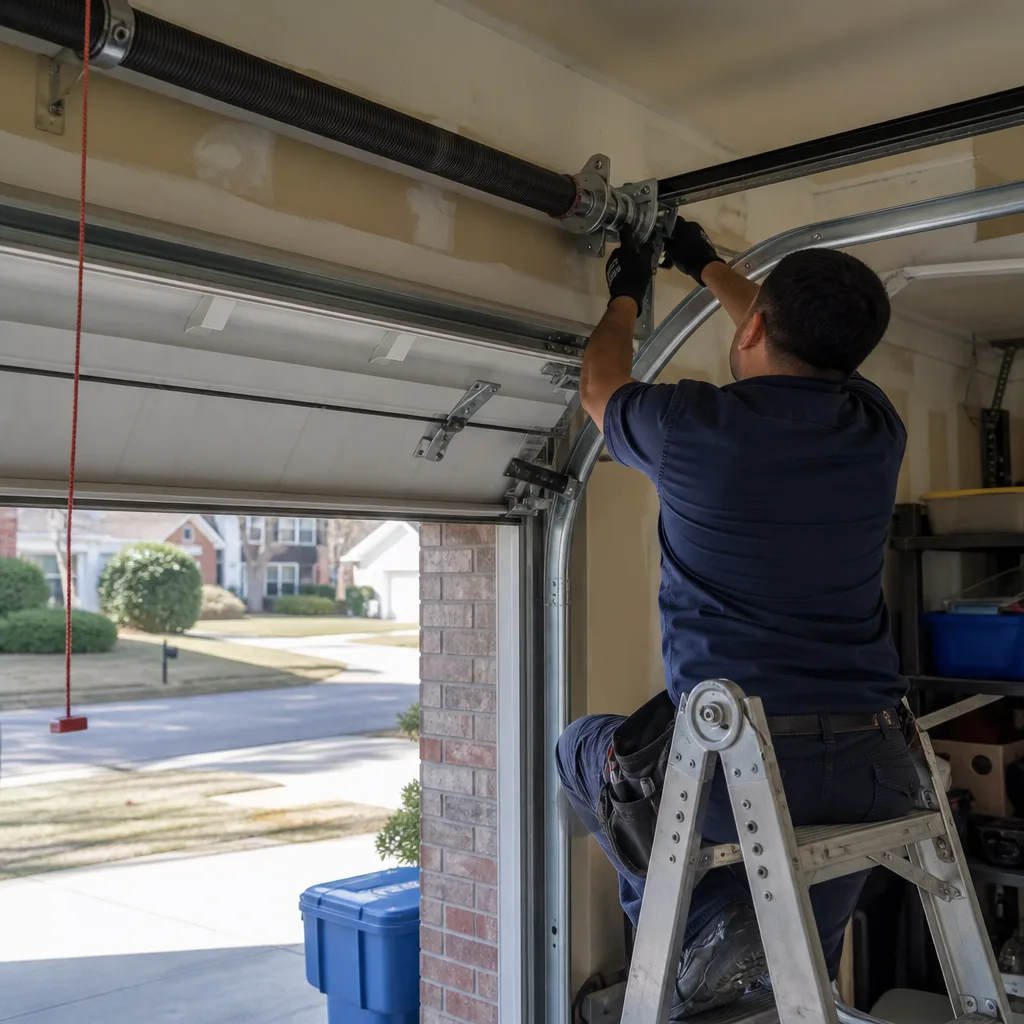
Garage door repair is not a weekend project. Torsion springs are under hundreds of pounds of tension, and the tools required to wind or unwind them are specialized. A spring that releases unexpectedly can cause serious injury. The same applies to track work: a door that derails under tension can fall without warning. These are not warnings designed to scare homeowners into calling; they are the reality of a system under mechanical load.
Call a professional when the spring breaks, when the door comes off its tracks, when the opener behaves erratically after a power surge, or when any repair requires removing tension from the springs. These are not tasks for a YouTube tutorial. Servo Garage Doors McDonough offers free estimates throughout McDonough, with a flat, written price delivered before any work starts and a documented photo record of everything found and done. Call (470) 928-4767 to schedule.
Frequently Asked Questions
Most single-subsystem repairs in McDonough run between $120 and $400, with spring replacement at $180 to $340 for a single torsion spring and opener repair at $90 to $200. Cross-subsystem repairs, where multiple components have failed simultaneously, can reach $600 to $900, and full door replacement starts around $1,100 for a single-wide. Every quote from Servo Garage Doors McDonough is a flat, written price delivered before any work begins, so the number you agree to is the number you pay. Call (470) 928-4767 for an exact quote on your door.
Yes, for emergency repairs like a broken spring or a door that is stuck open. We answer calls with a live person 24 hours a day, seven days a week, including holidays, and we give you a named technician and an on-the-way text, not a four-hour callback window. Servo Garage Doors McDonough home.
Disconnect the opener by pulling the red release cord and try to lift the door by hand. If the door is heavy and will not move or only moves a few inches, the spring has failed. If the door moves freely but the opener does not respond, the problem is in the opener. This 30-second test saves you from paying for an opener replacement when a $250 spring repair is what you actually need.
We service all eight major brands: LiftMaster, Chamberlain, Genie, Clopay, Amarr, Wayne Dalton, Craftsman, and Raynor. Parts for older Wayne Dalton doors in McDonough’s 1980s-era subdivisions can be harder to source, but we stock the common spring sizes locally and special-order uncommon parts with no premium markup.
No. The price is quoted in writing after we inspect the door, not before. Our technicians photograph the failed component, specify the exact part needed, and deliver a flat price before any work starts. That is Clause 1 of The Haven Standard, and it has been our operating rule since 2015. If you are ever quoted one price and invoiced another by any contractor, that is a scope change, and it should be agreed in writing before any additional work is done.
Yes, for the most common repairs. Our trucks in McDonough carry torsion springs in the standard wire diameters and lengths, nylon rollers, openers in the main LiftMaster and Chamberlain models, seals, cables, and hinges. Specialty parts, like a custom Raynor panel or an uncommon spring size, are ordered with a confirmed arrival date before any work is scheduled. You will know when the part arrives and when the job happens, in writing, before we start.
The Bottom Line
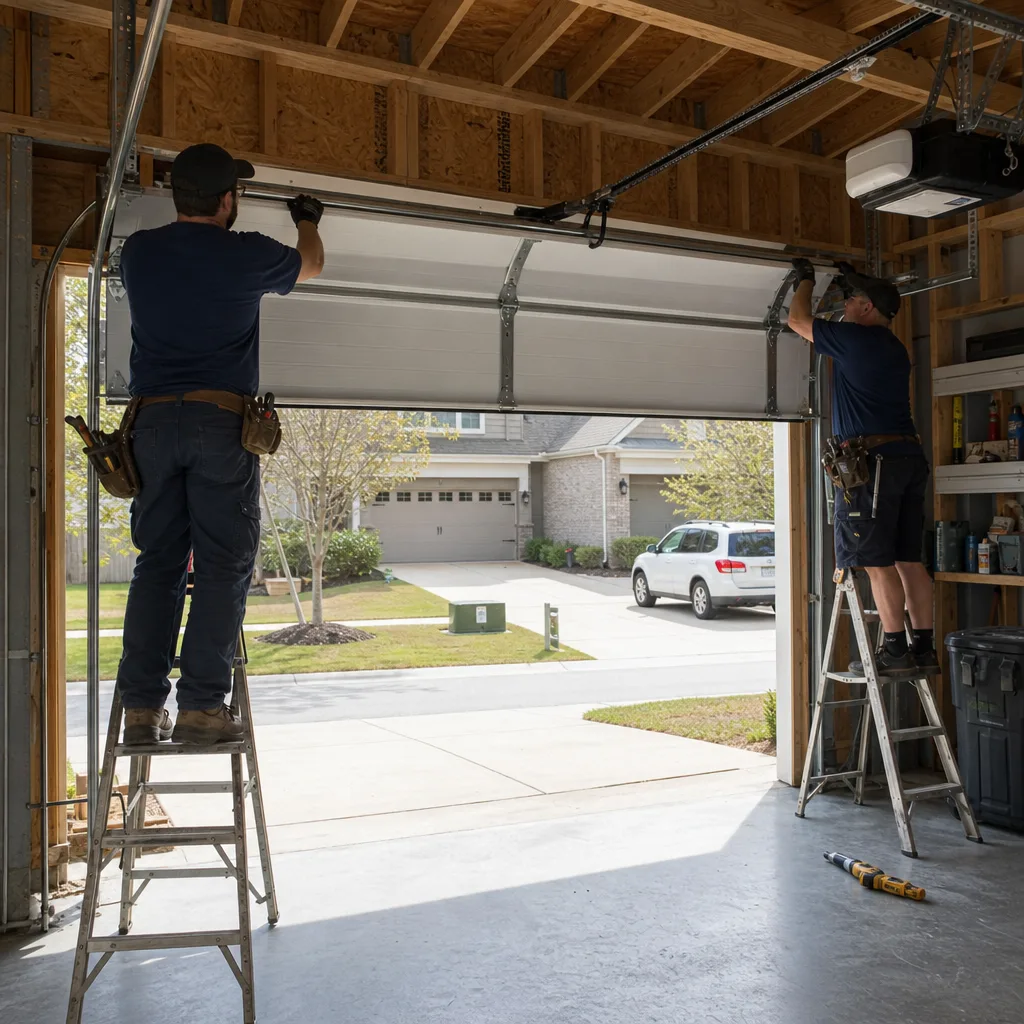
A garage door in McDonough is four subsystems, and the most expensive mistake a homeowner can make is treating all four as one failure. The spring is not the door. The opener is not the spring. The seal is not the track. Identifying which subsystem actually failed, reading the hardware labels before calling, and demanding a written, photographed quote before authorizing work are the three skills that will save you thousands of dollars over the life of your home. The evidence should speak first, and the price should be on paper before the first tool comes out. That is how garage door work should be done in McDonough, and it is how we have done it since 2015.
Written by Marcus Deller, Owner at Servo Garage Doors McDonough, serving McDonough since 2015.